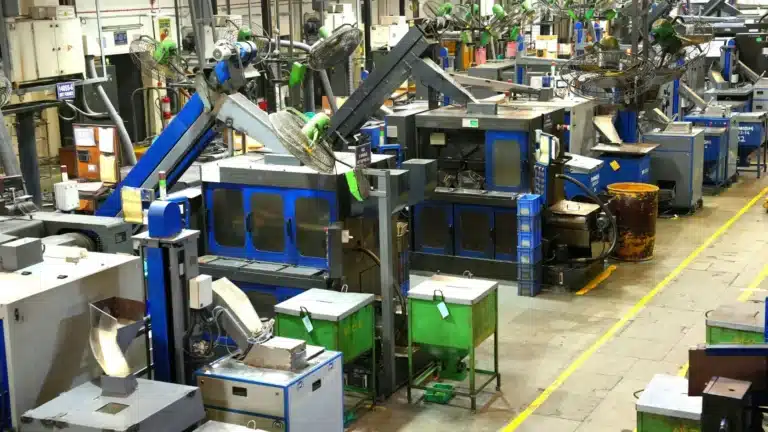
A minimum order quantity is the smallest run a factory will accept, and most founders don’t find out what theirs is until the quote comes back. You send a tech pack and ask for a quote, and the reply says 5,000 units on a product you hoped to test with 500. That number feels like a wall.
It isn’t a wall. It’s a cost structure with four parts, and each one behaves differently. Gembah places first orders through product manufacturing across a network of vetted factories, and the number is rarely arbitrary once you can see what sits behind it. Once you commit to a run, that run is also your first real test of whether the factory can build your product. Want a read on the order size your product actually needs? Talk to a Gembah sourcing expert.
How do you plan a first production order?
Get the minimum in writing along with the four costs behind it. Check it against the demand you can actually evidence. Close the gap with terms rather than a smaller order, such as a split shipment against one PO. Then lock the spec and the golden sample before the line starts.
Also Read
- How to Vet a Product Manufacturing Partner: The 2026 Due Diligence Sequence
- Global Sourcing for Small Businesses
- How to Find a Manufacturer for Your Product
The Short Version
A minimum order quantity is a cost-recovery number: setup, tooling, material minimums, and line time, spread across the units produced. You can’t buy under it, so plan around it with terms rather than order size. Then make the run you commit to earn its place: lock the spec, sign the golden sample, and measure the first parts off the tool before you reorder.
Key Takeaways
- An MOQ is a cost structure, not a policy. Setup, tooling, material minimums, and line time all sit inside the number.
- What you bring to the quote request shapes the number, because an unprepared buyer gets priced for uncertainty.
- Terms move more readily than order size, so look at deposit, lead time, and packaging first.
- A smaller run isn’t a cheaper order, since unit price, tooling amortization, and per-unit inspection all rise as the run shrinks.
- The order you commit to is also your first real test, so lock the spec and the golden sample before the line starts.
Table of Contents
- What a minimum order quantity actually is, and why the factory has one
- What your minimum order quantity is protecting
- What’s fixed, and what depends on how you order
- Planning around the minimum
- What a smaller run really costs you
- Sizing the first order against demand you can prove
- Lock these before the line starts
- What comes off the tool, and what it tells you
- Pre-production testing, and the sampling standard behind your inspection quote
- Decide: reorder, re-run, or redesign
- Myth vs. Reality
- Three Questions to Ask Before You Accept a Minimum
- How Gembah Helps Size and Place a First Production Order
- FAQs
- Commit to the Number You Can Defend
What a minimum order quantity actually is, and why the factory has one
A minimum order quantity is the smallest run a factory will accept, set so the factory recovers its setup, tooling, material purchasing, and line time across the units it produces. Those four drivers account for most of the number, and they behave differently.
Setup and changeover are hours of skilled labor that happen once per run, whether you order 500 units or 50,000. Tooling is a fixed cost that doesn’t shrink with order size, and on a first product, you’re usually the one paying it. Material minimums come from the mill or the resin supplier, not from your factory. Line time is the slot your run occupies, which the factory could have sold to someone else. A high minimum usually means the factory is protecting one of those four, and the number applies to every run you place, so no smaller trial order sits underneath it.
What your minimum order quantity is protecting
An unprepared buyer gets the list-price minimum, because the factory is pricing uncertainty along with the parts. Show up with open questions, and the quote absorbs the risk that you’ll change the material, redraw the part, or disappear after one order.
Four things shape the answer before you ask. A finished tech pack, so nobody is guessing at tolerances. A realistic annual forecast rather than a first-order number, which tells the factory what the relationship is worth. Decisions already made on materials, finish and packaging. And a plain statement of what you will and won’t change. Settle the spec first, because a factory-ready tech pack is the single strongest piece of evidence that you’re a buyer worth scheduling.
What’s fixed, and what depends on how you order
|
Item |
Fixed or variable |
Why |
|
Deposit structure |
Varies |
The factory sets its own payment terms, and cash up front is worth real money to it |
|
Lead time |
Varies |
A longer window lets the factory slot your run into spare capacity instead of displacing a paying job |
|
Packaging and labeling |
Varies |
Stock packaging removes a procurement step the factory would otherwise manage for you |
|
Split shipments against one PO |
Varies |
The factory still recovers its setup in full, so only the delivery schedule changes |
|
Material minimums |
Fixed |
The mill or resin supplier sets them, and your factory is a buyer too |
|
Tooling cost |
Fixed |
A cost that doesn’t shrink because your order did |
|
Certification and testing |
Fixed |
Labs charge per product, not per unit |
Save that table and bring it to the call. The variable items are the ones the factory can reschedule or substitute on its own authority. The fixed ones are costs somebody else already charged them for, so no amount of asking moves them.
Planning around the minimum
You can’t order under the minimum, but you can change what meeting it costs you by handing over something the factory wants more than the volume. A larger deposit improves the factory’s cash position. A longer lead time lets them slot your run into spare capacity instead of displacing a paying job. A second order committed in writing turns a one-off into a relationship. Dropping a colorway cuts a changeover. Accepting the factory’s stock packaging removes a procurement headache.
The most available concession is usually the split shipment: one purchase order at the full minimum, delivered in two batches. You still buy the quantity that makes the run worth running, and the factory still gets its setup back, but you pay for and store only half of it up front. Ask about that before you ask for a smaller total.
Not sure which of these your factory would actually take? Get a Gembah sourcing review.
What a smaller run really costs you
A smaller run isn’t a cheaper order, and the math often catches founders unaware. Setup and tooling amortization both spread across fewer units. An inspection visit costs about the same whatever the lot size, and the sample size grows far more slowly than the lot does, so per-unit inspection climbs. Freight per unit climbs with a smaller shipment.
Compare the two orders on landed cost and cash tied up rather than on unit price. A 1,000-unit order at a higher unit price can beat a 5,000-unit order at a lower one, but only if you’d have sat on the other 4,000 for a year. Run both numbers before you decide which one you’re aiming for, because the cheapest order is the one you can sell through.
Sizing the first order against demand you can prove
Provable demand is narrower than most founders want it to be. Pre-orders with money attached count. A waitlist that converted on a real offer counts. A channel that already sells your other SKUs counts. Survey interest doesn’t, and neither does a social following.
Size the order to the lower of the factory’s minimum and the demand you can evidence, then treat the gap between those two numbers as the thing to close before the PO. You close it by trading on terms, by proving more demand, or by accepting the carrying cost with your eyes open. Plan the second order while you’re at it, since scaling without breaking your supply chain is easier when the factory already knows it’s coming.
How many units should a first production order be?
Size it to the lower of the factory’s minimum and the demand you can evidence, then close the gap deliberately rather than guessing at it. There’s no universal number, because your product’s tooling, materials, and process set the minimum, not your stage as a business.
Lock these before the line starts
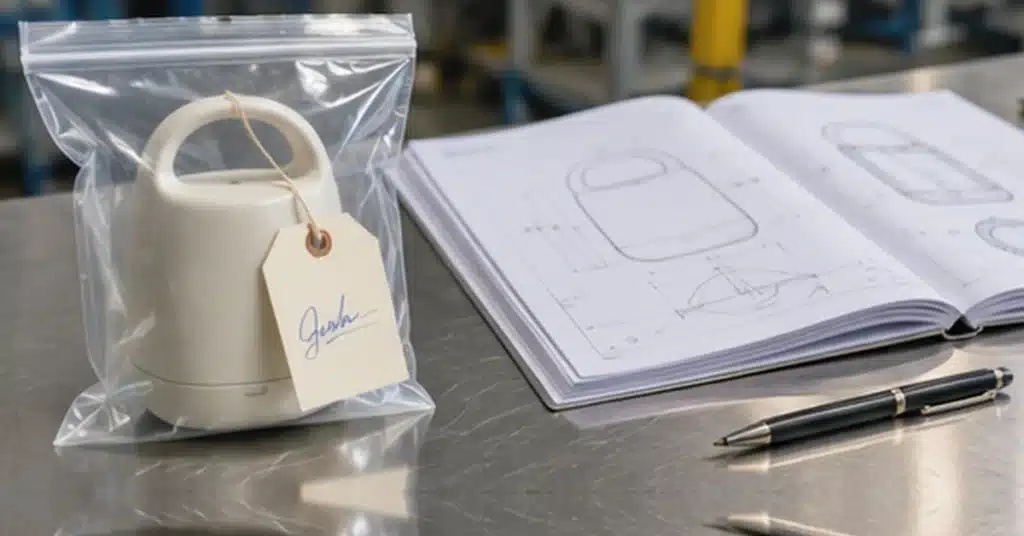
You’ve committed to a real run at the factory’s minimum, so that run has to do double duty. It’s the inventory you’ll sell and the only evidence you’ll get about whether this factory can build your product repeatably before you place a second order.
Freeze five things first, each with a recorded revision number: the tech pack and drawings, the approved golden sample, tooling sign-off, the packaging, and the inspection criteria both sides agreed to. Swap a material or a supplier halfway through, and you’ve started a different experiment, so the data from before the change no longer tells you anything.
What should I check before I commit to a first production order?
Check four things, in order. That the tech pack and golden sample are locked and signed. That the tooling samples are approved in writing before the line starts, not promised on a call. That the inspection plan names an AQL standard and the edition of it. And that you’ve reconciled the quoted unit price against the real cost at this quantity, including setup, inspection, and freight.
What comes off the tool, and what it tells you
Start before the line runs. Approve the tooling samples against the drawings and sign the golden sample, so the run has a physical reference to measure against. A factory that shows you parts only once the run has finished has sold you inventory, not a test.
Then measure across the run instead of grading a pile at the end. Four numbers carry most of the signal. Scrap and rework rates show whether the process is in control. Cycle time against quoted capacity shows whether the factory’s lead time is real. Operator dependency shows which steps rely on one skilled person who might not be there in March. And defect clustering, by shift, by cavity, or by batch, points at a cause instead of a symptom. If you can’t stand on the floor yourself, managing quality control remotely lays out three workable approaches. The question underneath all four numbers is the same one: would the second run look like this one?
Pre-production testing, and the sampling standard behind your inspection quote
Pre-production testing covers what the finished product has to survive, including function, safety, packaging, and drop testing. Run it on units from this run rather than on hand-built samples, because a certification failure found at volume is a recall conversation instead of a tooling conversation.
There’s also a change this year that affects the inspection quote sitting in your inbox. Inspection firms price acceptance sampling against an AQL standard, and ISO 2859-1:1999 is now withdrawn. ISO 2859-1:2026 replaced it in January 2026. An inspection plan and a purchase order can name different editions without anyone noticing, so ask which edition your inspection firm works to, then make sure your PO names the same one.
Decide: reorder, re-run, or redesign

The run gives you three honest options, and the rule for choosing between them is cleaner than most founders expect.
|
Signal |
Reorder |
Re-run |
Redesign |
|
Conformance |
Parts meet the tech pack across the run |
Misses trace to a fixable process cause |
The same feature fails however it’s built |
|
Process data |
Scrap, cycle time and defect rates are stable |
Unstable, with a named corrective action |
Unstable for reasons that trace to the drawing |
|
Cost |
The gap to quote is explainable and shrinks at volume |
The gap comes from rework you can fix |
The cost is structural, not a volume problem |
Reorder when conformance and process data are stable and you can explain the cost gap. Re-run when the failures sit on the process side and the factory has a real corrective action. Redesign when the same failure keeps appearing no matter who builds it, because that’s a drawing problem wearing a manufacturing costume.
Which companies help plan and manage a first production order?
Four kinds of partner show up at this stage, and they own different things when something goes wrong. A sourcing agent finds and books factory capacity, but usually doesn’t own your drawings. An inspection firm measures what came off the line and reports it without fixing the cause. A contract manufacturer builds to the spec you supply, which makes spec errors your problem. An end-to-end development partner owns the design, the factory relationship and the inspection together, so one failure doesn’t turn into three vendors pointing at each other.
Myth vs. Reality
Myth: “The minimum is just the factory’s policy.”
Reality: It’s a cost-recovery number, and seeing which cost it protects tells you whether to plan around it or find a different factory.
Three Questions to Ask Before You Accept a Minimum
A minimum comes with reasons behind it. These three questions get them on the table before you sign.
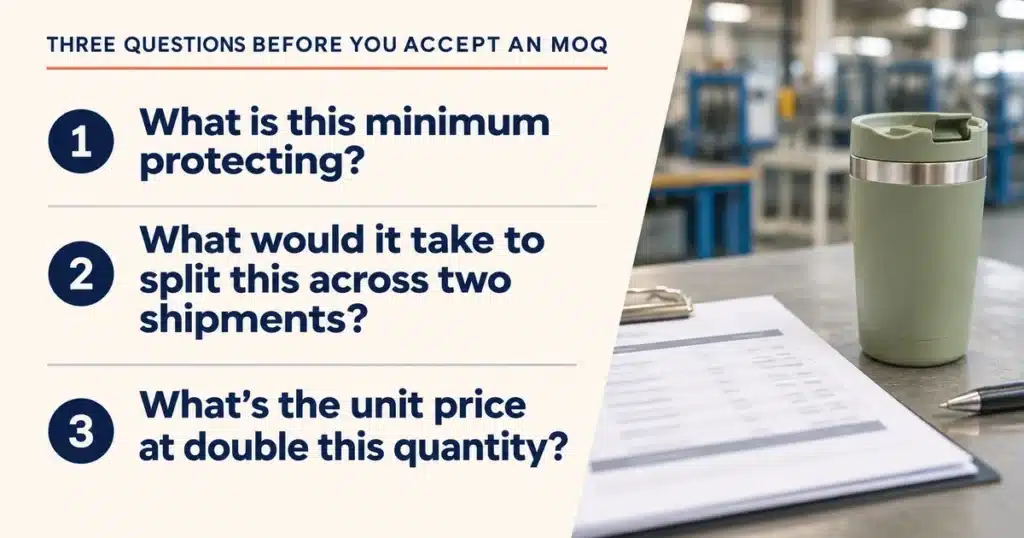
- “What is this minimum protecting?” Setup, a material minimum, tooling, or line time. A factory that names the driver is working with you; one that just repeats the number isn’t.
- “What would it take to split this across two shipments?” You’re offering to buy the full quantity, which keeps the factory’s setup whole, and asking for relief on cash and storage instead.
- “What’s the unit price at double this quantity?” The gap between the two prices tells you what the minimum is really costing you, and whether growing into it beats trying to move it.
Ask all three before you sign. The answers tell you whether you’re buying a partnership or a transaction.
How Gembah Helps Size and Place a First Production Order
Our sourcing and manufacturing team places your product with a factory whose minimums match the order you can actually fund, drawing on a network of over 2,000 vetted factories across 8 countries. We run in-process quality control plus final product inspection and testing, so the first run tells you something you can act on. Design and engineering settle the tech pack before anyone asks for a quote, because an unfinished spec makes a factory quote defensively.
We don’t stop at a placed order. We also take the product through Market Validation and the Pre-Launch, Crowdfunding, and Launch stages, with crowdfunding where the product suits that route. Proving demand is how a founder earns the right to a smaller first order, which is why it carries more weight here than on most projects. One accountable team carries the product from the quote to the shelf, and the work stays connected to product manufacturing throughout.
FAQs
What is a minimum order quantity?
A minimum order quantity is the smallest run a factory will accept for a given product. It’s set so the factory recovers setup, tooling, material purchasing, and line time across the units produced, which is why the number changes with the process rather than with your company’s size.
How do you plan a first production order?
You can’t order under a factory’s minimum for a given run, so start from that number. Find out which of the four costs it protects, then close the gap with terms rather than a smaller order: a larger deposit, a longer lead time, a committed second order, a dropped colorway, or stock packaging all cost you less than unsold inventory does.
How many units should a first production order be?
Size it to the lower of the factory’s minimum and the demand you can evidence, then close the gap deliberately rather than guessing at it. Pre-orders, a converted waitlist, and an existing channel count as evidence; survey interest and follower counts don’t.
Why do factories set minimum order quantities?
Because a short run costs them almost as much to prepare as a long one. Setup and changeover are fixed hours, you’ve already paid for the tooling, mills sell raw material in their own minimums, and the line time they give your run is line time they sell to nobody else.
Is a smaller run always cheaper?
No. A smaller run raises the unit price, spreads tooling and setup across fewer units, and keeps per-unit inspection and freight high. Compare orders on landed cost and cash tied up, not on unit price, and remember that the cheapest order is the one you can sell through.
What should I check before I commit to a first production order?
That the tech pack and golden sample are locked and signed, that the tooling samples are approved in writing before the line starts, that the inspection plan names an AQL standard and edition, and that you’ve reconciled the quoted unit price against the real cost at this quantity.
What does a first production order cost?
Budget the product-side costs: tooling and any tooling adjustments, line setup and changeover, the units themselves, in-process and final inspection, pre-production testing at a lab, and freight. Expect the per-unit figure on a first order to sit above your volume quote, because setup and inspection spread across one run rather than many.
Commit to the Number You Can Defend
The real problem isn’t the size of the factory’s minimum. It’s the size of the order you can fund and sell, and closing the distance between those two numbers is the work. Price what the minimum protects, plan on terms instead of order size, size the order against demand you can prove, then lock the spec and measure what comes off the tool before you place the second one.
Ready to find out what your first order should actually be? Size your production order with Gembah.