Baby product differentiation is a product decision before it’s a marketing one, and in this category, it’s also a compliance decision. You launched a private-label baby SKU; it sold, and within two quarters, four listings appeared with the same mold, the same photo angles, and a lower price. The instinct is to optimize the listing harder.
That instinct fails when the product is identical. Competitors copy better bullets and a cleaner photo set inside a week, and you end up competing on price against sellers with lower overhead. The durable move is changing the product itself, which Gembah handles through custom baby product development—and which carries a retesting consequence most sellers don’t price in. Want a read on what would actually differentiate your SKU? Talk to a Gembah product expert.
Do I need to retest a baby product after a design change?
Yes, whenever 16 CFR 1107.2 would call it a material change: any change to design, manufacturing process, or component sourcing that could affect compliance. 16 CFR 1107.23 then requires the manufacturer to send samples of the changed product to a third-party conformity assessment body and to issue a new Children’s Product Certificate. If you import the product, 16 CFR 1110.7(a) makes you that certifier.
Also Read
- Private Label Baby Products
- Baby Product Manufacturers: How to Find Safe, Compliant Factories for Your Product
- Product Design and Development for Amazon Sellers
Quick Answer
Differentiation that holds up has to live in the product. Mine your own reviews and returns for the friction nobody has fixed; change the materials, geometry, use case, or the system around the product, then plan for the retesting that change triggers in a children’s product category.
Key Points
- Listing-level differentiation is rented. Anyone can copy a bullet, an image, or a bundle inside a week.
- Your reviews and returns already name the gap competitors haven’t closed.
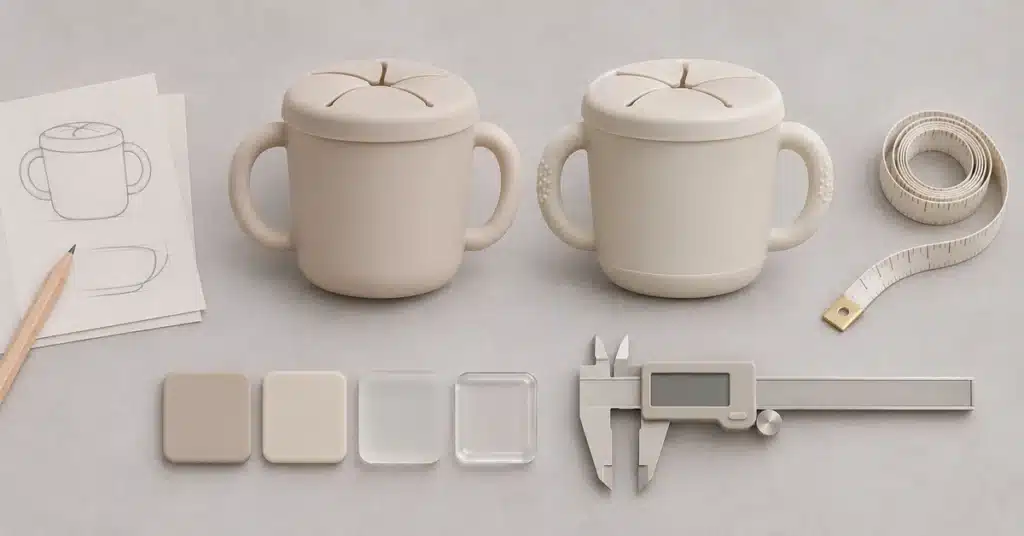
- Four levers change a product: materials, geometry, use case, and the system around it.
- In baby, a design change is a regulated event. A material change means retesting and a new Children’s Product Certificate.
- Owning the tooling and design makes the improvement defensible.
Table of Contents
- Why listing-level differentiation stops working in baby
- What baby product differentiation actually means
- Find the change worth making
- The four levers that actually change a product
- The compliance consequence most sellers don’t price in
- Custom development vs. private-label improvement
- Protect what you changed
- Myth vs. Reality
- Three Signs Your Baby SKU Needs a Product Change, Not a Listing Change
- How Gembah Helps Turn a Me-Too SKU Into Your Own Product
- FAQs
- Compete on the Product, Not the Price
Why listing-level differentiation stops working in baby
Baby buyers research harder than almost any other consumer group. They read the one-star reviews, compare materials, and ask other parents before they spend $40 on something that goes straight into their infant’s mouth. That scrutiny rewards real product quality and punishes overpromising marketing.
It also means the category is full of generic supply. The same contract factories sell the same catalog molds to anyone with a purchase order, so competitors match a bundle, a new insert card, or a better photo set quickly. None of this makes listing work pointless—a bad listing will sink a good product. It makes listing work insufficient on its own, because every seller sharing your mold can copy it.
What baby product differentiation actually means
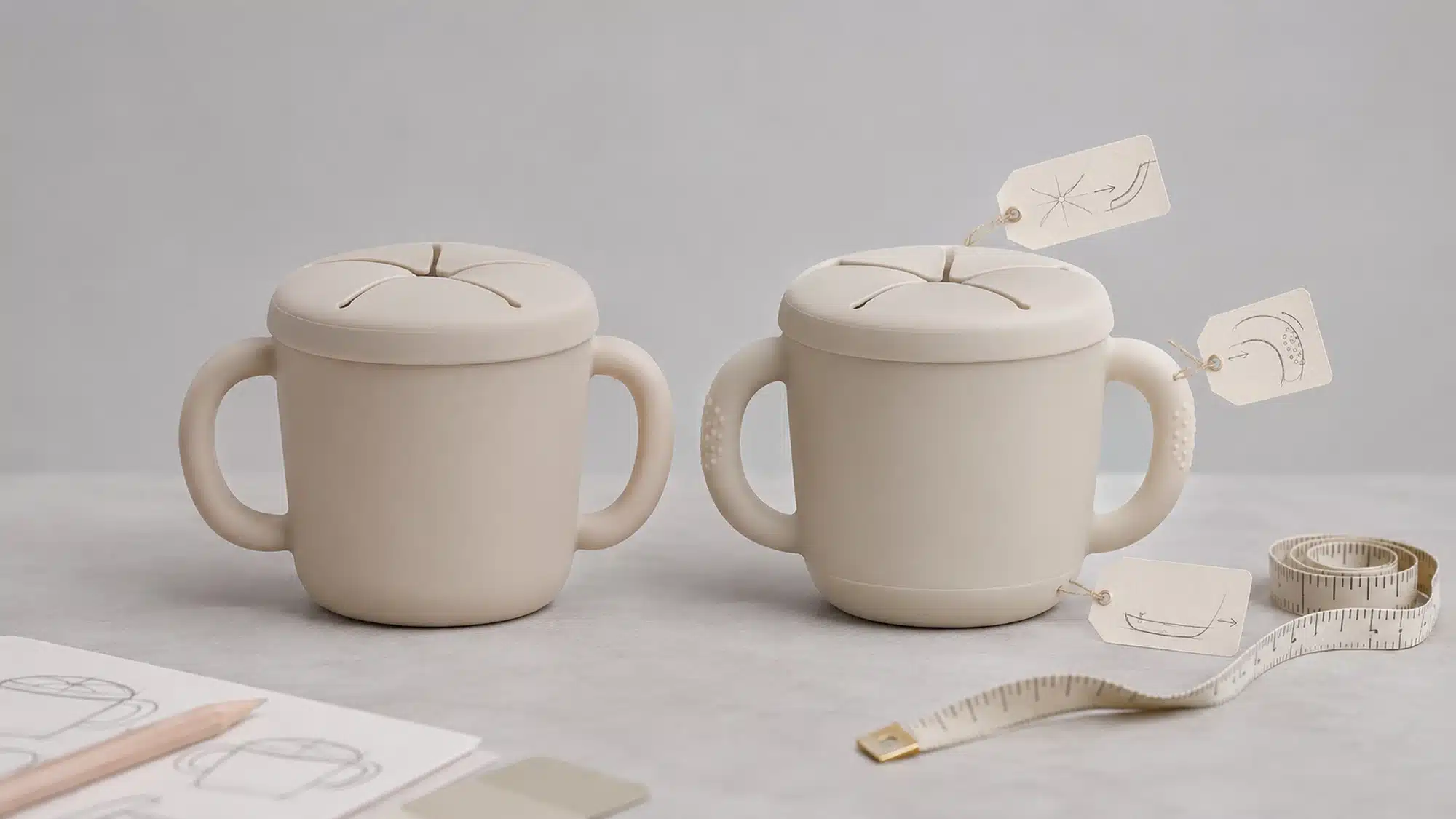
Baby product differentiation is a change to the product’s materials, form, function, or system that a caregiver can feel in use and a competitor can’t replicate by copying your listing. The test is physical: hand both products to a parent for a week and ask which one they’d keep.
That rules out a few things sellers describe as differentiation. A new color isn’t it. Packaging isn’t it, though packaging can carry the message. A bundle isn’t it either, because the bundle is a purchasing decision your competitor can make tomorrow.
How can I improve an existing baby product instead of selling another identical version?
Start from the complaints your own product already generates. Find the one friction that recurs across both your reviews and your returns, then change the design to remove it. Re-certify before you relist, because a design change in a children’s product category triggers new third-party testing and a new certificate. The sequence matters: diagnose from your own data, change one thing, test it, then relaunch.
Find the change worth making
Your own reviews and return reasons already name the friction competitors haven’t closed, and so do the reviews on the three closest SKUs to yours. Read the one- to three-star reviews for the complaint that recurs, then read your returns for the one that costs you money. Reducing product returns walks through how to run that analysis properly.
The four levers that actually change a product
|
Lever |
What changes |
Cost on existing tooling |
Best when |
|---|---|---|---|
|
Materials |
Feel, washability, durability, and non-toxic claims a caregiver can verify |
Low to moderate |
Reviews complain about staining, odor, cleaning, or wear |
|
Geometry |
The dimension that makes it fit the car seat, the counter, or the diaper bag |
Moderate; sometimes a tooling insert |
A fit or storage complaint repeats across models or homes |
|
Use case |
Extending the age band or adding the second job caregivers already improvise |
Low on packaging and instructions, higher if the form changes |
Customers describe using it for something you never designed |
|
The system |
Refills, replacement parts, or the companion piece that makes switching costly |
Varies; often a new part rather than a new mold |
You want repeat revenue and a reason for customers to stay in your ecosystem |
Materials and geometry are usually the lowest-cost first moves for a seller with existing tooling, and they produce a difference a caregiver notices immediately. Before you commit to any of them, check how the change interacts with how the factory actually makes the part— design for manufacturing decides whether your improvement is a tweak or a new mold.
The compliance consequence most sellers don’t price in
A design change in this category comes with a testing bill. For a children’s product, 16 CFR 1107.2 defines a material change as any change in the product’s design, manufacturing process, or sourcing of component parts that a manufacturer exercising due care knows, or should know, could affect the product’s ability to comply with the applicable rules, bans, standards, or regulations. 16 CFR 1107.23 is the obligation that definition triggers: samples of the changed product go to a third-party conformity assessment body for testing, and the manufacturer has to issue a new Children’s Product Certificate, which it can’t do until the product meets the applicable rules. If you import the product, that manufacturer is you— 16 CFR 1110.7(a) makes the importer of record the certifier, so the testing bill and the certificate both sit on your side of the table.
Section 1107.23(d) catches sellers off guard, because it covers sourcing: swapping one component for another is a material change when the swap could affect compliance, and the rule’s own examples include a change in component composition, a change of component supplier, or a different component from the same supplier who provided the original.
There’s a narrower path in 1107.23(a) when the change is limited to a single component part and doesn’t affect the rest of the product’s ability to comply—the new certificate can rest on the earlier certification testing plus third-party testing of the changed part, provided the tested part is identical in all material respects to the one in the finished product. Budget retesting into the differentiation decision up front, and specify the change to pass the same rules the original was certified to.
Need the retesting mapped before you commit to a change? Review your change plan with Gembah.
Custom development vs. private-label improvement
|
Private-label improvement |
Custom baby product development | |
|---|---|---|
|
Speed |
Weeks to a few months |
Months, including design and tooling |
|
Cost |
Lower; works within the factory’s existing tooling |
Higher; new tooling and engineering time |
|
Ceiling |
Limited to what the catalog mold allows |
Whatever the design requires |
|
Defensibility |
Modest; the mold is still available to others |
Strong when you own the tooling and the design |
|
Retesting |
The material or sourcing change triggers it |
Full certification for a new product |
The honest verdict depends on your intent for the SKU. If you plan to harvest it for another 18 months and move on, private label product improvement gets you a real difference at a price that matches that horizon. If you plan to defend it for years and build a brand on it, custom baby product development is the only version that produces something competitors can’t order from your factory. Either way, ask the factory the ownership and capability questions before you pay for the change.
Protect what you changed
The factory can sell a differentiated product sourced off someone else’s catalog to the next buyer who asks, and that happens more often than sellers expect. Who paid for the tooling, who physically holds the mold, and who owns the design files all decide whether your improvement stays yours.
Settle those questions in writing before anyone cuts the tooling. Tooling you paid for should be tooling you can move, and a design you funded should be a design the factory can’t resell. None of this is legal advice, but it is the practical floor underneath any differentiation spend.
Myth vs. Reality
Myth: “I’ll differentiate with better branding.”
Reality: Branding sells a difference; it doesn’t create one.
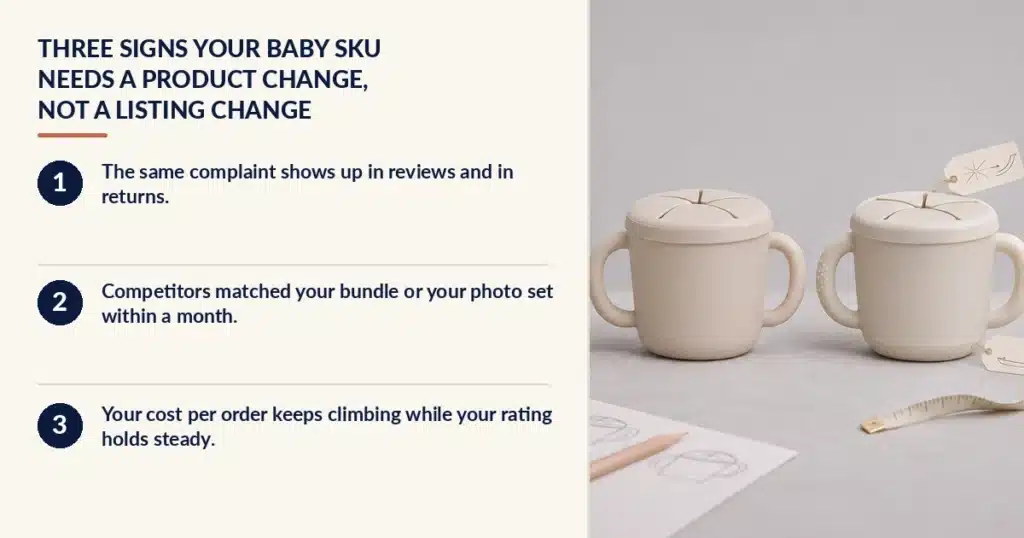
Three Signs Your Baby SKU Needs a Product Change, Not a Listing Change
Listing work is cheaper, so it’s the right first move. These three signs mean it has stopped being enough.
- The same complaint shows up in reviews and in returns. When both data sets point to the same friction, the product is the problem, and better copy won’t fix it.
- Competitors matched your bundle or your photo set within a month. Anything a competitor can copy in weeks isn’t differentiation; it’s a head start.
- Your cost per order keeps climbing while your rating holds steady. You’re buying volume the product isn’t earning on its own.
Any one of these justifies pricing out a design change. All three mean you’re already paying for one, in ad spend instead of tooling.
How Gembah Helps Turn a Me-Too SKU Into Your Own Product
Research and ideation find the gap worth building into, using your own review and return data rather than a category report. Our design and engineering team turns that gap into a manufacturable change, with the tolerances and tooling implications worked out before anyone quotes it. Our sourcing and manufacturing team then places it with a factory whose compliance and certification requirements match your target markets. We run in-process quality control plus final product inspection and testing, so the improvement survives the run.
We also take the improved product through Market Validation and the Pre-Launch, Crowdfunding, and Launch stages, with crowdfunding where the product suits that route. The repositioning lands with the relaunch instead of trailing it by a quarter, which matters when you’re asking buyers to re-evaluate a SKU they’ve already seen. All of it runs through custom baby product development.
FAQs
How can I improve an existing baby product instead of selling another identical version?
Use your reviews and return reasons to find recurring friction, change the design to remove it, and re-certify before relisting. Pick one change rather than five, so you can tell whether it worked.
What counts as real baby product differentiation on Amazon?
A change a caregiver can feel in use—to materials, form, function, or the system around the product. Colors, bundles, packaging, and photography are marketing changes—a competitor sharing your mold can match all four.
Do I need to retest a baby product after a design change?
If it meets the material-change definition in 16 CFR 1107.2, yes, and 16 CFR 1107.23 sets what follows. Samples go to a third-party conformity assessment body, and the manufacturer has to issue a new Children’s Product Certificate, which it can’t do until the product meets the applicable rules. If you import the product, 16 CFR 1110.7(a) makes you the certifier, not your factory. Sourcing changes count, so a new supplier or a different component from your current supplier can trigger it.
Who helps established Amazon sellers develop custom baby products?
Industrial designers handle form, mechanical engineers handle structure and tolerances, sourcing agents find factories, and third-party labs run the testing. End-to-end development partners cover design, sourcing, and inspection together, which keeps a compliance question from bouncing between three vendors.
Is private-label improvement or custom development the better move?
Private-label improvement is faster and cheaper, but the factory’s existing tooling caps it. Custom development costs more and produces something only you can sell. Choose based on whether you intend to defend the SKU for years or harvest it.
How do I keep a competitor from copying my improved product?
Own the tooling and the design files, and improve something a competitor can’t order off a catalog. A change that requires your mold, your spec, or your companion part is far harder to match than one a factory can replicate for the next buyer.
What does it cost to differentiate an existing baby product?
Budget the product-side costs: design and engineering time, tooling changes or a new mold, samples, third-party retesting, and a new certificate. A materials or geometry change on existing tooling sits at the low end, and a new mold with full certification sits at the high end.
Compete on the Product, Not the Price
Competing on price against sellers who share your mold is a margin problem that gets worse every quarter. Change the product instead: find the friction in your own data, pick one of the four levers, budget the retesting, and come back with something the next copycat can’t order.
Ready to build the version competitors can’t copy? Start your product upgrade with Gembah.