Brands treat reducing product returns as a logistics problem, when it’s usually a design problem with a paper trail. The National Retail Federation and Happy Returns put 2025 returns at $849.9 billion, or 15.8% of annual retail sales, with online returns running 19.3% of online sales in research released October 15, 2025. For a multi-SKU seller, that’s a number with your name on part of it.
Most brands read returns as a cost line, reconcile the refunds, and move on. The reason codes attached to those refunds are the closest thing you’ll get to free engineering feedback from real customers using your product in real homes. Gembah works that data back into product design for exactly that reason. Want help turning your return data into a fixed next version? Talk to a Gembah design expert.
How do you reduce product returns?
Reducing product returns means reading them as defect data, in four steps:
- Sort each return into an expectation gap, a fit-and-function failure, or a true defect.
- Segment by SKU, reason code, date code, and batch to find the pattern.
- Change one variable so you can tell what worked.
- Verify on pre-production prototypes before you commit to the full run.
Also Read
- Design for Manufacturing: DFM Principles and Best Practices
- Product Design and Development for Amazon Sellers
- What Is a Tech Pack?
Summary
Return reasons are free defect data. Sort them into expectation gaps, fit-and-function problems, and true defects, because each one has a different fix. Only the middle bucket justifies new tooling, and you confirm the fix on pre-production prototypes before the full run.
Key Takeaways
- Returns are defect analysis you already paid for, and most of that data never makes it into the design file.
- Three buckets, three different fixes: expectation gaps, fit-and-function failures, and true defects.
- A single angry review is an anecdote. Patterns need volume, date codes, and batch data.
- Not every return is a design problem, and fixing the listing is often the cheaper win.
- Verify the fix on pre-production prototypes before you commit tooling to version two.
Table of Contents
- Returns are defect analysis you already paid for
- Reducing product returns starts by sorting the reasons into three buckets
- Product defect analysis: find the pattern, not the anecdote
- Turn findings into design improvements you can tool
- Fix the listing gaps too, because not every return is a defect
- Verify the fix before the next full run
- Myth vs. Reality
- Three Return Reasons That Are Really Design Problems
- How Gembah Helps Close the Loop Between Returns and the Next Version
- FAQs
- Make Version Two Earn Its Tooling
Returns are defect analysis you already paid for
A paid QA program gives you a few hundred units under controlled conditions. Your returns give you every unit that failed in an actual kitchen, car, or garage, with a customer-written note about what went wrong. The sample size is larger, and the conditions are real, which is the combination engineering teams normally pay a lab to approximate.
Almost nobody uses that data, and the reason is structural, not laziness. Return reasons live in a customer service or operations spreadsheet, measured as refund dollars and resolution time. Whoever specs version two sits in a different conversation entirely, usually working from a competitive review and a margin target. Nobody owns the handoff, so the most useful product feedback your company generates dies in a tab nobody opens.
Reducing product returns starts by sorting the reasons into three buckets
|
Bucket |
What happened |
Where the fix lives |
Cost |
|---|---|---|---|
|
Expectation gap |
The product worked; the listing oversold it or underexplained it |
Content: photos, sizing, scale references, what’s in the box |
Lowest; no tooling |
|
Fit and function |
The product works as designed, but the design is wrong for how people use it |
Design: dimensions, materials, tolerances, interface |
Moderate to high; may need tooling |
|
True defect |
The product failed against its own spec |
Process or supplier: inspection, materials, workmanship |
Varies; often a factory conversation |
Save that table and use it on your next returns review. Only the middle bucket earns new tooling, and mislabeling bucket one as bucket two is the most common way brands spend real money on the wrong fix. A sizing complaint that a better scale photo would have prevented doesn’t need a new mold, and a mold won’t fix it.
How can product design changes reduce customer returns?
Design changes cut returns when they remove the specific friction the return reasons name: sizing and fit, assembly difficulty, durability at a known stress point, or a use case the product doesn’t support. The sequence is classify, find the pattern, change one variable, then verify on pre-production prototypes. Changing three things at once means you won’t know which one worked, and you’ll carry the cost of all three into version two.
Product defect analysis: find the pattern, not the anecdote
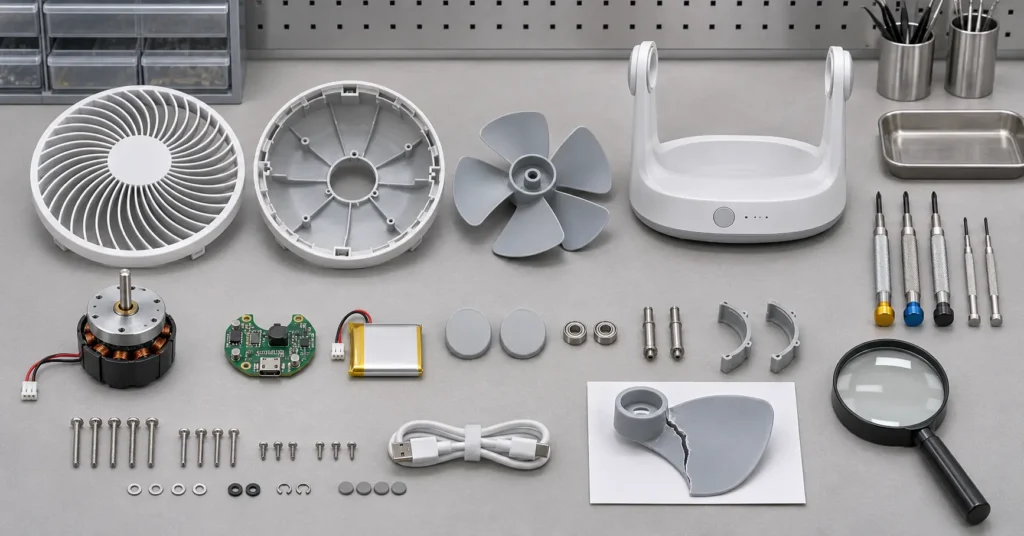
Pull returns by SKU and reason code, then segment them by date code, batch, and production run. A failure rate that looks like a flat 4% across a year often turns out to be 11% on two batches and almost nothing on the rest, which points at the process instead of the design. Those are different problems with different owners.
Then open the units. The reason field records what the customer believed, not what failed, and “doesn’t work” covers a cracked housing, a dead battery contact, and a misread instruction equally well. Tear down returned stock and look for repetition: failure at the same joint, the same component, the same point in the use cycle. One cracked hinge is an anecdote. Nine cracked hinges in the same place make a spec. When you can’t be on the floor yourself, remote quality control can close the loop between what you found and what the factory changes.
Turn findings into design improvements you can tool
A failure pattern becomes useful when it turns into a specific change: a thicker wall section at the stress point, a different resin, a tighter tolerance on a mating part, or a fastener that doesn’t back out under vibration. Write the change into the tech pack with a revision number, because a fix agreed on a call and never documented won’t survive the handoff to the factory.
Cost depends almost entirely on whether the change touches the mold. Material swaps, surface finishes, fasteners, packaging, and instructions are usually cheap on existing tooling. Wall thickness, draft angles, and anything that moves a parting line often mean a tooling modification or a new mold, so get a quote on the tooling change before you commit to the design change.
Sitting on return data you haven’t turned into a spec? Get a Gembah engineering review.
Fix the listing gaps too, because not every return is a defect
The fastest return reduction available usually costs nothing in tooling. Add a sizing chart with real measurements, put a human hand or a common object in one photo for scale, state plainly whether the product needs assembly and how long it takes, and list exactly what’s in the box.
Expectation-gap returns are also the ones most likely to bring a one-star review along with them, because the customer feels misled rather than unlucky. Fixing the content protects the rating and the margin at the same time, and it takes an afternoon.
Verify the fix before the next full run
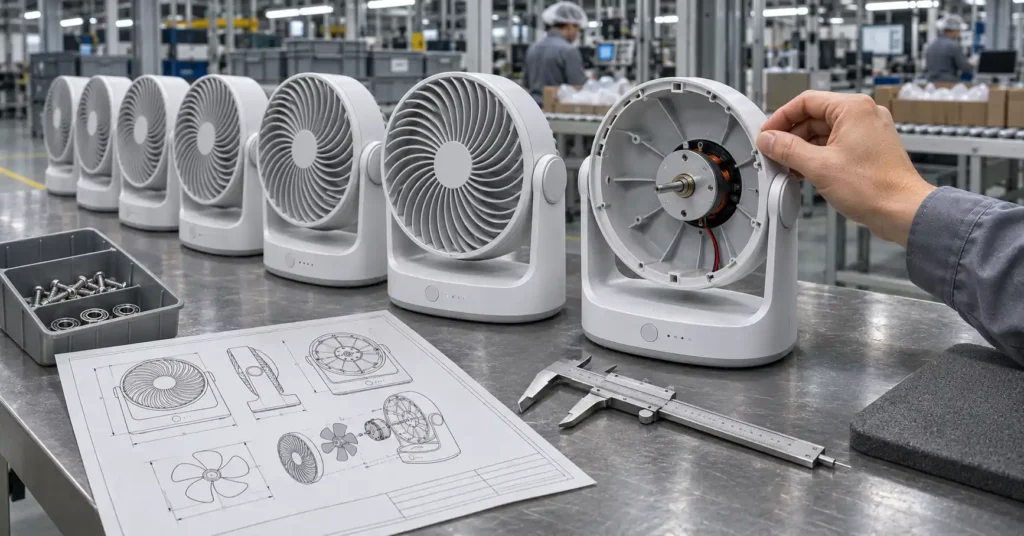
A change that works on a sample hasn’t proven itself yet. Run the revised design as pre-production prototypes in the final materials and processes, inspect against the updated spec rather than the old one, and confirm the original failure mode is actually gone before the full run. If the fix was a process change rather than a design change, check that it holds across operators and shifts and not just on the first few units.
Build the verification into your launch plan rather than bolting it on. New product introduction gives you the structure for it, and verifying on pre-production prototypes either proves a fix or lets it fail quietly, at a price you can still afford.
Who can help fix recurring defects in an existing product?
Four options, each solving a different problem. A design engineer finds the root cause when the failure traces to the drawing. An inspection firm catches process failures and batch variation without changing the design. A new supplier helps when the factory can’t hold the spec you’ve already written. An end-to-end development partner covers the case where the fix spans design and manufacturing, which is most cases where the same defect keeps returning after a supposed correction.
Myth vs. Reality
Myth: “Our return rate is just the category average.”
Reality: The average hides which of your returns were preventable, and the reason codes tell you which ones.
Three Return Reasons That Are Really Design Problems
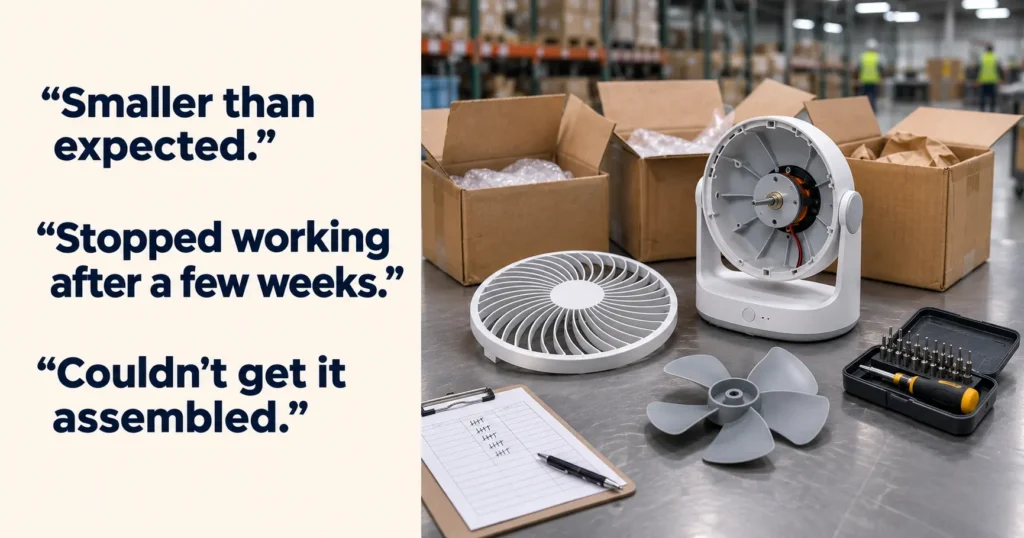
Some return reasons look like customer error, but they’re really design problems. These three come back as design work almost every time.
- “Smaller than expected.” Sometimes a photo problem, but when it repeats on a product people buy for a known space, the dimension is wrong for the job.
- “Stopped working after a few weeks.” A durability failure at a predictable stress point, and the teardown usually finds the same joint or component every time.
- “Couldn’t get it assembled.” Instructions help, but a part that only goes together one non-obvious way is a design that assumed too much.
Sort these out of your returns first. They’re the ones where a spec change pays for itself on version two.
How Gembah Helps Close the Loop Between Returns and the Next Version
Our design and engineering team turns a failure pattern into a spec change, with the tooling cost of that change known before you approve it. Our sourcing and manufacturing team takes the revised spec to a factory and runs in-process quality control plus final product inspection and testing, so the fix holds across the whole run instead of the first carton.
We also carry the next version through Market Validation and the Pre-Launch, Crowdfunding, and Launch stages, with crowdfunding where the product suits it. The relaunch then tests the improvement with real buyers instead of leaving the fix to speak for itself. The work connects back to product design, which is where return data should have been landing all along.
FAQs
How can product design changes reduce customer returns?
They work when the change removes the specific friction the return reasons name, such as sizing, assembly, durability at a known stress point, or an unsupported use case. Change one variable at a time so you can measure whether it worked.
What is a good return rate for a physical product?
Judge your rate against your own category and channel rather than a single benchmark, since rates vary widely among apparel, electronics, and hard goods, and online sells back harder than retail. The more useful target is the preventable share: what percentage of your returns trace to a cause you could have designed or described away.
How do I analyze return reasons to find a defect?
Pull returns by SKU and reason code, segment by date code, batch, and production run, and physically tear down returned units instead of trusting the reason field. Look for repetition at the same component, joint, or point in the use cycle.
Who can help fix recurring defects in an existing product?
A design engineer for root cause, an inspection firm for process and batch failures, a new supplier when the factory can’t hold spec, and an end-to-end partner when the fix spans design and manufacturing.
How many returns do I need before a pattern is real?
Enough that the cluster survives segmentation. If a failure concentrates in one batch, one date code, or one component across dozens of units rather than scattering evenly across your volume, you have a signal. A handful of complaints spread across a year’s production usually isn’t one.
Should I fix the product or the listing first?
Fix the listing first, because expectation-gap returns cost nothing in tooling and resolve in days. Then fix the design for the fit-and-function returns the content can’t address.
What does it cost to fix a defect in an existing product?
Budget engineering time for root cause and the revised spec, any tooling modification or new mold, samples, and re-inspection on the verification run. Changes that avoid the mold sit at the low end, and anything that moves a parting line or a wall section sits well above it.
Make Version Two Earn Its Tooling
Fewer preventable returns and a better-specified next version come from the same place: reading the data you already own. Sort the reasons, find the pattern, change one thing, and verify it on pre-production prototypes before the full run.

Ready to make your return data pay for itself? Fix your next version with Gembah.