Miguel Ferrer spent 32 years in Fire Rescue and EMS, including 26 years with Davie Fire Rescue in South Florida, where he retired as a Captain in February 2024. He has served as a paramedic, a Fire Rescue Captain, and a FEMA instructor, with more than 30 disaster deployments. He still works in disaster response, training, and incident management. He also runs Search Grounds™, maker of the 72-Hour Cuban Coffee Kit.
Our case study covers how the kit got built. This is our conversation with Miguel on the twenty years before it existed. Lightly edited for length and clarity.
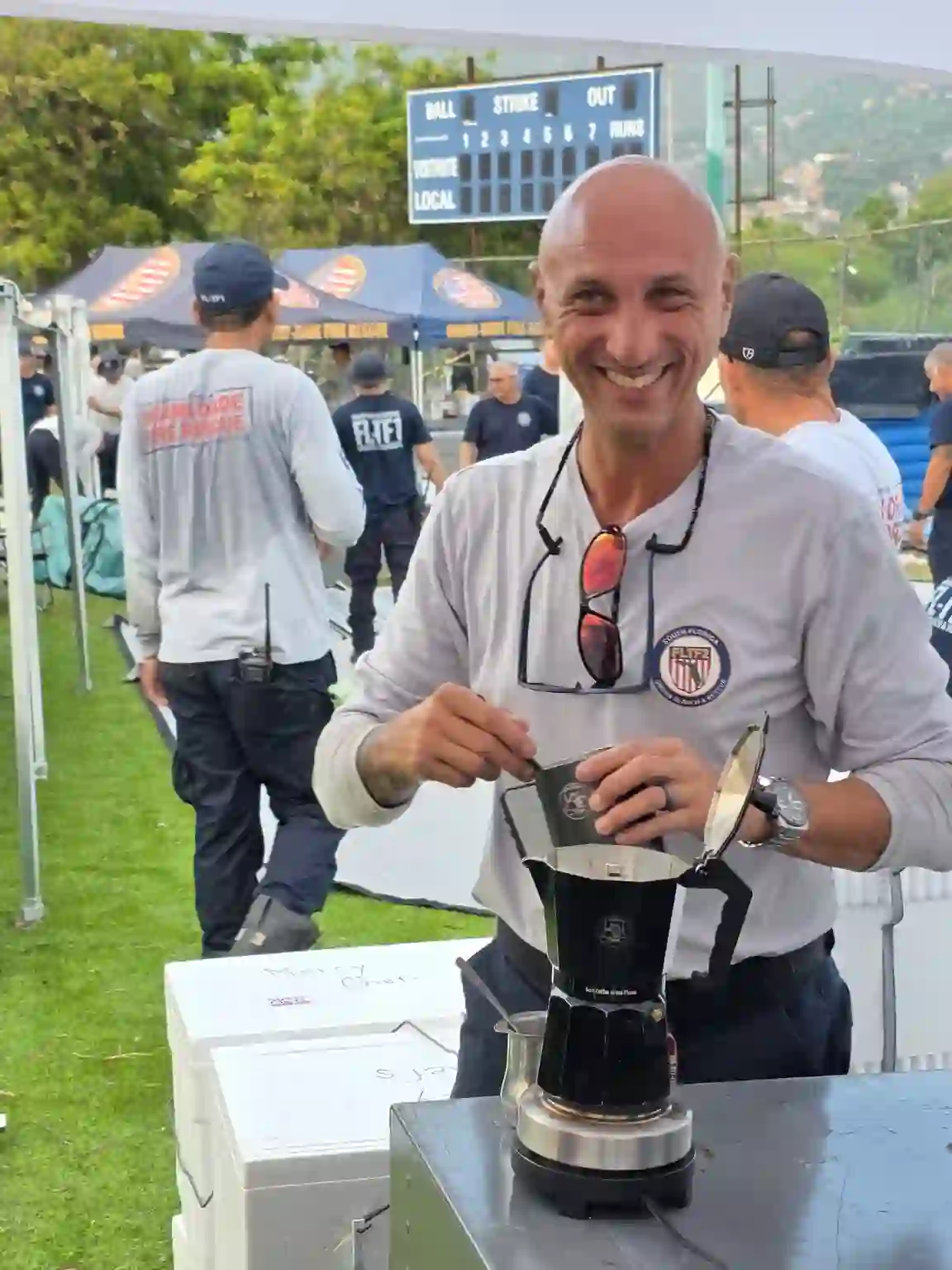
Miguel Ferrer: I’m not much of a salesman. My pitch is just what I lived through over the course of my career in urban search and rescue.
I created the Search Grounds™ 72-Hour Cuban Coffee Kit, and the inspiration for it came out of sleepless nights on deployments, earthquakes, building collapses, and hurricanes. The field-ready brew kit gives urban search and rescue personnel and first responders in austere environments a sense of normalcy. It does a lot more than provide a little shot of coffee.
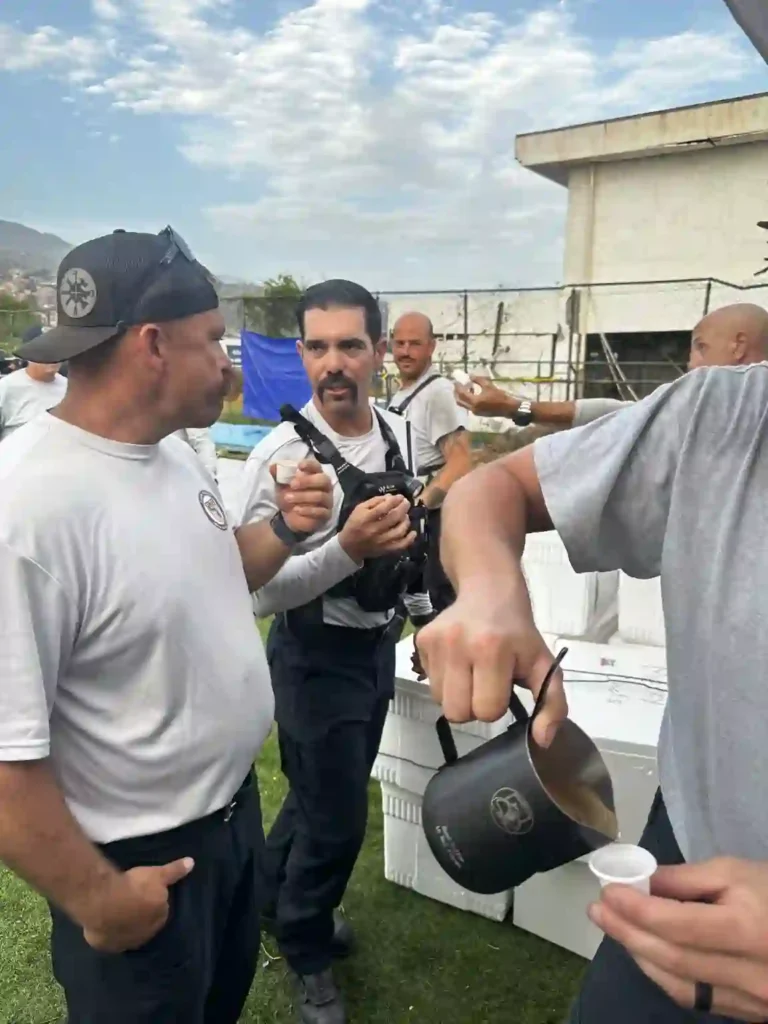
Miguel: It depended on what role I was in, but as a medical specialist, coffee was how I corralled cats. You have eighty-something Type A personalities on a federal deployment with a collapsed building behind them. Getting them to come to the medical tent is nearly impossible. So you get creative.
The coffee brought them to me. I could start evaluating somebody without putting a blood pressure cuff on them. Just watching them come over, I could see where they were at mentally. In those moments, that matters. These are life and death situations that people don’t always come back from the same.
Miguel: Yes, it built bridges. Every culture has some version of coffee, of cafecito. During a multi-state incident management training exercise in Texas, where I was serving as Medical Unit Leader, it became as simple as, “Hey, you need a coffee? Yeah. How many helicopters do you need?” That’s how those conversations started.
Miguel: During Hurricane Harvey, when huge parts of Texas were flooded, I was in Texas for two and a half weeks. We were eating out of broken-down gas stations, sleeping wherever we could find a spot. I slept under a truck once to get two hours. Real downtime is rare. So those few minutes with the cafecito made it worthwhile.
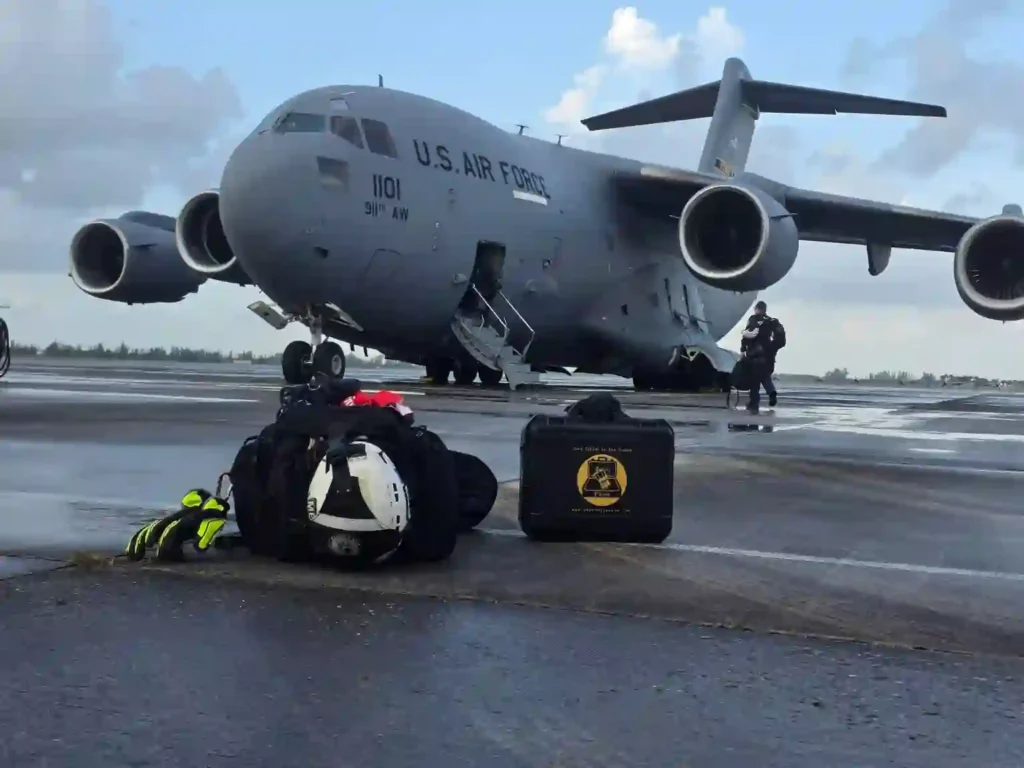
Miguel: Because I don’t make coffee. I have a bachelor’s degree in Disaster Management and an associate degree in Emergency Medical Services. I’m a Medical Specialist, an alternate Medical Unit Leader, a Liaison Officer, and I teach disaster medicine and Incident Command Systems. And I’m the coffee guy?
Miguel: The training. A Medical Specialist in Urban Search & Rescue goes through Medical Team Training, MTT, which focuses on disaster medicine and is for physicians and Medical Specialists. You’re learning how to do things surgeons typically do in a well-lit OR with fifteen people helping, and we’re having to do them with a headlight, in a hole.
Our mantra in that training was, “Bringing Good Medicine to Bad Places.” Which then became, Miguel brings good coffee to bad places. I’ve been hearing that for twenty years. Eventually it became the Search Grounds™ slogan, “Bringing Good Coffee to Bad Places™.” I didn’t come up with it, I just finally put it on a product.
Miguel: I retired from Davie Fire Rescue in February 2024 after 26 years with the department and 32 years in Fire Rescue and EMS. I’d planned it out, I was going to go be a chief somewhere. At the time, my brother was terminally ill, and I lost him later that August. That period put things in perspective in a way planning doesn’t.
I sat there thinking, you spent 32 years around disasters and death. People call you when they’re in the worst moment of their life. Nobody ever calls to ask how you’re doing. That accumulates. It’s an injury you don’t notice you’re taking.
I knew I wasn’t going to sit still. I realized I could go do incident management anywhere, but all that brings is more sadness, because something terrible has to happen before I get activated. Whereas this thing I’d been doing for twenty years anyway made people smile. I’ve never handed somebody a cup of coffee and had them be mean to me. Hasn’t happened yet.
It does. It’s how you get to say, “Hey, you seem a little off today. Is that you, or is it the site?” It starts a connection that can lead to deeper relationships and understanding.
Logistics would buy a piece of equipment, pull it out of its case, and throw the Pelican away. I’d say no, no, no, I’m taking that seventy dollar case. Then I’d put my coffee pot and my stuff in it. Everything in my kit now, I’ve been running for twenty years.
Failure, and then immediately: how do I even start this? I had an idea and I could buy the parts, but it’s more complicated than you think. I hit a wall. I can run a disaster. Red stuff, wet stuff, put the wet stuff on the red stuff. The business side was never something I pictured myself in.
The money was the other piece. It’s not cheap to start a company or build a product. I kept thinking I’m about to throw this idea away. That eased once I started talking to people who clearly got it, and once the product started taking shape I thought, okay, I have something.
Yes, it did! A good friend of mine says his friend’s son plays baseball and likes Cuban coffee, and asked if it would be ok to give him a kit. I said, sure. Later he tells me he gave it to a kid named Justin. I said, what school does Justin play for? He goes, no, he’s a pitcher, and he starts stumbling. I’m thinking he’s about to tell me some backwards thing. He goes, no, no, he plays for a team called the Pirates.
I said, what school is that.
My buddy doesn’t know baseball at all. That’s the only reason the story is funny. The kit went out, the guy loved it, tagged me. Then a kit made its way to the Marlins, too. They’re in both clubhouses now, and one of the coaches makes the coffee for everybody.
On an overlanding trip, out in the middle of nowhere, that’s exactly the situation the kit is for. Camping. Little league. Anywhere outdoors, honestly. It’s also made its way into US&R and first-responder training, emergency-management events, and other public-safety settings. That’s the direction.
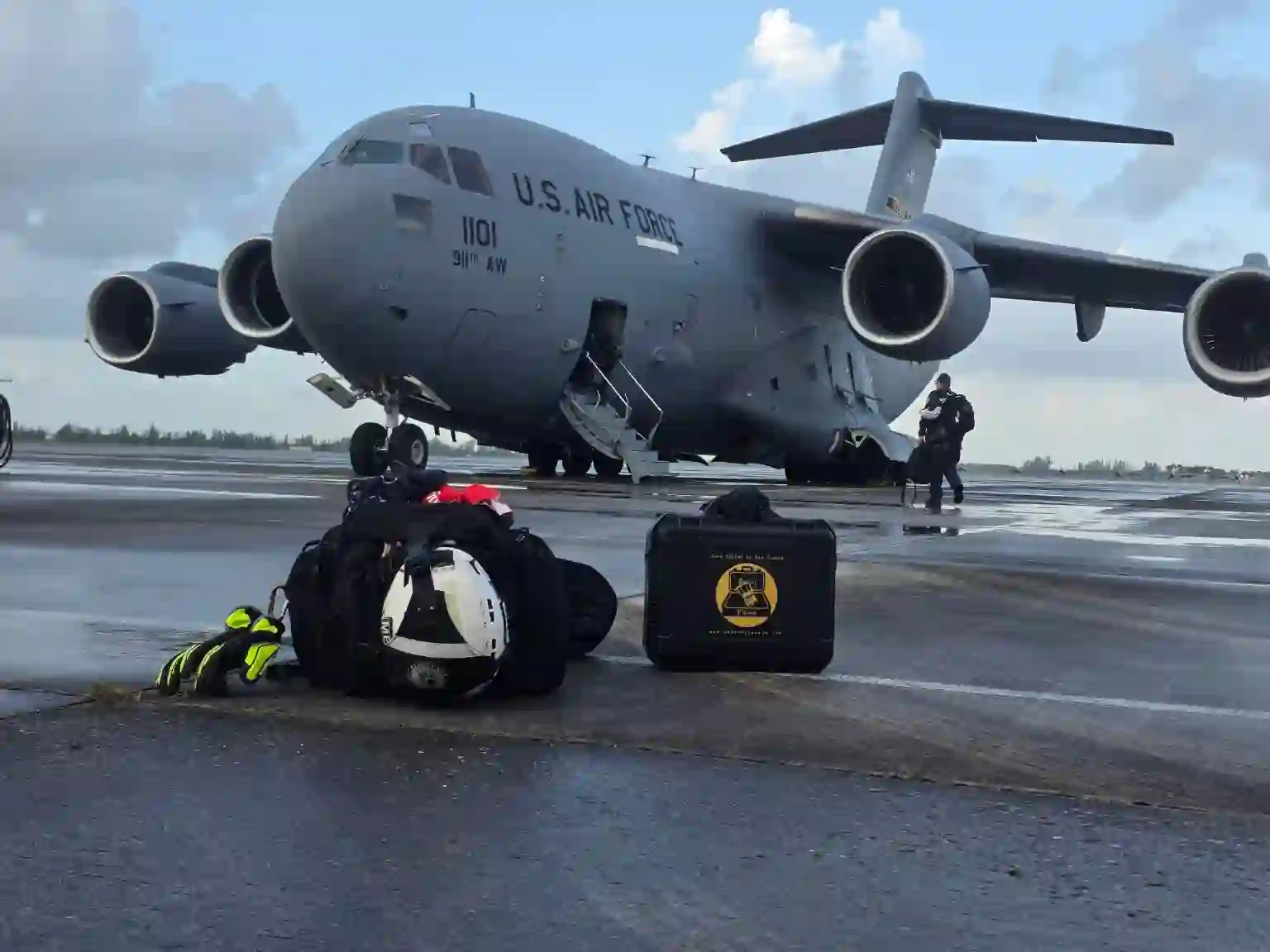
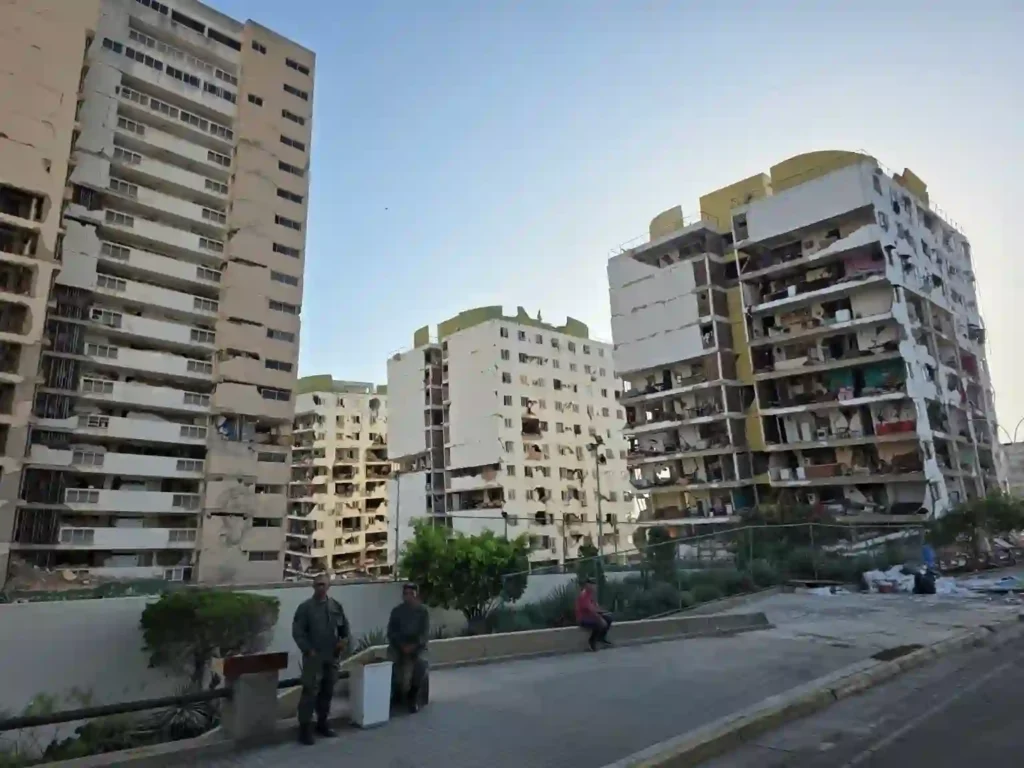
And I’m still doing the work myself. In 2026, I deployed to Venezuela with Florida Task Force 2 as a Medical Specialist following the earthquakes, working in the same kind of austere environment that inspired Search Grounds in the first place.
We have USPTO trademark protection on the brand and the slogan, and we’ve received a Notice of Allowance on the kit’s design patent. We’ve expanded on the website and Amazon, launched a coffee subscription, and built out an affiliate network. Most recently, we brought fiber laser engraving in house so we can do agency logos, task force branding, and personalization.
But what I’m proudest of is that the kits are being used by the people they were built for. Firefighters, urban search and rescue, emergency managers, law enforcement, and disaster responders all over the country.
Sizes. I have to address the masses, not the classes. Right now, I’m exploring a 12-cup version of the kit that can serve a larger group while keeping the same field-ready concept.
And the far goal, I want one of my kits in the worst place on Earth. Top of Everest if I can get it there.
If you have the drive, don’t wait. Time doesn’t stand still for anybody. If you have a dream and you don’t know how to make it real, it doesn’t hurt to look and ask. That’s all I did.
Life is a gamble. You don’t know if you will wake up tomorrow. So put one foot in front of the other. Your only obstacle is usually the one you put in front of yourself, and usually it’s up here in your mind.
What would you tell somebody sitting where you were with just an idea, unsure of how to start a business?
Miguel Ferrer retired as a Captain from Davie Fire Rescue in February 2024 after 32 years in Fire Rescue and EMS, with no product or e-commerce experience. The domain expertise was the asset: twenty years of refining the kit in the field meant the product specification already existed, it just wasn’t written down. The business mechanics were learnable and the technical gaps were outsourced.
Search Grounds™ was designed for Urban Search & Rescue, but the kits have since made their way into federal and local law enforcement, fire departments, incident management teams, water rescue teams, training environments, camping and overlanding, and even professional sports.
Search Grounds holds USPTO trademark protection on both the brand name and its slogan, and has received a Notice of Allowance on the design patent for the kit itself. For products assembled from sourced components rather than invented from scratch, the defensible assets are usually the brand and the physical configuration, not the underlying technology.
Have something your crew keeps asking you to build? Gembah handles design, sourcing, and manufacturing for founders bringing physical products to market.
Start Your Journey Today