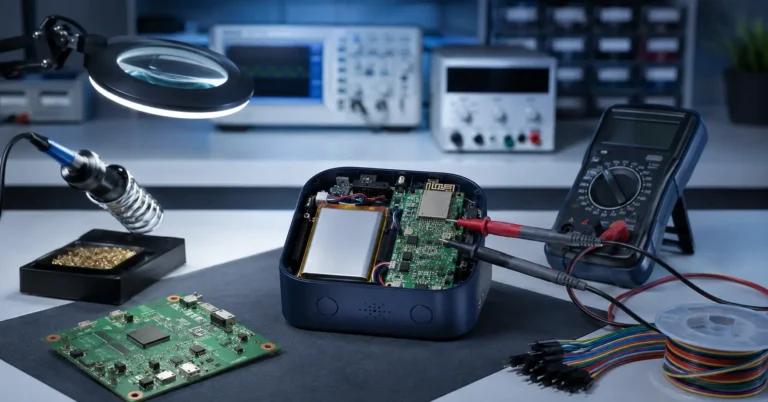
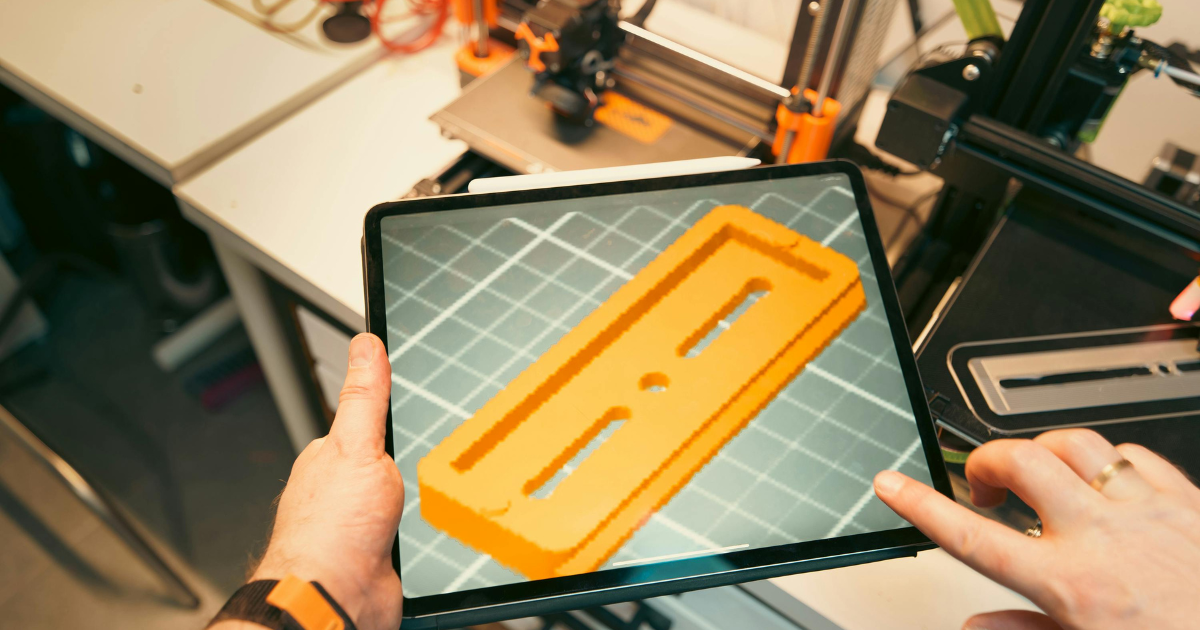
Product prototype development is where an idea starts getting real. It is the stage where teams learn whether a concept can work, what needs to change, what customers actually respond to, and whether the product can move toward manufacturing without expensive surprises.
A prototype is not just a model. It is a decision-making tool. Done well, it helps you validate functionality, usability, manufacturability, cost, safety, and product-market fit before you commit to larger production costs.
Developing a strong product prototype is the bridge between your idea and a real product people can use and buy. Let’s look at what a product prototype is, why product prototype development matters, and clear steps to plan, build, test, and improve your prototype so you can move into production with confidence.
Smart teams use prototypes to reduce costly failures, speed up decision-making, and win investor trust before mass production. If your design process still feels like guesswork, it is time to evolve.
Gembah helps teams build real prototypes that drive results, from idea to factory floor. Talk to us, and let’s turn your product concept into a market-ready MVP.
Book a Product Development Session
TL;DR
Prototyping is not optional. It is your insurance policy, decision engine, and speed multiplier in modern product development. In this guide, you will learn how teams prototype smarter in 2026 using digital models, physical samples, user testing, design for manufacturing, and disciplined iteration. You will also learn how to choose the right prototype type, avoid common mistakes, manage budget, and move from prototype to production without losing control of quality or cost.
Key Points
- Prototypes are not mockups. They are functional tools that validate your product’s design, usability, manufacturability, cost, and market fit.
- Modern prototyping includes both digital and physical iterations. Smart teams simulate, test, and revise before committing to expensive tooling.
- 2026 prototyping trends focus on digital twins, additive manufacturing, AI-assisted design, sustainability, and hardware-software integration. Speed matters, but the best teams also improve quality and reduce rework.
- Skipping early prototypes leads to late-stage failures. Smart founders build lean MVPs early, test fast, and iterate with discipline.
- Prototypes are not just for internal use. They are proof points for investors, manufacturing partners, retailers, and early customers.
- Gembah connects you with world-class prototyping partners and guides you from design to production-ready execution.
Also Read:
What Is a Product Prototype?
A product prototype is an early working model of your product that shows how it looks, how it works, or both. It is not ready for full production yet. It is used to test ideas, find problems, collect feedback, and reduce risk before you spend money on tooling and manufacturing.
In product development, prototype development lets you move from an abstract idea to a real object, digital model, or working system you can test and improve. A good product prototype reduces risk, speeds up decision-making, and helps you prove your concept to investors, partners, manufacturers, and customers.
Why Prototyping Isn’t Optional in Today’s Product Development
The question “what is a prototype in design” has a clear answer: it is your product’s proof of concept, risk assessment tool, and communication bridge all rolled into one. Modern prototyping serves as the critical link between ideas and market-ready solutions, enabling teams to visualize concepts, test assumptions, and validate functionality before committing major resources.
Creating effective product prototypes helps surface design flaws and usability issues that might otherwise remain hidden until full-scale production. This early detection capability changes the entire development path, allowing teams to iterate based on real feedback and technical feasibility assessments. The result is clearer communication among stakeholders, designers, engineers, and investors, which aligns expectations and reduces costly misunderstandings.
Mitigate Risk Before Full-Scale Launch
The purpose of prototyping extends far beyond simple visualization. It is about intelligent risk management. Testing with prototypes reveals potential manufacturing challenges and helps confirm whether core functions perform as intended, minimizing the risk of post-launch failures.
This iterative approach allows for rapid experimentation and validation, which reduces the chance of costly late-stage changes. By surfacing problems early through systematic prototype builds, development teams avoid expensive mistakes, production delays, and reputational damage that can arise from launching unproven products.
Modern teams increasingly combine physical prototypes with simulation, digital twins, and additive manufacturing data. NIST notes that advanced informatics and AI for additive manufacturing can support process assurance and quality assurance during AM part fabrication. That makes prototyping more useful because teams can learn from both real-world testing and trusted production data.
What Kind of Prototype Do You Actually Need?
Not every prototype serves the same purpose. The right type depends on the question you are trying to answer.
- Proof-of-concept prototypes test whether the core idea can work.
- Looks-like prototypes test form, size, visual appeal, and perceived quality.
- Works-like prototypes test function and performance.
- Engineering prototypes test technical feasibility, components, materials, and tolerances.
- Pre-production prototypes help confirm readiness for manufacturing.
The mistake many teams make is building the wrong prototype at the wrong time. Good prototype development starts by defining what you need to learn first.
Investors and Stakeholders Demand Proof
Today’s investment landscape demands tangible evidence of product viability. A well-executed prototype product demonstrates that your concept moves beyond theoretical possibility into practical reality, making it significantly easier to secure buy-in and funding from investors or decision-makers.
Physical or digital prototypes provide concrete evidence of progress and capability, building credibility with stakeholders who need to evaluate multiple opportunities. These working models serve as compelling tools during pitches and presentations, helping communicate value propositions and differentiate from competitors in crowded markets.
Demonstrating a functional prototype reassures stakeholders about feasibility, market fit, and development readiness. This tangible proof accelerates decision-making and investment processes, particularly when coupled with clear documentation of prototype phases, testing results, and next-step manufacturing requirements.
How to Create a Product Prototype (Step-by-Step)
- Define the product requirements. Write down what your product must do, who it is for, key features, target price, and any safety or quality standards. This becomes the blueprint for your prototype development process. It matters because it prevents you from prototyping blind. If you do not understand the customer, the market, the likely margin structure, and the constraints around manufacturing, your prototype may answer the wrong questions and send the project in the wrong direction.
- Sketch and model your product idea. Create simple sketches and low-fidelity models to explore size, shape, and basic function. Use paper, foam, or simple 3D CAD models to quickly test different options before you build a full product prototype.
- Choose materials and manufacturing methods. Decide what materials you will use for your first functional prototype and how it will be made, such as 3D printing, CNC machining, laser cutting, sewing, electronics breadboarding, or simple hand-built parts. Match your choices to the final product as closely as your budget allows.
- Build a functional product prototype. Create a prototype that shows how the product will work in real life, not just how it looks. Focus on core functions first so you can test performance, durability, and user experience.
- Test the prototype with real users. Put the product prototype in front of users who match your target customer. Watch how they use it, collect feedback, and document issues with comfort, usability, reliability, setup, safety, and perceived value.
- Refine and iterate the prototype. Use test data to fix problems, adjust features, and improve the design. Repeat the prototype development cycle until you have a version that meets your product requirements and is ready for production planning.
- Plan the path from prototype to production. Once your product prototype works, work with manufacturers to choose final materials, tooling, and production processes. Lock in drawings, tolerances, test plans, and quality standards so the final product matches your best prototype.
Major Prototyping Trends Reshaping 2026
The landscape of prototype design tools and methodologies continues evolving rapidly. The strongest trend is not one tool. It is the combination of digital modeling, additive manufacturing, data-driven testing, and faster feedback loops. Teams can now test more ideas before tooling, compare materials earlier, and capture better data from each build.
NIST describes additive manufacturing as a digital manufacturing process that relies on data for decision-making through development lifecycles. That matters for prototyping because digital files, sensor data, test results, and material performance can all become part of a repeatable product development record.
Digital twins are also becoming more important in advanced manufacturing. NIST explains that digital twins help manufacturers represent, diagnose, predict, and optimize operations, while also noting that standards and implementation challenges remain. For product teams, this means virtual models can improve learning, but physical validation still matters.
Growing Focus on Sustainability
Environmental consciousness has moved from nice-to-have to a core product development consideration. Teams now explore renewable, recycled, repairable, and lower-waste materials earlier in the prototype phase so they can understand cost, performance, durability, and customer value before production.
The shift toward sustainability reflects broader market demands, regulatory pressure, and cost control. Prototype decisions influence final material choices, packaging, tooling, scrap, repairability, and end-of-life options. Testing those choices early helps teams avoid sustainability claims they cannot support later.
Sustainable prototyping does not mean choosing the greenest-sounding material by default. It means testing whether the material performs, whether it can be sourced consistently, whether it passes safety and compliance requirements, and whether it supports the product’s cost target.
Prototype Use Cases: How Teams Learn Faster
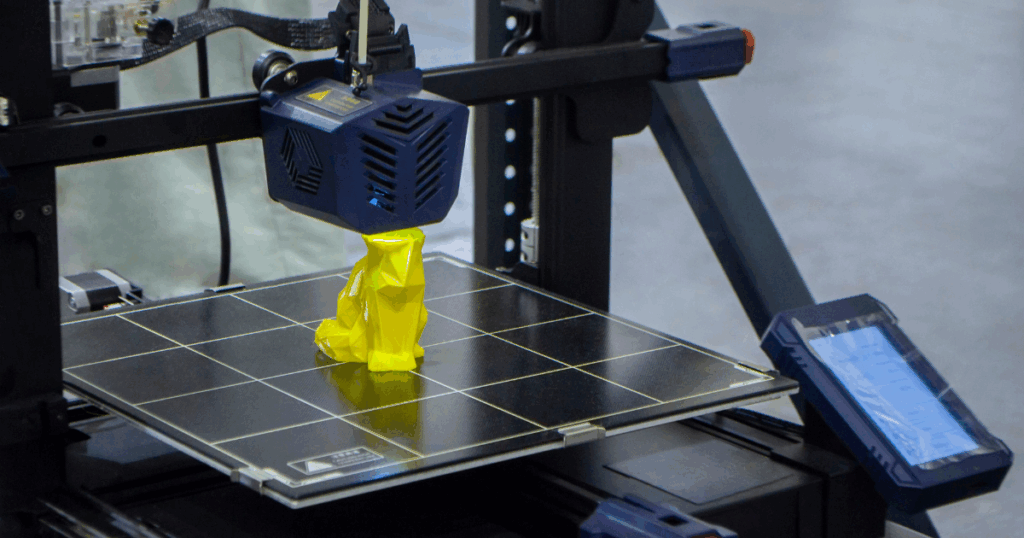
Strategic prototyping works because it turns assumptions into tests. Instead of debating whether a product will work, teams build the right prototype and collect evidence. The examples below show how different industries use prototypes to reduce uncertainty before larger investment.
Medical Devices: Validating Safety, Use, and Documentation
Medical device teams use prototypes to evaluate usability, function, risk, materials, and design inputs before moving deeper into regulated development. For finished medical devices, the FDA’s Quality Management System Regulation became effective on February 2, 2026, and incorporates ISO 13485:2016 by reference. That makes documentation, design and development controls, validation, and quality planning critical from the start.
For regulated products, a prototype is not just an engineering sample. It is part of a traceable learning process that can support design decisions, risk management, verification, validation, and eventual manufacturing controls.
Industrial Hardware: Reducing Downtime and Production Risk
Industrial hardware teams often use prototypes to test durability, assembly, fit, ergonomics, and serviceability under real operating conditions. A fixture, bracket, enclosure, conveyor component, or machine part may need repeated cycles before the design is ready for production.
Additive manufacturing, CNC machining, and hybrid fabrication can help industrial teams test parts faster than traditional tooling allows. The goal is not just a better prototype. It is a faster path to a reliable production process.
Consumer Products: Testing Value Before Tooling
Consumer product teams use prototypes to test comfort, size, usability, setup, packaging, perceived value, and purchase intent. This is especially important when the final product requires custom molds, electronics, textiles, or supplier coordination across several components.
A simple works-like model can reveal whether the core benefit is strong enough. A looks-like model can reveal whether the customer understands the product. A pre-production prototype can reveal whether the factory can repeat the design at scale. Each prototype should answer a specific question before the team spends more money.
Core Best Practices for Effective Prototype Design
Successful prototype product design follows proven methods that maximize learning while minimizing waste. The most effective approaches align prototyping techniques with specific project objectives, ensuring each iteration delivers meaningful insights that drive product development forward.
Clearly Define Purpose & Scope
Establishing clear objectives for each prototype, whether validating form, function, user experience, cost, risk, or manufacturability, ensures focused and efficient development. The purpose of a prototype must be explicitly defined before any design or fabrication work begins.
Defining scope helps allocate resources appropriately while preventing unnecessary complexity that can cloud validation results. Development teams should align on what specific questions each prototype needs to answer and what critical decisions it should enable before moving to the next development phase.
This clarity becomes particularly important when determining how to build a prototype that serves multiple stakeholder needs. Early-stage prototypes may prioritize quick idea validation using low-fidelity models, while later iterations require high-fidelity representations that accurately reflect full functionality and appearance.
Leverage Collaboration and End-User Feedback
Modern prototyping increasingly emphasizes direct involvement from end users, engineers, designers, sourcing partners, and manufacturing experts. Users can reveal behavior and friction that internal teams miss. Engineers can identify technical risks. Manufacturers can flag cost and tooling issues before they become expensive.
Internal feedback culture also plays an important role. Regular team critique sessions help identify potential issues before they become costly problems. The best feedback loops are specific, documented, and tied to decisions: keep, change, test again, or move forward.
For connected products, teams should also test across hardware, firmware, apps, cloud services, and user onboarding. A prototype that works only in a controlled demo may still fail when real users set it up at home.
Material and Process Selection Aligns with Testing Goals
Choosing appropriate materials and prototyping methods that match intended testing objectives remains critical for generating meaningful results. Early-stage prototypes may use low-cost, easily modifiable materials that enable rapid iteration, while later versions should use materials and processes that mirror production realities.
Prototype testing should be treated as a structured learning loop, not a box to check. Alpha testing helps you expose design and functionality weaknesses early. Beta testing helps you understand how real users experience the product and what must change before production.
The goal is not to prove your original idea was perfect. The goal is to make the product better before mistakes get more expensive.
The selection of specific prototyping tools and techniques, whether 3D printing, CNC machining, sewing, electronics breadboarding, hand fabrication, or digital simulation, should be based on required speed, fidelity level, and relevance to the final product specification.
This strategic approach ensures that each prototype delivers maximum value for its intended purpose while building toward production-ready specifications. Teams must balance speed and cost against the need for accurate representation of final product characteristics.
Design for Manufacturing (DfM) Integration
Integrating DfM principles into prototyping phases ensures that designs remain feasible, cost-effective, and scalable for mass production. Prototypes should account for assembly requirements, material constraints, tolerances, tooling, packaging, inspection methods, and supplier capabilities to avoid surprises during manufacturing transfer.
Early collaboration with manufacturing partners or engineers helps identify potential production issues and streamlines the transition from prototype to scalable manufacturing. This integration prevents costly redesigns and ensures that innovative concepts remain manufacturable at commercial volumes.
DfM also protects margin. A small change to part count, fastener choice, wall thickness, assembly sequence, or material can have a major effect on tooling cost, labor time, defect rates, and production yield.
Navigating Common Prototyping Pitfalls
Even well-intentioned prototyping efforts can encounter challenges that undermine their effectiveness. Understanding these common pitfalls helps development teams maintain realistic expectations while implementing strategies to minimize risks and maximize learning opportunities.
Over-Engineering Early Prototypes
Many teams fall into the trap of creating overly complex early prototypes that consume excessive resources without delivering proportional insights. Early-stage models should focus on validating core assumptions rather than perfecting every detail, allowing for rapid iteration and learning cycles.
The temptation to build production-quality prototypes too early often stems from stakeholder pressure or perfectionist tendencies. However, this approach typically leads to slower feedback loops and higher costs without necessarily improving decision-making quality. Maintaining discipline around prototype fidelity levels ensures resources are allocated efficiently across development phases.
Insufficient User Testing Integration
Prototypes developed in isolation from end users frequently miss critical usability issues and market-fit problems that become expensive to address later. The most effective prototyping processes incorporate user feedback at multiple stages, enabling teams to validate assumptions and adjust directions before committing to advanced development work.
Scheduling regular user testing sessions throughout prototyping phases, rather than treating testing as a final validation step, helps surface issues when they are easier and less expensive to address. This iterative approach reduces the risk of fundamental design flaws making it through to production phases.
Prototype testing should be treated as a structured learning loop, not a box to check. Alpha testing helps you expose design and functionality weaknesses early. Beta testing helps you understand how real users experience the product and what must change before production.
The goal is not to prove your original idea was perfect. The goal is to make the product better before mistakes get more expensive.
Inadequate Documentation and Knowledge Transfer
Poor documentation practices during prototyping can lead to lost insights and repeated mistakes as projects transition between teams or development phases. Maintaining clear records of design decisions, test results, materials, suppliers, versions, and lessons learned ensures that valuable knowledge accumulates rather than disappears with team changes.
Establishing standardized documentation processes early in prototyping phases prevents information gaps that can undermine later development efforts. This includes capturing not just what worked, but also what did not work and why, providing valuable guidance for future iterations and related projects.
Can I Hire a Company to Create My Prototype?
Yes, and in many cases, that is the smarter move. Strong prototype development requires more than CAD or fabrication. It requires market thinking, design judgment, engineering discipline, sourcing knowledge, and an understanding of how prototype decisions affect tooling and production.
The best prototype partners do not just help you build something that looks real. They help you learn what needs to happen next to make the product more viable, more manufacturable, and more likely to succeed in market.
Prototyping Budget & Cost Management
Understanding prototype development costs enables better resource allocation and project planning. Prototype costs vary widely based on complexity, fidelity, material choice, electronics, tooling, finishing, testing, and the number of iterations required. A simple proof-of-concept may be inexpensive. A production-like engineering prototype for a regulated or complex product can require a much larger budget.
Understand Core Cost Drivers
Prototype costs are influenced by complexity, material choice, fidelity level, and the number of iterations required. Labor expenses, specialized tooling requirements, electronics, embedded software, surface finishing, certification planning, and custom components can significantly affect overall budget allocation. Recognizing which aspects contribute most to total cost helps prioritize spending and avoid unnecessary expenses.
Cost control starts with the question each prototype must answer. If the goal is to test hand feel, you may not need production-grade electronics. If the goal is to test a snap fit, surface finish may not matter. If the goal is to validate a manufacturing process, the material and process should be much closer to production intent.
Optimize Through Early Design Validation
Validating key assumptions and design choices with early, low-cost prototypes prevents costly rework in later development stages. Virtual prototyping, simulation, and rough physical builds can help teams eliminate weak concepts before investing in higher-fidelity engineering models.
The financial impact of strategic prototyping extends beyond direct prototype cost. A good prototype can prevent tooling mistakes, reduce rework, shorten decision cycles, and help teams avoid overbuilding features customers do not value.
Iterative feedback loops and rapid testing help identify critical flaws before investing in high-fidelity or production-grade prototypes. This approach enables teams to catch and correct design issues before manufacturing, resulting in faster development cycles and lower risk than a linear build-once approach.
Prototyping Across Industries: When to Prototype What
Different industries require tailored approaches to prototype product design, reflecting unique regulatory requirements, user expectations, and technical constraints. Understanding these sector-specific needs ensures that prototyping efforts align with industry standards and market realities.
Consumer Electronics & IoT
Prototyping in consumer electronics focuses on both physical form and integrated digital functionality, including connectivity, user interface design, firmware, sensors, battery life, thermal performance, and hardware-software integration.
Fast-moving consumer markets demand accelerated prototyping cycles to stay ahead of trends and respond effectively to user feedback. Iterative models test ergonomics, user interactions, and system integration before committing to production tooling and manufacturing investments.
The convergence of physical and digital elements in consumer electronics requires prototypes that accurately represent both hardware performance and software functionality. This comprehensive approach ensures that final products meet user expectations for seamless, intuitive experiences.
MedTech & Regulated Devices
Medical device prototyping must address safety, usability, risk, documentation, and compliance from the earliest development stages. The FDA’s QMSR is now effective and aligns U.S. medical device quality system requirements more closely with ISO 13485:2016, so design and development planning should be treated as part of the quality system, not an afterthought.
Design documentation, verification, validation, risk management, and traceability remain critical throughout prototype phases. Functional prototypes may support usability testing, engineering verification, clinical input, regulatory planning, and validation against product requirements.
For regulated products, prototype decisions should be documented carefully because they can affect design history, supplier choices, component selection, and future manufacturing controls.
Industrial Hardware & Machinery
Prototyping for industrial applications emphasizes durability, performance under stress, maintainability, service access, and compatibility with existing systems and workflows. Prototypes may include scaled models, functional assemblies, fixtures, jigs, or specialized test rigs to validate mechanical, electrical, and operational parameters under realistic conditions.
The focus centers on ensuring reliability, maintainability, and manufacturability in demanding industrial environments. For industrial products, the prototype should help answer whether the product can perform repeatedly, survive the environment, be serviced safely, and be manufactured at the required cost and volume.
This type of prototyping must balance innovation with proven manufacturing processes and operational requirements. A design that works once in a lab still needs to work repeatedly in the field.
Learn:
More About Our Product Prototyping Solutions
End-to-End Product Prototyping Solutions.
How Gembah Supports Best-in-Class Prototyping
Gembah’s comprehensive platform addresses the complex challenges of modern prototype product design through expert guidance and access to a vetted network of designers, engineers, product experts, and factories. This ecosystem enables clients to navigate every stage of the prototyping process with confidence and efficiency.
The platform offers specialized prototyping services including concept refinement, 3D modeling and technical drawings, prototype planning, physical prototype builds, virtual prototypes, and production-readiness support. Gembah helps teams connect design decisions to sourcing, costing, tooling, and manufacturing realities earlier in the process.
Gembah’s approach emphasizes strategic alignment between prototyping objectives and business goals. The platform supports material selection, DfM integration, and iterative design processes that help teams move efficiently from initial concepts to production-ready prototypes. Collaborative tools facilitate communication, documentation, and feedback collection, streamlining development cycles while maintaining quality standards.
Recent client successes demonstrate this comprehensive approach in action. Gembah partnered with Kate Bray and B to develop a women’s health device that provides cramp relief, managing expert guidance on product development, electrical engineering, and compliance planning.
By leveraging industry expertise and scalable manufacturing partnerships, Gembah helps clients achieve high-quality prototypes that align with business objectives while minimizing development risks and optimizing resource allocation.
FAQs
What is product prototype development? Product prototype development is the process of turning an idea into a testable model so you can validate design, function, usability, cost, manufacturability, and customer value before production.
How many prototypes do I need before manufacturing? Most products need more than one. A typical path includes a proof-of-concept prototype, a looks-like or works-like prototype, an engineering prototype, and a pre-production prototype before tooling or mass production.
What is the difference between a prototype and an MVP? A prototype is built to learn whether the product can work and what should change. An MVP is a minimum viable product released to test market demand with real customers.
Can I prototype without a manufacturer? Yes, early prototypes can often be made with sketches, CAD, foam models, 3D printing, electronics kits, or small fabrication shops. But before production, you should involve manufacturing partners so the design can be made at scale.
When should I talk to a prototyping company? Talk to a prototyping company when you need engineering support, material guidance, production-like samples, user testing help, or a plan that connects your prototype to manufacturing.
Conclusion
Here is the hard truth: without smart prototyping, you are burning money. The brands that win in 2026 test early, validate with users, document what they learn, and connect prototype decisions to manufacturing from the start.
Prototyping is not just a phase. It is a system for risk management, speed, and insight. It helps you learn what customers want, what the product must do, what the factory can build, and what needs to change before costs rise.
Gembah gives you the playbook, the people, and the partners to make it real. From digital CAD to factory-ready prototypes, we help you build with confidence, not chaos.