TL;DR: Product prototype development turns your idea into a testable product before you commit to full production. The process starts with feasibility and requirements, moves through prototype building and testing and ends with a production-ready design. Each round gives you a chance to find problems, gather feedback and make changes while they are still cheaper to fix.
A promising product idea can still fail once you start dealing with materials, dimensions, engineering requirements and real-world use. That’s why building a prototype is such an important part of developing a physical product.
A prototype gives you something you can inspect and test before you place a production order. It helps answer practical questions that sketches and renderings can’t answer on their own.
Does the product work as planned? Does it feel right in someone’s hands? Can the parts be manufactured? Will the materials hold up? Do people understand how to use it?
This guide covers the product prototype development process and explains how to prototype a product from early feasibility work through a production-ready prototype.
Product Prototype Development Explained
Product prototype development is the process of turning a product concept into one or more physical models that you can evaluate before manufacturing begins.
The first version doesn’t need to look like something you’d put on a store shelf. Early prototypes often exist to answer a single question. You might need to prove that a mechanism works, test the size of a component or see how users interact with the product.
Later versions become closer to the finished product. Materials, dimensions, appearance and function become more accurate as you learn from each round of testing.
A proof of concept and a prototype also serve different purposes. A proof of concept tests whether an idea can work. A prototype gives you a model you can evaluate, change and test.
If you’re still defining the basic form and visual direction of your idea, concept design usually comes before detailed prototype development.
Why Build a Product Prototype?
The main reason to prototype is simple. You want to find problems before those problems are repeated across hundreds or thousands of manufactured units.
A good prototype development process helps you:
- Test the idea: Confirm that the product can solve the problem you designed it to solve.
- Test function: See whether moving parts, electronics, controls and other features work as planned.
- Test usability: Watch real people interact with the product and identify confusing or awkward features.
- Find design problems: Catch issues with dimensions, materials, tolerances or assembly before production.
- Check manufacturability: Confirm that the design can be made at the quality and cost your business requires.
- Prepare production specifications: Give your manufacturer clear information about what they need to produce.
Some products need several prototype rounds. Others require fewer. The right number depends on the product, its complexity and what each round of testing reveals.
The Product Prototype Development Process
You usually can’t hand a manufacturer a rough sketch and expect a production-ready prototype to come back. Much of the work happens before the first physical model is built.
For most physical products, the process can be grouped into three broad phases.
Phase 1: Define the Product and Validate Feasibility
Start by defining what you’re trying to make and what the product must do. This keeps the prototype focused on real requirements instead of assumptions.
Your early work should answer questions about the customer, use case, competing products, target price and technical requirements. You also need an early view of materials and manufacturing constraints.
Research Before Prototyping
Prototype development can consume time and money quickly if you’re testing an idea that hasn’t been examined first. Research helps you decide whether the product deserves further investment.
Look at the market and the customer problem. Compare competing products. Study pricing and likely production costs. Identify technical requirements that could make the product difficult or expensive to manufacture.
The goal isn’t to prove that your original idea is right. You need enough information to decide what should move forward and what should change before prototype work begins.
Set the Initial Product Requirements
Once the idea passes the first feasibility check, define the product in more detail.
Depending on the product, your requirements might include:
- Overall dimensions and weight
- Required functions
- Target materials
- Moving or removable parts
- Electronic components
- Safety or performance requirements
- Target manufacturing cost
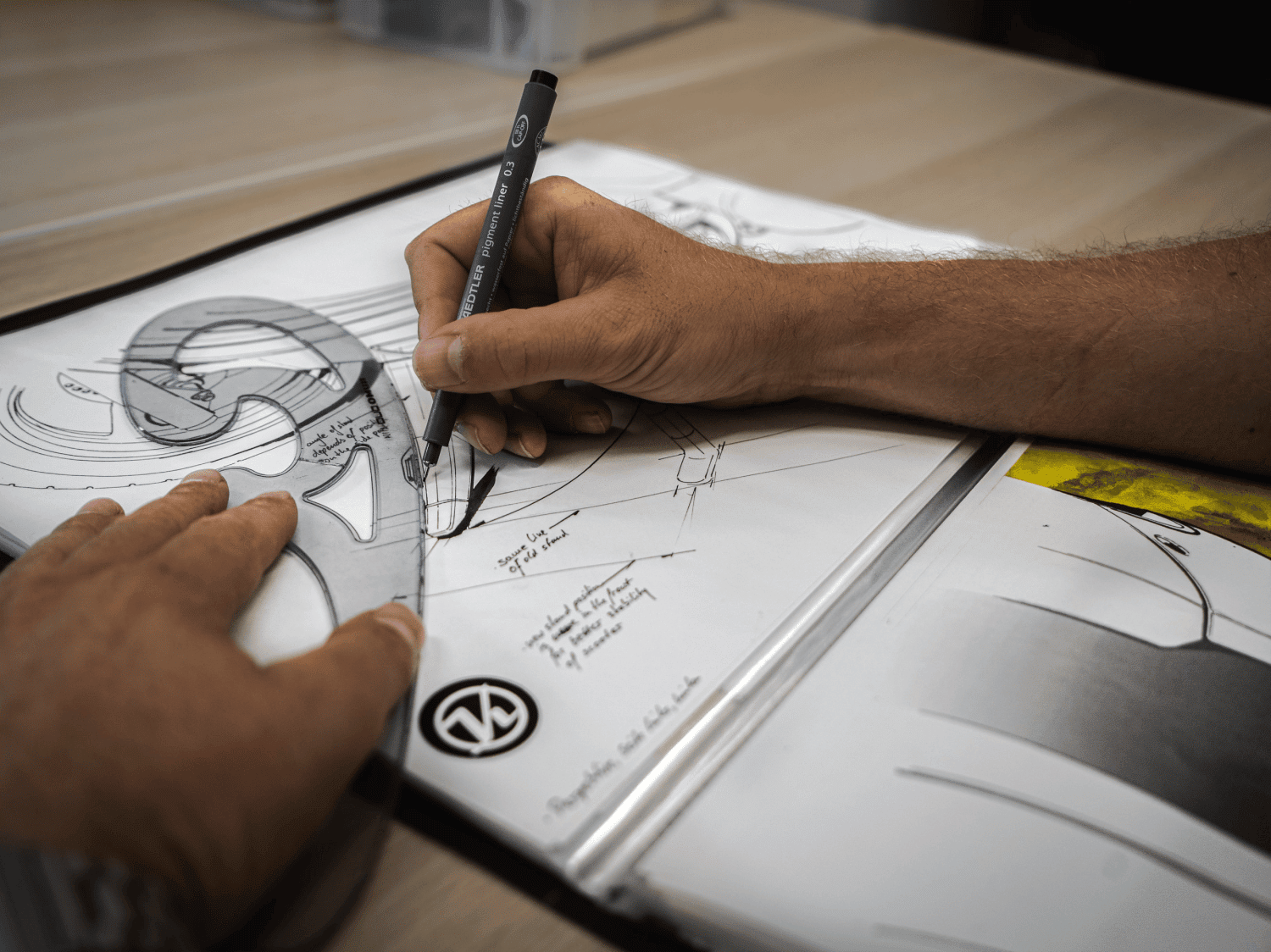
Early drawings help turn these requirements into something designers and engineers can work with. If you’re still at that stage, our guide to product design sketches explains how sketches help move an idea toward a defined product.
Phase 2: Build and Test the Prototype
Once the requirements are clear enough, you can begin creating physical prototypes.
The exact method depends on the product. A simple plastic part might be 3D printed. A mechanical assembly could require several fabricated components. An electronic product may need circuit boards, housings and working controls.
Products with electrical components have their own testing needs. Our electronic prototype guide covers that process in more detail.
This is also where product designers and engineers start solving different parts of the same problem. Designers focus on how the product looks and how people interact with it. Engineers address structure, mechanisms, tolerances, materials and technical performance.
The design work inside prototyping deserves more detail than we need here. See our guide to prototype product design for a closer look at designing the physical prototype itself.
If the product requires more technical development, prototype engineering can help turn the design into something that functions under real operating conditions.
Test Function First
An early prototype often looks rough. That’s fine if the purpose of that version is to test function.
For example, you may need to confirm that a hinge opens correctly, a handle supports the required load or two parts fit together with the right tolerance. Spending extra money on appearance won’t help answer those questions.
Keep each prototype tied to specific testing goals. That makes the results easier to judge and gives the next revision a clear purpose.
Test the Product With Users
Once the prototype can perform its main functions, put it in front of people who match your intended customer.
Watch what they do instead of relying only on what they say. Someone may tell you the product is easy to use while struggling with a control, grip or assembly step.
Useful prototype testing questions include:
- Does the product perform its main job?
- Can the user understand how it works without much explanation?
- Are controls, handles or moving parts comfortable to use?
- Does anything bend, loosen, bind or break?
- Are the size and weight appropriate for the intended user?
- Which parts create confusion or frustration?
- What changes would improve the next version?
Record what happens during testing. Separate isolated preferences from problems that appear across several users or tests.
Revise and Test Again
Prototype development is usually a repeated cycle. You build, test, make changes and test again.
A revision might change a dimension, material, mechanism or manufacturing method. Some changes improve the user experience. Others make the product easier or less expensive to produce.
Keep track of what changed between versions and why. That record becomes useful when designers, engineers and manufacturers need to understand how the product reached its current specifications.
Phase 3: Create a Production-Ready Prototype
The final phase brings the product closer to what a manufacturer will eventually produce at scale.
By this point, the major questions about function, dimensions, materials and user interaction should have been addressed. The prototype should represent the intended product closely enough to support final manufacturing decisions.
You will also need detailed specifications that define what the manufacturer is expected to make. These can include drawings, dimensions, materials, tolerances, component requirements and assembly instructions.
This is where manufacturability becomes especially important. A prototype can work perfectly as a one-off model and still be difficult or expensive to reproduce at scale.
Before production begins, review the design with manufacturing in mind. Look for parts that are difficult to source, unnecessary complexity and processes that could create quality problems during repeated production.
What to Test in a Product Prototype
A prototype should be judged against the requirements you set at the beginning of the project. Testing everything at once can make the results harder to interpret.
Depending on the product, you may need to test:
- Size, weight and proportions
- Fit between parts
- Strength and durability
- Movement and mechanical function
- Controls and user interaction
- Electronic functions
- Assembly and disassembly
- Material performance
- Appearance where it affects buyer acceptance
- Manufacturing feasibility
The testing plan should match the stage of the prototype. There’s little value in judging surface finish on an early model built only to test a mechanism.
How Many Prototype Versions Do You Need?
There’s no fixed number of prototype versions for every product. A simple product may need only a few rounds. A product with electronics, moving parts or demanding performance requirements can require many more.
Move to the next stage when the current prototype has answered the questions it was built to test. Avoid treating the first working model as the finished design just because it works once.
Prototype cost also changes sharply based on materials, tooling and the type of model you’re building. Our guide to product development costs covers the larger cost picture.
Prototype vs. MVP
A prototype and a minimum viable product can appear at nearby stages of development, but they serve different purposes.
You usually build a prototype to answer design, engineering and usability questions. An MVP is intended to put a limited but usable version of a product in front of customers and test market response.
If you’re deciding which one your project needs, see our full comparison of a prototype vs. MVP.
Moving From Prototype to Production
A successful prototype doesn’t automatically mean the product is ready for a large production order.
Before moving forward, confirm that the manufacturer can reproduce the approved design at the required quality and cost. Final samples should be checked against the specifications created during product development.
You also need clear quality requirements. Decide which dimensions, functions and appearance standards must be checked during production. The manufacturer needs objective criteria instead of instructions such as “make it look like the prototype.”
The handoff from prototype to manufacturing works best when the final prototype, drawings and specifications all describe the same product.
Working With a Product Development Company
You can build some early prototypes yourself, especially when you’re testing a basic concept. More complex products often require product designers, engineers, prototype makers and manufacturing specialists at different stages.
A product development company can bring those disciplines together and help you manage the handoffs between them. That can be useful when a design decision affects engineering or when an engineering change affects manufacturing cost.
Before hiring a company, ask how it handles research, design reviews, prototype testing and preparation for manufacturing. Ask who will perform the engineering work and whether the team has worked with products similar to yours.
You should also understand what happens after the prototype is approved. A prototype is much more useful when the specifications and production plan can move with it into sourcing and manufacturing.
Build a Prototype You Can Take to Production
A prototype should give you evidence. It should show what works, expose what still needs attention and give your manufacturing team clear direction.
Gembah supports product development through research, design, engineering, prototyping and manufacturing. If you need help moving an idea into a tested physical product, talk with Gembah about product prototyping and see what your next development step should be.