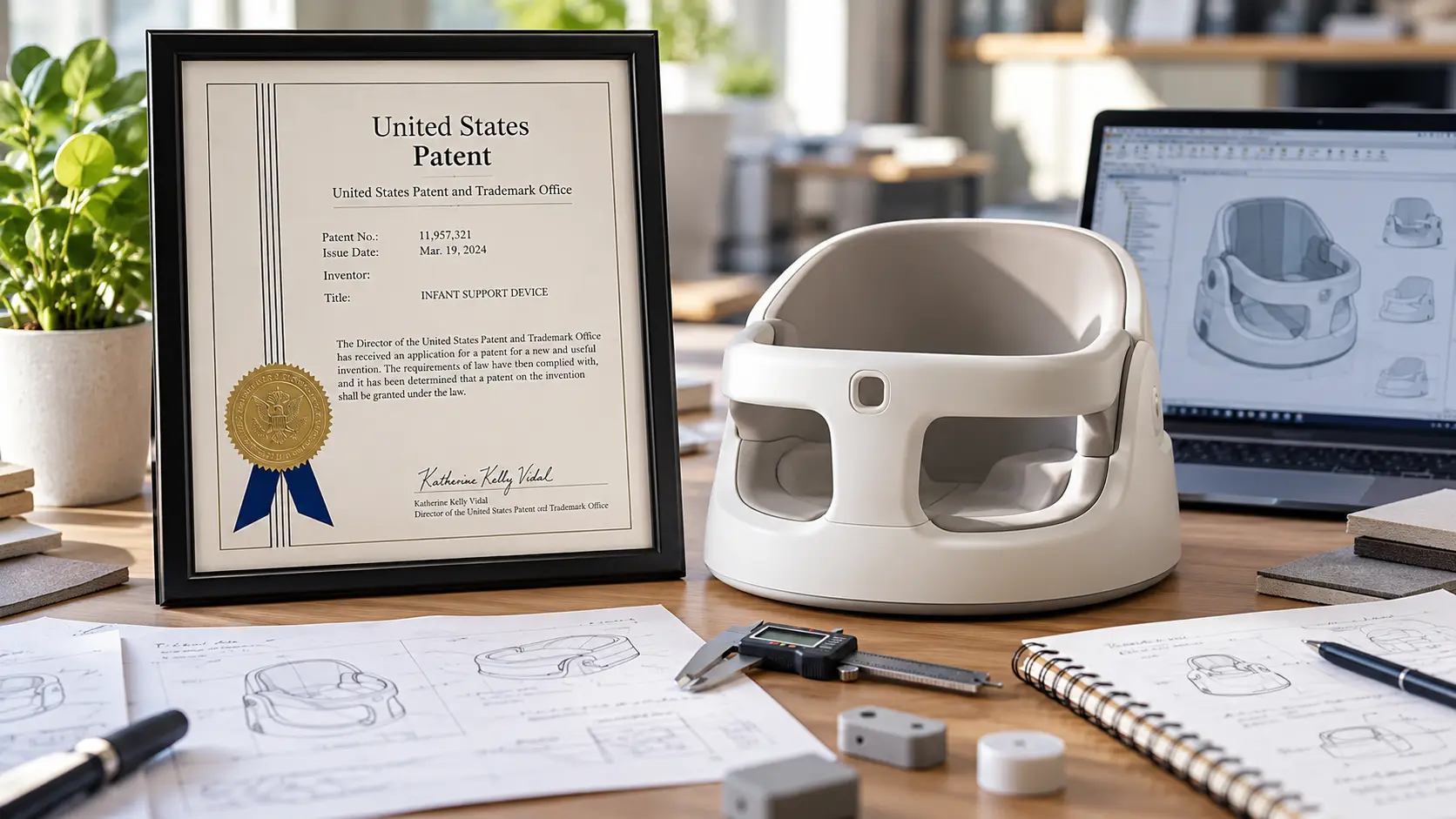
Baby product development starts the day after you file your patent—and most inventors underestimate it. A patent protects your idea. It doesn’t prove the product can be made, pass safety testing, or sell. If you’re holding a filing and staring at a blank next step, you’ve hit the most common stall point in the whole process. From here, the route runs through a business case, a real market gap, a manufacturable design, safety certification, and a first production run. Gembah maps that route for founders every week, and this post is the roadmap. Want a second opinion on where your idea sits? See how baby product development works.
What do you do after filing a patent for a baby product? After filing, you move from legal protection to a buildable product: validate the business case and unit economics, confirm a real market gap, turn the patent drawing into a manufacturable design, certify it against current CPSC safety rules, and choose a compliance-capable manufacturer for the first run.
The Short Version
A patent is step zero, not a finished product. Real baby product development runs in sequence: pressure-test the business case, segment the market and find a gap, turn the drawing into something a factory can actually make, prototype and certify it against current safety rules, then pick a manufacturer who can pass testing and ship. Safety and regulatory planning run through every stage—and the rules changed in 2025 and 2026, so a plan built on last year’s requirements will cost you. This post walks a patent-holding inventor through each step.
Key Takeaways
- A patent protects the idea, not the product—development, testing, and sourcing still stand between filing and shelf.
- Validate the business case and unit economics, testing and certification costs included, before you spend on design or tooling.
- US baby-product growth is value-led, not birth-led, so your market segmentation should target the premium, safety-driven buyer.
- Design for compliance from the first sketch; third-party testing and a Children’s Product Certificate are required for any product covered by a safety rule.
- The manufacturer you choose decides whether the first run passes testing and ships on time.
Also Read
- Baby Product Manufacturers: How to Find and Vet the Right Partner
- Private Label Baby Products: A Starting Point for New Brands
- How to Build a Product Roadmap
What a patent actually gets you (and what it doesn’t)
A patent gives you the right to stop others from copying your invention. That’s it. It says nothing about whether a factory can produce your design at a price people will pay, or whether anyone actually wants it.
A provisional filing buys you 12 months before the utility application is due, making the next steps time-sensitive, not optional. This is where most first-time inventors freeze: the legal win feels like the finish line, but it’s really the starting gun.
Step 1—Pressure-test the business case
Before you spend a dollar on design or tooling, build the numbers. A business plan for baby products must price in what other categories skip: third-party safety testing and certification, which add real cost before you sell a single unit. Work out your target retail price, your cost of goods with testing and certification folded in, your margin, and genuine demand.
“Worth building?” is a math question in this category, not a gut call. The inventors who get burned are the ones who priced the product but not the compliance behind it.
Is a new baby product worth building given current safety and regulatory demands?
Often yes—but only after you price the risk. Current CPSIA rules require third-party lab testing and a Children’s Product Certificate for products covered by a safety rule, and those costs belong in your go/no-go math from the start. Put them in your unit economics before you commit to tooling, not after.
Step 2—Segment the market and find the gap
The US baby products market was worth about $58.5 billion in 2025 and is projected to reach $81.55 billion by 2033—roughly 4.3% annual growth, per Grand View Research. Here’s the part that should shape your strategy: that growth isn’t coming from more babies. US birth rates keep falling. It’s coming from higher spending per child on premium, safety-driven, and organic products.
So baby product market segmentation by age band—newborn, infant, toddler—matters less than segmenting by the trust-driven buyer who’ll pay more for proof of safety. The open gaps are in premium, non-toxic, direct-to-consumer, or subscription models.
Step 3—Turn the patent drawing into a manufacturable design
A patent drawing shows the idea. It rarely shows a part a factory can mold, assemble, and ship. Baby product design at this stage means design-for-manufacturing: picking materials, wall thicknesses, and part counts a factory can actually produce—and that can pass safety testing later instead of forcing an expensive redo.
Small-parts and material decisions made now cost a fraction of the ones made after a failed test.
Not sure your drawing can be built as-is? Talk to a Gembah expert.
Step 4—Prototype, test, and certify for safety
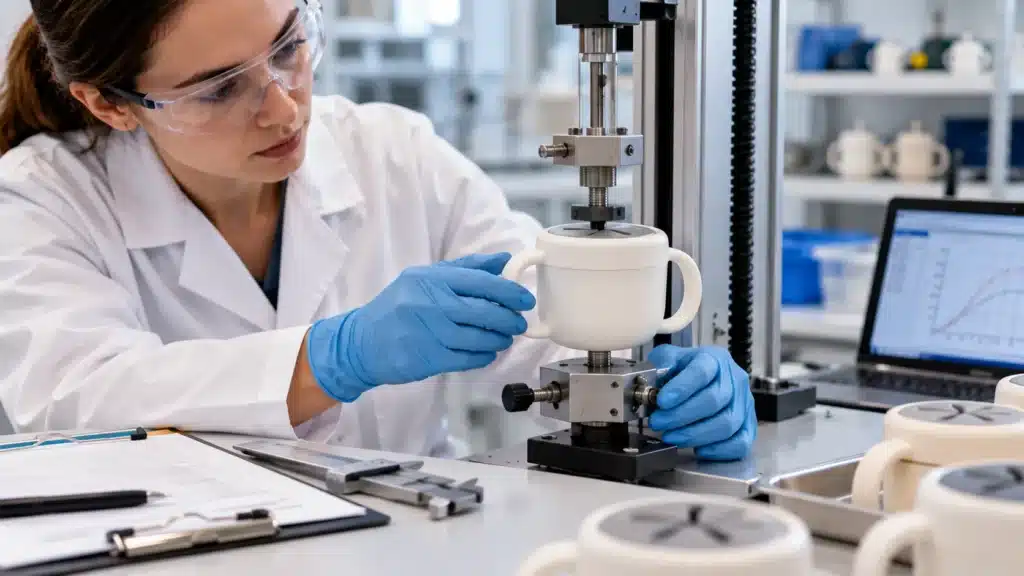
Sampling comes first, then third-party testing at a CPSC-accepted lab, then the Children’s Product Certificate (CPC). The importer issues the CPC for an imported product, or the domestic manufacturer or private labeler for a US-made one— not a retailer or distributor. It’s required for any children’s product subject to a children’s product safety rule, which is nearly every baby product.
Two standards are new enough that a 2025-or-later build has to design around them from the start. 16 CFR Part 1242 covers nursing pillows (effective April 23, 2025), and 16 CFR Part 1243 covers infant support cushions (effective May 5, 2025)—and Part 1243 brings infant loungers under a federal safety standard for the first time. A nursing pillow that doubles as a lounger has to meet both parts. The trigger is the date of manufacture, not the date of sale.
What changed for imported baby products in 2025–2026?
Importing got heavier. The CPSC’s compliance-certificate eFiling rule (16 CFR Part 1110) is already in force—its July 8, 2026 applicability date has passed, with Foreign Trade Zone withdrawals following on January 8, 2027—and it carries no de minimis or small-business exemption. Separately, the $800 de minimis exemption that once let low-value parcels clear informally is gone—suspended for all countries in August 2025 and made indefinite in June 2026—so imported samples, components, and units now face formal entry and the certificate filing that comes with it.
Step 5—Choose a manufacturer and plan the first run
Manufacturing baby products well comes down to the factory. You want baby product manufacturers who’ve passed US testing before, can hit a minimum order quantity you can afford, and run real quality control. Two current details are worth raising when you vet them.
- Registration cards: durable infant and toddler products need consumer registration cards under 16 CFR Part 1130—a rule in force since 2009, not a new 2026 requirement. The recent change is that the covered-product list grew in late 2024 to add nursing pillows and infant support cushions.
- ASTM revisions: CPSC has been re-pointing its durable-product standards to newer ASTM versions— bassinets to F2194-25 (effective February 21, 2026) and infant swings to F2088-25 (effective July 25, 2026), with crib mattresses and full-size cribs following. A factory’s existing test reports may be against a superseded revision, so ask the sharp question: which revision did you last test to?
Step 6—Build the brand and go to market
In a category where buyers lead with trust, your brand has to show safety, not just claim it. Lead with third-party testing, transparent materials, and real reviews.
Then choose your channel. Direct-to-consumer gives you margin and customer data, retail gives you reach, and Amazon gives you traffic while squeezing both. Most first runs start on one channel and expand once the product proves itself.
Myth vs. Reality
Myth: “A patent means my product is ready to sell.” Reality: It protects the idea. Development, testing, and sourcing still stand between filing and getting to market.
How Gembah Helps a Patent Holder Get to Shelf
A patent holder’s worst outcome is stitching together a freelance designer, a sourcing agent, and a factory who each point fingers when testing fails. Gembah runs research and ideation, design and engineering, prototyping, sourcing and manufacturing, and quality control as one accountable team. A network of vetted factories, plus in-process and final inspection, backs us up. We stay with you through Market Validation and the Pre-Launch, Crowdfunding, and Launch stages, all the way through hitting the market.
The point is getting the product and its specs right upstream, so the first run is designed to pass testing instead of coming back. That’s baby product development handled as one route, not five handoffs.
From Filing to First Run: Your Next Move
A patent is a real milestone—it’s just not a product yet. Inventors who reach the shelf treat filing as the start of baby product development, bring price, safety, and testing in early, and choose a manufacturer that can prove compliance. Do that, and the distance between your drawing and a shelf-ready product gets a lot shorter.
Ready to turn your patent into a product you can actually make? Get a quote from Gembah—or contact the team to talk through your build.
FAQs
What do I do after filing a patent for a baby product?
Move from protection to production: validate the business case, confirm a market gap, turn the patent drawing into a manufacturable design, certify it against current CPSC rules, and choose a compliance-capable manufacturer for the first run.
Is a new baby product idea worth building given current safety and regulatory demands?
It can be, but only if you price the risk. Factor third-party testing and certification into your unit economics up front, because those costs decide whether the margin survives—and they apply to any product covered by a children’s product safety rule.
How do you differentiate a baby product brand in a competitive, trust-driven category?
Show safety rather than claim it. This buyer cares more about third-party test results, transparent materials, and genuine reviews than price. The brands that win lead with proof.
What market gaps exist in baby and infant products right now?
Growth is value-led—premium, organic or non-toxic, and subscription or direct-to-consumer models—rather than driven by birth numbers. Gaps exist where safety-conscious buyers are underserved at premium price points.
Do I need a business plan before manufacturing a baby product?
Yes. A baby-product business plan that includes testing, certification, tooling, and a realistic first-run volume tells you whether to tool at all. Skipping it is how inventors fund a product nobody can profitably sell.
What does it cost to develop a baby product after the patent stage?
Expect product-side costs across design, prototyping, tooling, third-party testing and certification, and the first production run. Costs vary by complexity and materials, but testing and certification are fixed costs you can’t skip.