


Executive Summary: Core Product & Operational Milestones
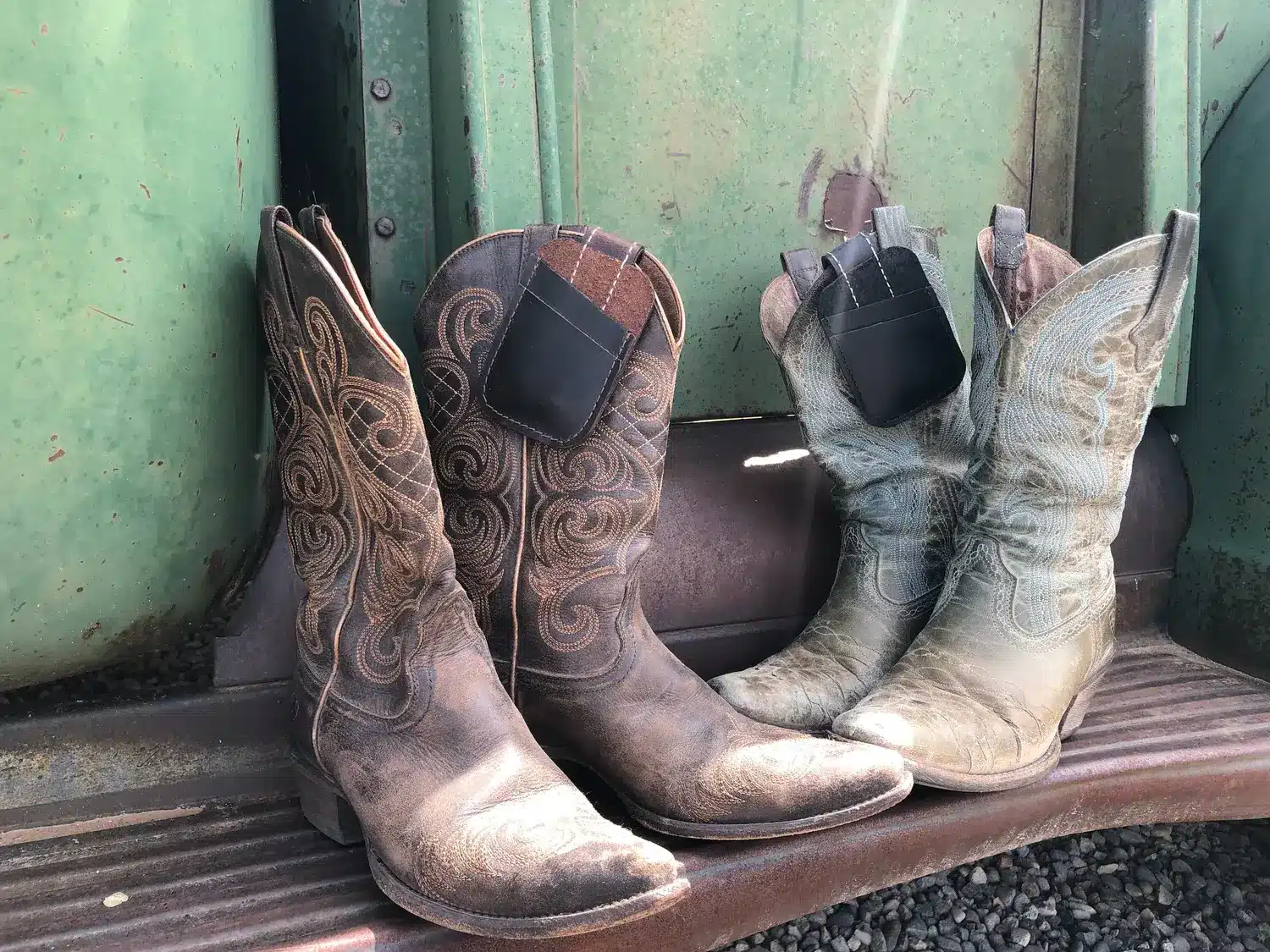
- The Origin Story: Conceived in 2017 during record-breaking, 100-degree pavement heat at the Route 91 country music festival in Las Vegas to solve a universal pain point—preventing credit cards, IDs, and hotel keys from slipping to the bottom of hot cowboy boots when wearing pocketless outfits like rompers and dresses.
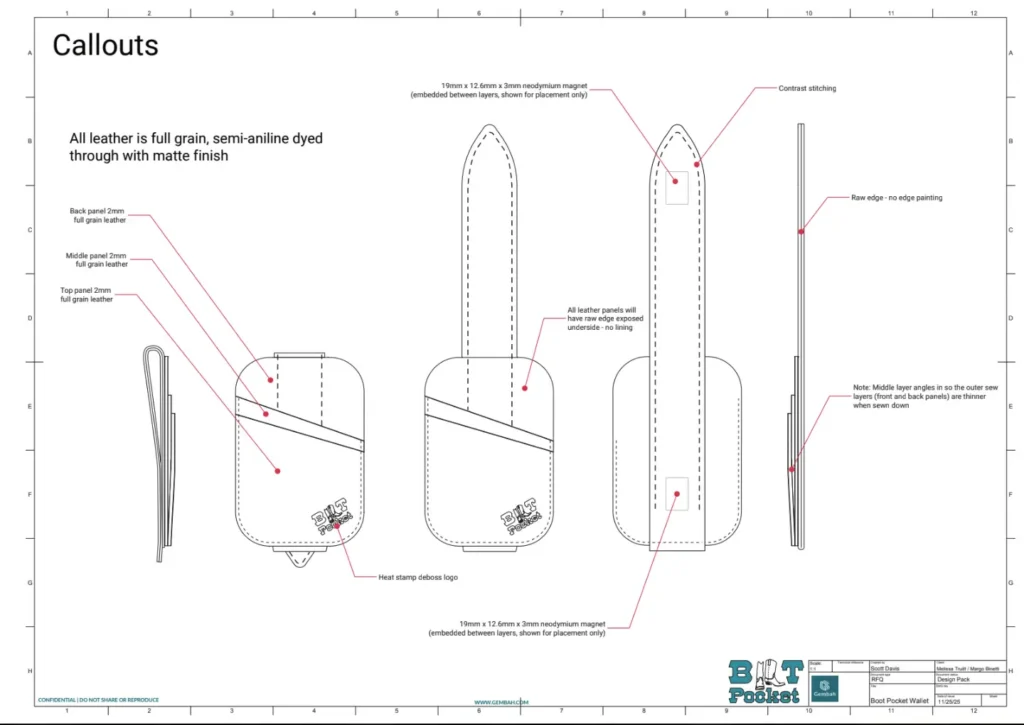
- The Structural Pivot: Transitioned from complex, over-engineered original handmade prototypes featuring cumbersome clips and tie systems to the streamlined, magnetic-anchor Boot Pocket—an ultra-secure sleeve that slides seamlessly into any boot top.
- Front-End IP Strategy: Established a 50% member LLC in Colorado and secured a strategic anchor patent on the magnetic strip application, creating a defensive “child patent” structure for future SKUs (cell phone, lip balm, and concealed carry holders) to maximize long-term patent life and stop competitor infringement before mass production.
- Capital-Efficient Manufacturing Scale: Partnered with Gembah to establish an international supply chain, managing complex raw material hurdles—such as negotiating late, expensive magnet sourcing with zero cost increases at the factory—to import an initial inventory run of 5,000 units.
- Algorithmic Organic Marketing: Launched a lean, highly innovative digital approach: identifying local micro-influencers whose specific content (like country line-dancing) triggers high algorithmic reach (200,000+ views) regardless of low follower counts, and securing free content via automated affiliate commission codes.
Case Study: Overcoming Technical Design Hurdles, Structuring a Defensible Legal Asset, and Capitalizing on Community-First Retail Strategy
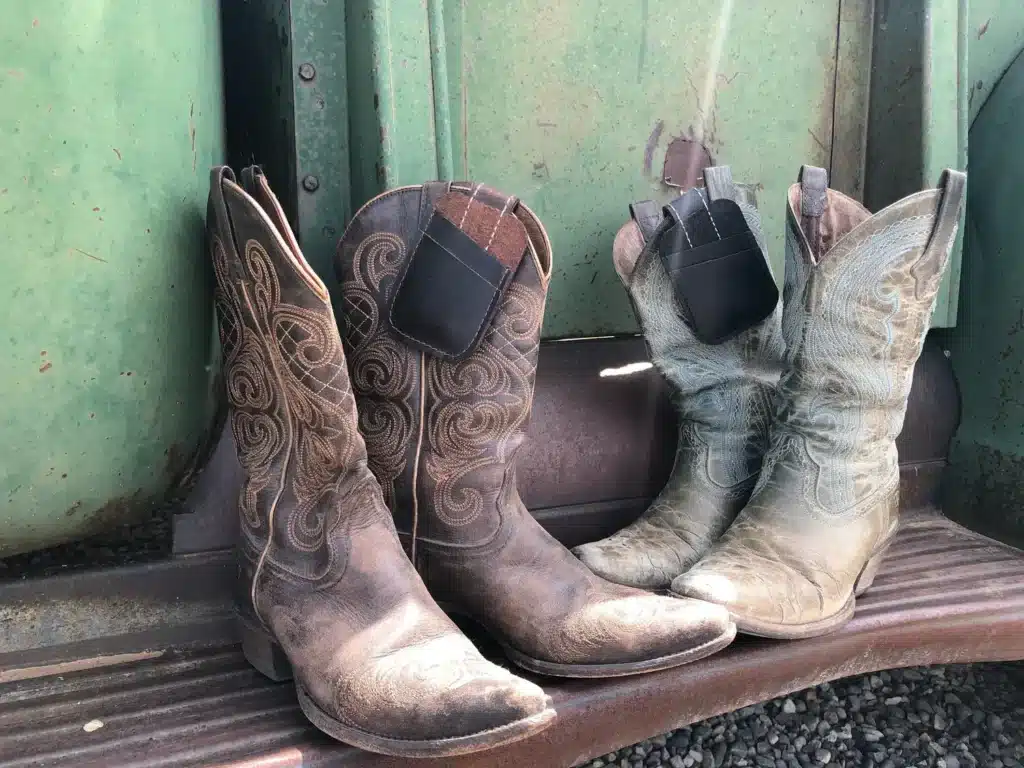
Launching a completely novel utility asset into a specialized fashion and culture landscape requires strict operational discipline. For Melissa Truitt and her co-founder Margot Binetti, a master leather craftsman based in Steamboat, Colorado, bringing Boot Pocket to market meant protecting their intellectual property from day one, navigating international manufacturing complexities, and building a marketing engine built purely for modern social media algorithms.
1. The Legal and Patent Gauntlet: Building a Multi-Generational Product Moat
Many independent inventors focus entirely on product aesthetics while neglecting defensive legal foundations. Coming from a 20-year background negotiating complex oil and gas leases as a landman, Melissa approached the launch of Boot Pocket with a strict corporate mindset.
Before committing major capital to global manufacturing, the founders established a 50% member LLC in the state of Colorado and engaged an attorney to execute an intensive patent search. Discovering a complete white space regarding magnetic attachment utility on footwear, they successfully patented their magnetic strip anchoring mechanism.
This core legal strategy serves as a permanent defensive moat:
- Defensive Protection: By securing the foundational anchor patent on the magnetic configuration, the brand holds immediate legal recourse to prevent competitors from utilizing clip-on or structural magnetic boot attachments.
- The Child Patent Framework: The parent patent was intentionally structured to spawn subsequent “child patents” for upcoming product variations, including dedicated smartphone holsters, lip balm sleeves, and concealed carry holders. This effectively extends the aggregate life cycle of their intellectual property portfolio.
- Front-End Tax Optimization: Setting up the LLC framework allowed the founders to capture early structural write-offs and pass developmental capital losses directly down into their corporate tax structures, optimizing their financial runway during the pre-launch phase.
2. Supply Chain Orchestration: Managing Production Lead Times and Scaling Inventory Volume
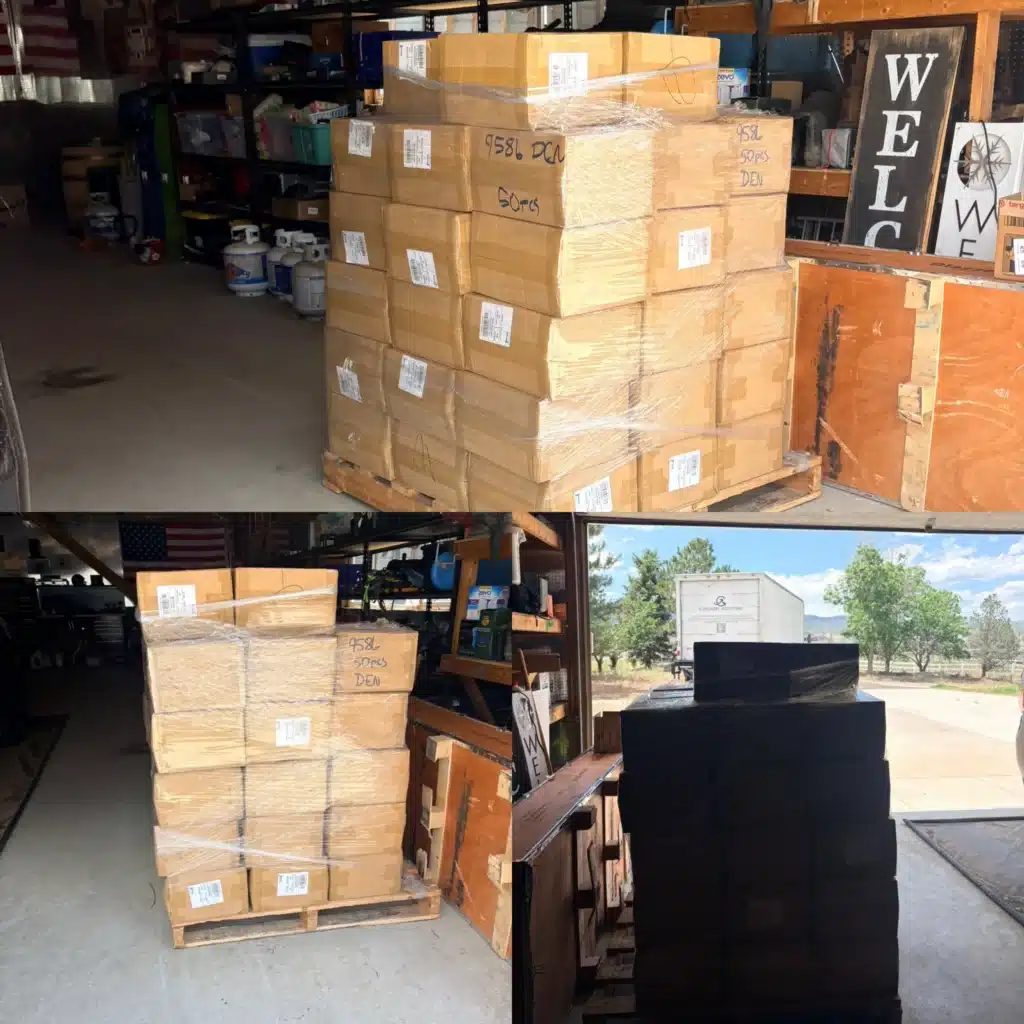
Transitioning from a localized, hand-crafted operation—where Margot previously built a limited run of 200 custom units by hand in her workshop—to mass global scale introduces sharp supply chain friction. Partnering with Gembah’s end-to-end framework, Boot Pocket successfully navigated international logistics to establish a reliable commercial manufacturing footprint, launching directly with an initial production run of 5,000 units.
Managing a specialized accessory line at this scale requires extreme discipline over inventory timelines and product engineering. Because the Boot Pocket relies on high-performance industrial magnets embedded seamlessly into premium leather, the manufacturing process is bound to a precise 120-day production lead time. By mapping out these exact factory timelines early in the pre-launch phase, Melissa and Margot secured optimal unit economics and established a predictable restocking schedule. This structured manufacturing foundation allows Boot Pocket to keep its inventory fluid, protecting upfront gross margins and creating a sustainable baseline of cash flow to directly fund the development of their upcoming second and third SKUs.
3. Maximizing Capital Efficiency: The Algorithmic Micro-Influencer and Grassroots Framework
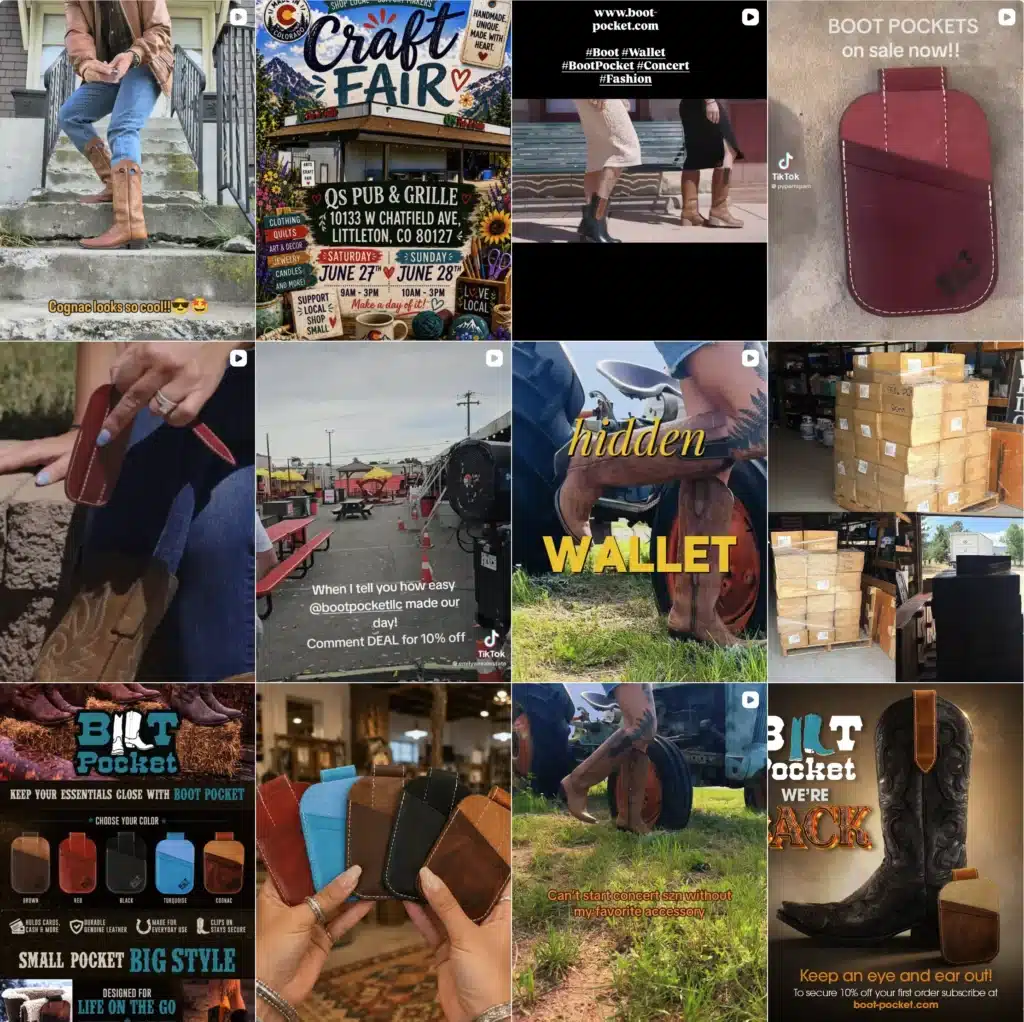
For an early-stage consumer goods startup, managing initial capital allocation is a critical balancing act. Rather than immediately deploying high-burn paid ad campaigns during the pre-launch phase, Melissa and Margot engineered a highly agile, organic marketing framework designed to maximize visibility while maintaining strict capital efficiency.
By taking a hands-on approach to their early-stage marketing, the co-founders built a highly efficient engine tailored for modern social media algorithms:
- The Virality Collaboration Strategy: Instead of chasing mainstream influencers with massive follower counts, Melissa actively tracks niche, micro-accounts that have achieved organic algorithmic anomalies (e.g., generating 200,000 to 300,000 views on country music or concert-related content despite a small following).
- Performance-Based Gifting Loops: Boot Pocket seeds free product directly to these creators (such as line-dancers and festival-goers traveling to major country music hubs like Nashville) alongside localized affiliate tracking codes.
- The Evergreen Commission Model: Creators generate high-converting, authentic video assets in exchange for a percentage of net proceeds, backed by an intentional commitment from the brand never to expire their affiliate tracking codes as long as the content drives consistent consumer activity.
- Hyper-Local Community Retail: Complementing their digital push, the brand leverages grassroots physical presence—deploying local brand ambassadors to capture direct market feedback at regional farmers’ markets, while organically integrating into specialized storefronts like concealed-carry accessory retail.
This foundational, community-first framework allows Boot Pocket to build an immediate base of user-generated content and real-world traction, perfectly positioning the brand to layer in scaled, high-reach marketing programs as they head into peak retail seasons.
Interested in building your product? Let’s talk.
Start Your Journey Today