

Finding trending products to sell in 2026 starts with checking demand, competition and the cost of bringing a product to market. A popular category can still be difficult to enter if factory costs, shipping or returns leave little margin.
This 2026 edition compares nine product ideas across pet supplies, baby products and electronics. Use them as research candidates. Recheck current demand in your target market before you choose suppliers or commit to inventory.
For each idea, review the buyer’s needs and the manufacturing decisions behind the product. Search interest is one signal. It does not prove that shoppers will buy from your store.
Before Choosing a Trending Product, Validate These Five Things
| Validation area | What to check |
|---|---|
| Demand | Check current search interest, marketplace sales signals and the problem buyers want to solve. |
| Competition | Compare existing sellers, prices and reviews to find a gap you can serve. |
| Margin | Include factory costs, shipping, duties and selling fees. Allow for advertising, packaging and returns. |
| Manufacturability | Review materials, tooling and supplier capacity. Confirm testing needs and production consistency. |
| Differentiation | Identify a useful difference in design, features or packaging that buyers value. |
Record the country, date range and source for each demand check. Keep that information with your supplier quotes so you can revisit the decision before placing an order.
How to Use Google Trends for Pet Products and Other Ideas
Use Google Trends to compare search interest in your target country. Google Trends reports relative interest on a scale of 0 to 100. It does not provide an absolute monthly search count.
For pet products, compare related terms and review seasonal peaks. Apply the same settings when comparing baby products or electronics. Then check marketplace listings, customer reviews and expected margins. A search spike alone is insufficient evidence for an inventory order.
Trending Pet Products to Research
Pet products can serve specific needs around feeding, rest and everyday care. Compare competing products to see where cleaning, durability or replacement parts create frustration for owners.
Build your plan around suitable materials and reliable construction. Check cleaning requirements and packaging before selecting a factory.
1. Pet Fountain
Pet fountains circulate drinking water through a pump. Some use replaceable filters. Compare products by cleaning access, noise, capacity and the cost of replacement parts.
Review current search interest for pet fountains in your intended market. Compare recent interest with earlier periods using the same settings. Check whether marketplace reviews reveal problems your design could address.
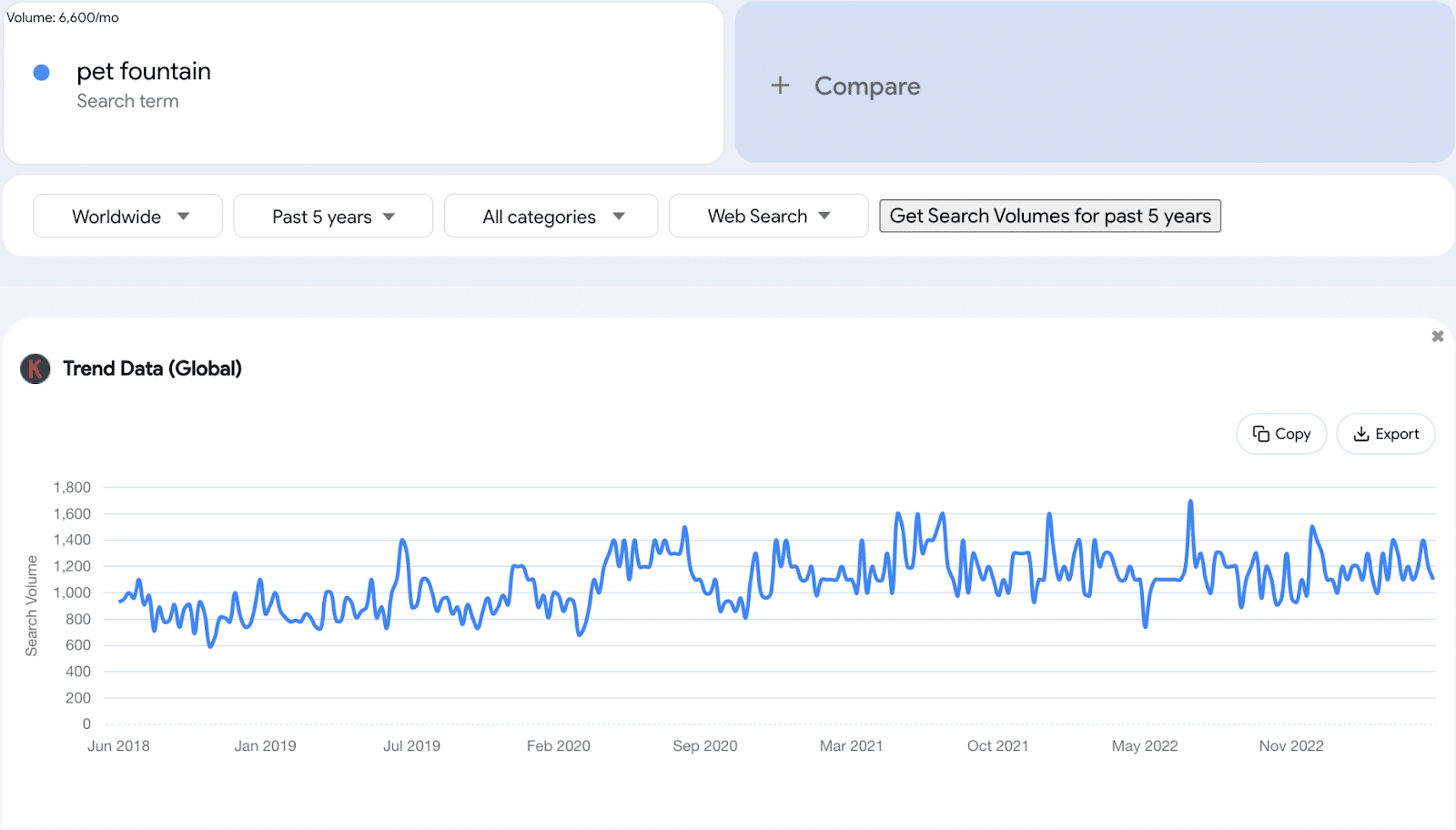
Market the features your product can demonstrate. Show how owners refill the reservoir and clean the pump. State capacity and filter replacement needs. Avoid promising improved health without supporting evidence.
A demonstration can show the parts and cleaning process more clearly than a broad convenience claim. Include the maintenance work buyers will need to do.
Check water-contact materials, pump reliability and leaks. Review electrical safety and replacement filter supply. Test whether the packaging protects small components during shipping.
2. Donut Dog Bed
Donut dog beds have raised edges around a central sleeping area. Compare sizes, cover materials and cleaning options before choosing a version to sell.
Check search interest for donut dog beds alongside reviews of existing products. Look for complaints about flattening, sizing or washing. Those concerns can guide a useful product difference.
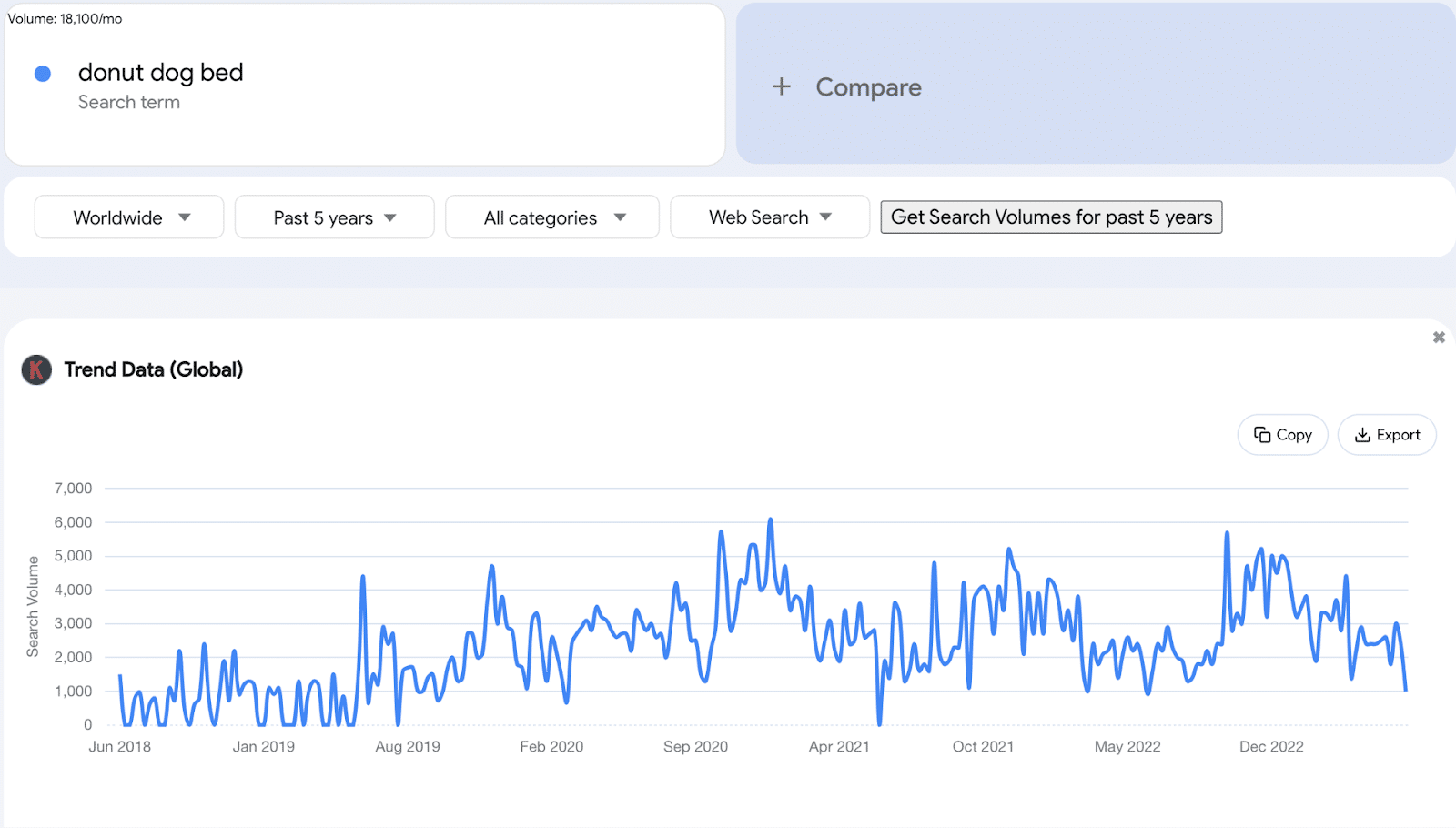
Give shoppers clear dimensions and washing instructions. Show the bed with a size reference. Explain the cover and filling materials rather than making unsupported claims about reducing anxiety.
Test seam strength and filling consistency. Check how the bed holds its shape after washing and compression. Packaging should protect the product without creating unnecessary shipping costs.
3. Slow Feeder Bowl
Slow feeder bowls use ridges or compartments to make food less immediately accessible. The layout and bowl size should fit the animals and food types the product is designed for.
Review search interest for slow feeder bowls and compare existing designs. Read reviews for cleaning problems, slipping or layouts that are difficult for certain animals to use.
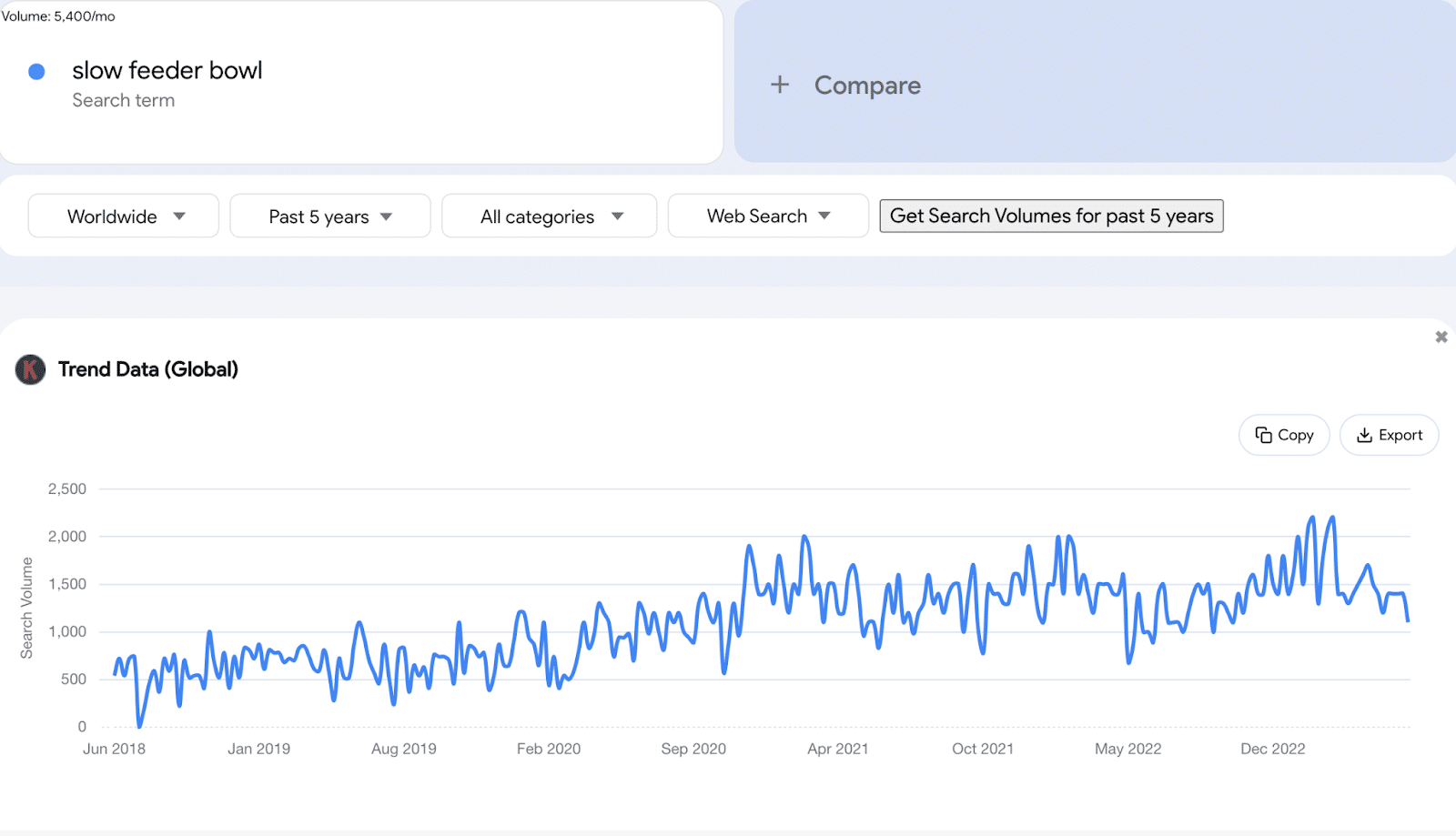
Show the bowl’s dimensions and interior layout. Explain which food types it suits and how to clean it. Avoid claims that the bowl prevents choking, bloating or other health problems without reliable support.
A useful design difference could involve easier cleaning or a more stable base. Confirm that buyers value the change before paying for custom tooling.
Review food-contact materials and mold quality. Check for rough edges and test the base on common floor surfaces. Verify any dishwasher-safe claim before using it in your listing.
Trending Baby Products to Research
Baby products need careful planning around their intended use and the caregiver’s experience. Useful features can include clearer instructions, easier cleaning or simpler adjustment.
Build testing and compliance review into the product plan early. Confirm requirements for the product and destination market before choosing materials or approving production.
1. Baby Carrier Wraps
A baby carrier wrap uses fabric to hold an infant against a caregiver. Compare fit, adjustment and cleaning needs. The design and instructions should match the product’s verified intended use.
Use search interest for baby carrier wraps to guide further research. Compare customer questions about fit, adjustment and cleaning. Demand signals should support a decision alongside the product’s testing and manufacturing needs.
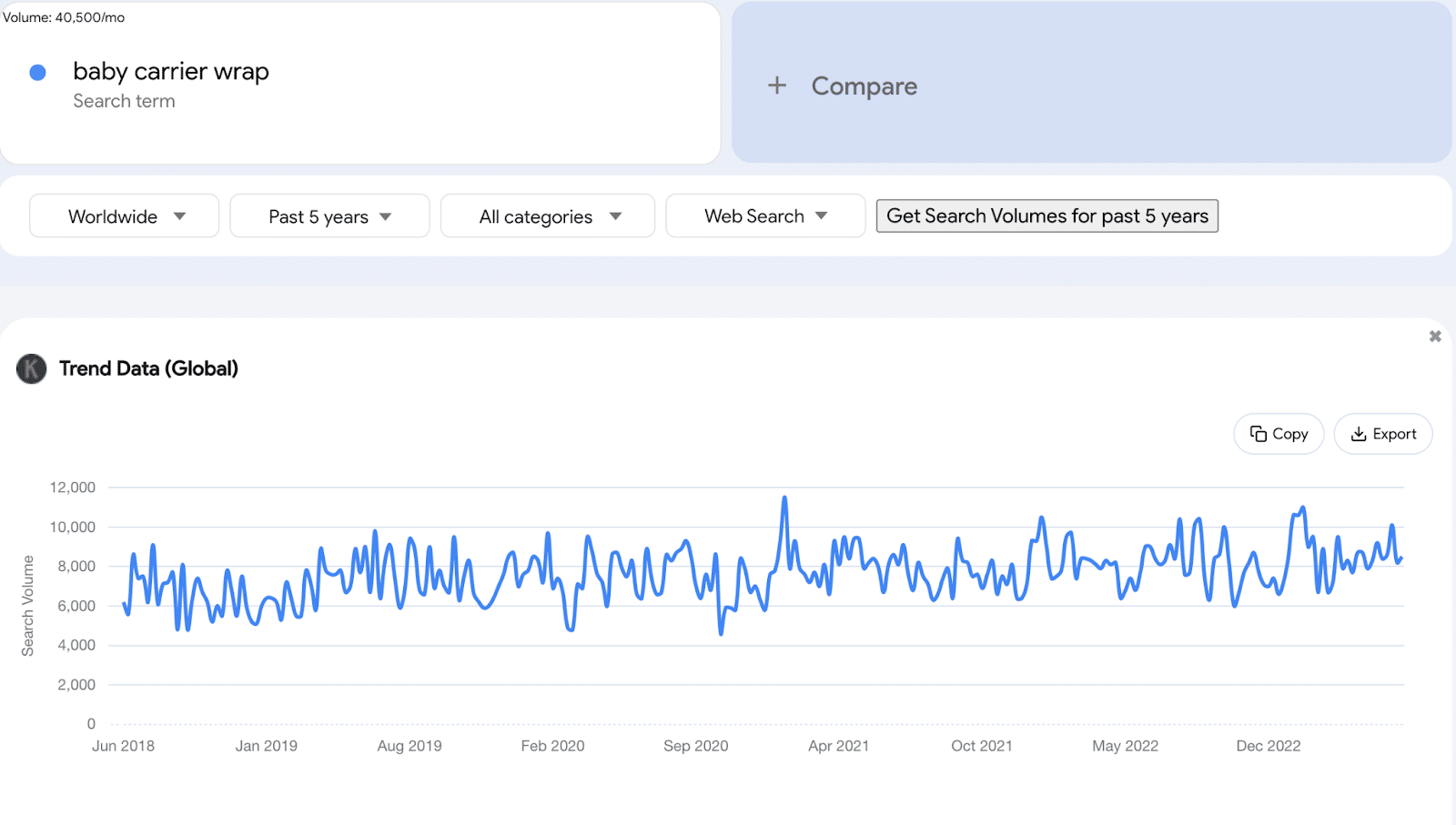
Explain the intended size or weight range using verified product information. Show adjustment steps and provide clear instructions. Keep claims about infant development or safety within the evidence available for the specific product.
Review fabric strength, stitching and load-bearing performance. Confirm sizing, warning labels and instructions with a qualified product specialist. Include testing costs when comparing supplier quotes.
2. Baby Nasal Aspirator
Baby nasal aspirators are designed to remove mucus from a baby’s nose. Designs differ in their suction method, components and cleaning process.
Review search interest for baby nasal aspirators and questions on existing listings. Cleaning, replacement parts and clear instructions can be useful areas to investigate.
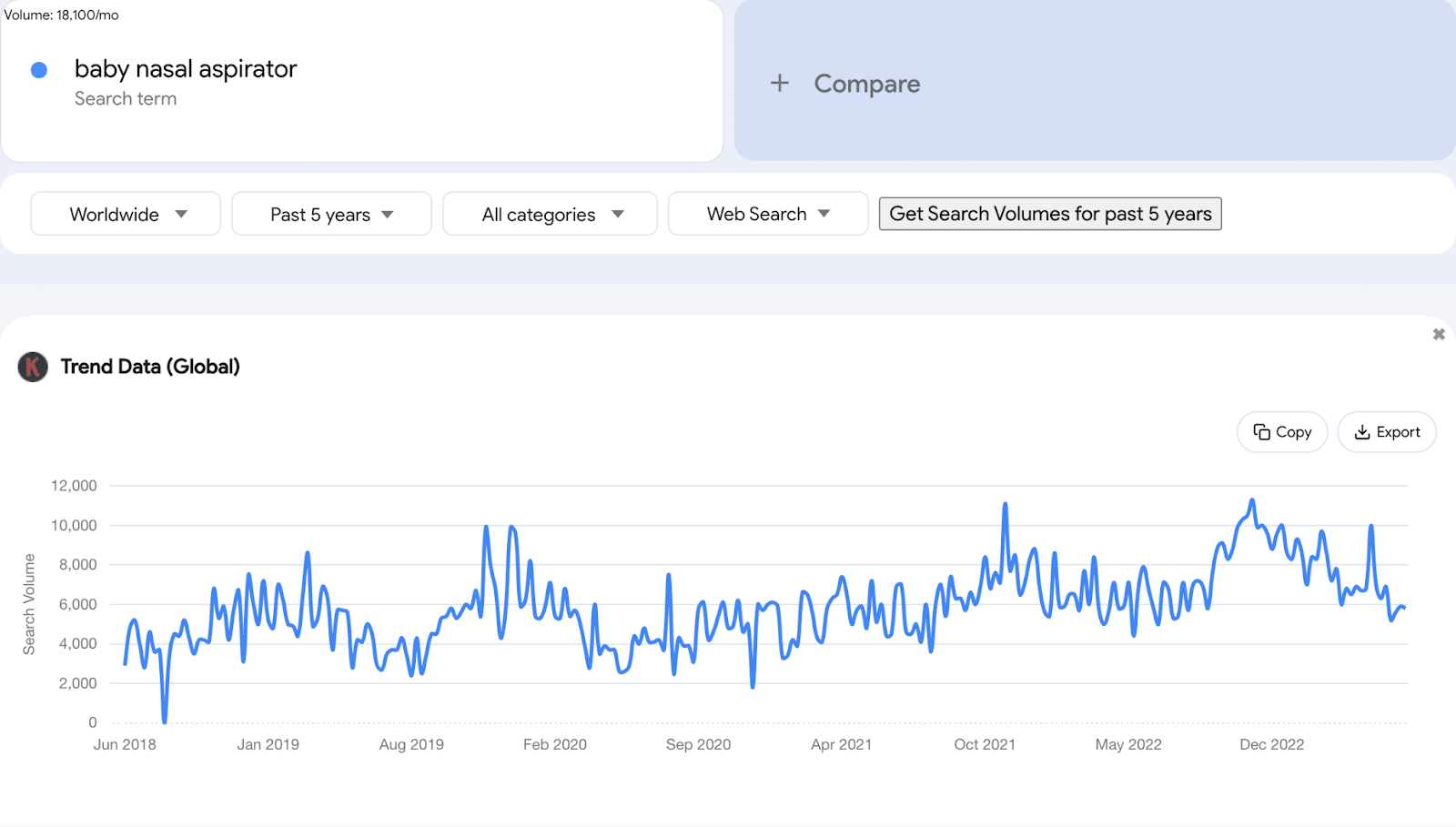
Describe how the specific product works and how its components are cleaned. Keep age guidance and usage instructions consistent with the product’s approved documentation. Avoid promising that it prevents infections or improves sleep.
Review material suitability and component durability. Assess small parts, cleaning instructions and packaging claims. Confirm whether the product needs regulatory review in your target market before placing an order.
3. Baby Sound Machine
Baby sound machines play sounds such as white noise or lullabies. Compare controls, timers and power options. The product plan should address sound output and clear placement instructions.
Check search interest for baby sound machines and customer questions about controls or portability. Compare actual product features rather than assuming that category interest proves demand for another model.
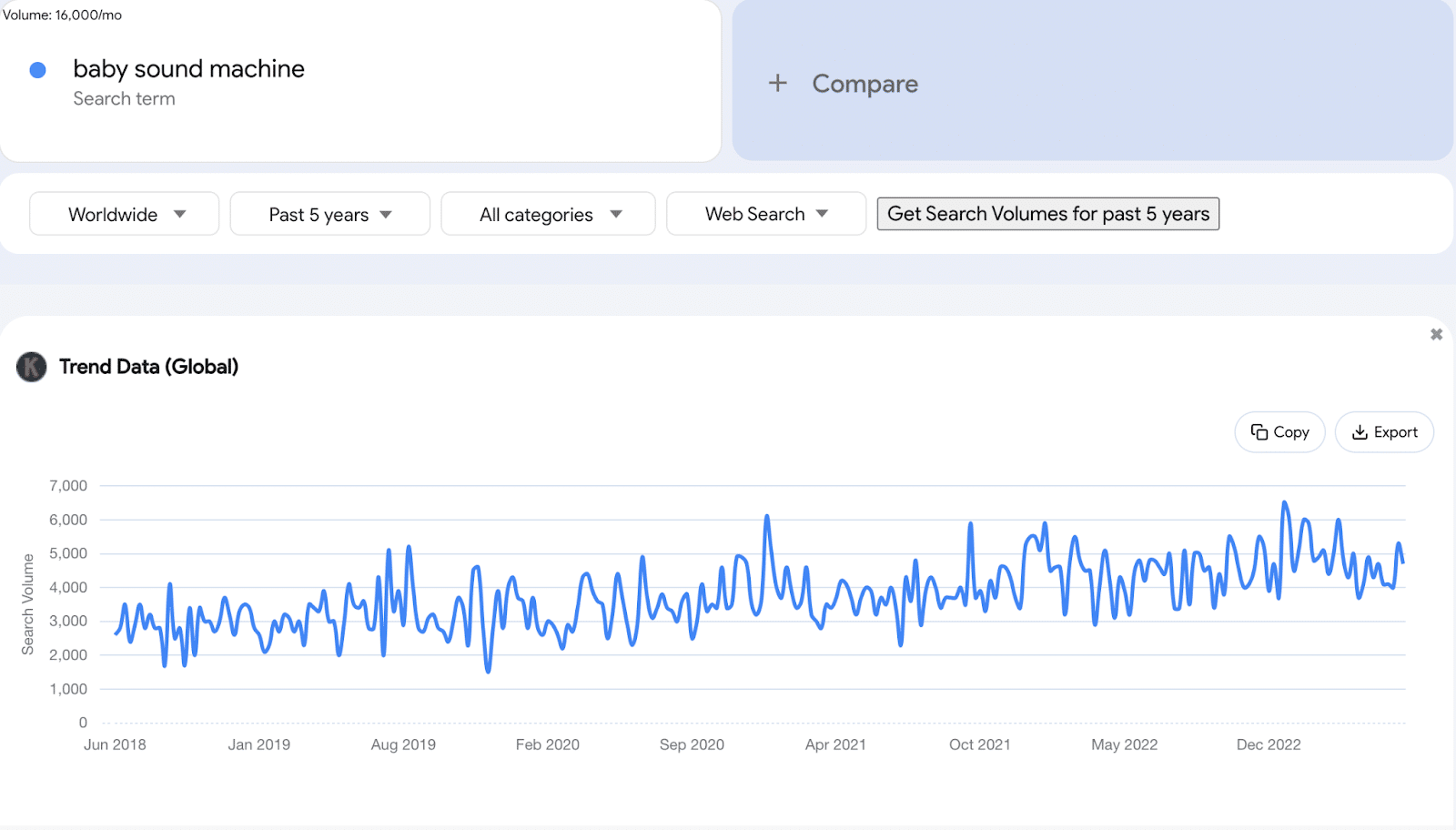
Show how caregivers adjust the controls and timer. State the available sounds and power requirements. Avoid guarantees about infant sleep or health outcomes.
Review speaker output, electrical components and battery or power-supply performance. Confirm testing needs and usage instructions. Test whether the packaging protects the device in transit.
Trending Electronics to Research
Electronics can offer useful features, but components and after-sale support affect the budget. Compare the full development cost before selecting a product.
Plan for prototypes and testing. Confirm component availability, packaging protection and replacement parts. Include the cost of warranty support when estimating margin.
1. Air Purifier
Air purifiers move air through a filtering system. Compare products by verified performance, operating noise and replacement filter costs. Match the design to the intended room size and use.
Review search interest for air purifiers in your target country. Check seasonal changes and buyer questions about filters, noise or running costs. A broad search term can include several different buying needs.
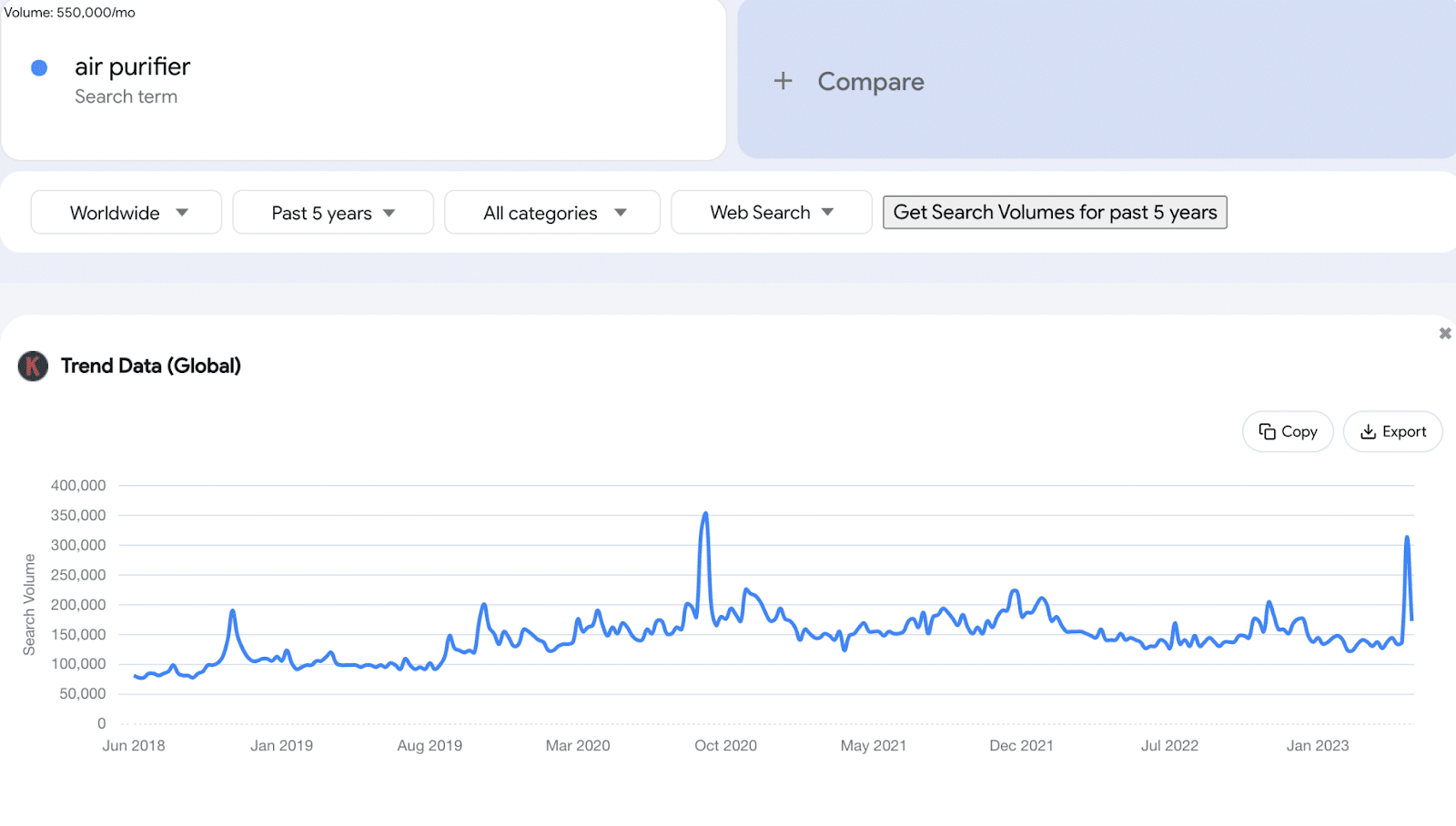
Use supported performance information to explain the product. State filter replacement needs and operating costs where you can verify them. Avoid promising disease prevention, allergy relief or better health without appropriate evidence.
Check filter supply, motor life and electrical safety. Review noise levels and packaging strength. Confirm which performance claims require testing before including them in your product brief.
2. Laser Hair Removal Machine
Hair-removal devices need more technical and regulatory work than many everyday accessories. Confirm whether the product uses a laser or intense pulsed light (IPL). IPL and laser technology are different, so the listing must describe the actual device.
Use search interest for laser hair removal machines as one research step. Compare the search language with the technology you plan to sell. Interest in professional equipment may not represent demand for a home-use device.
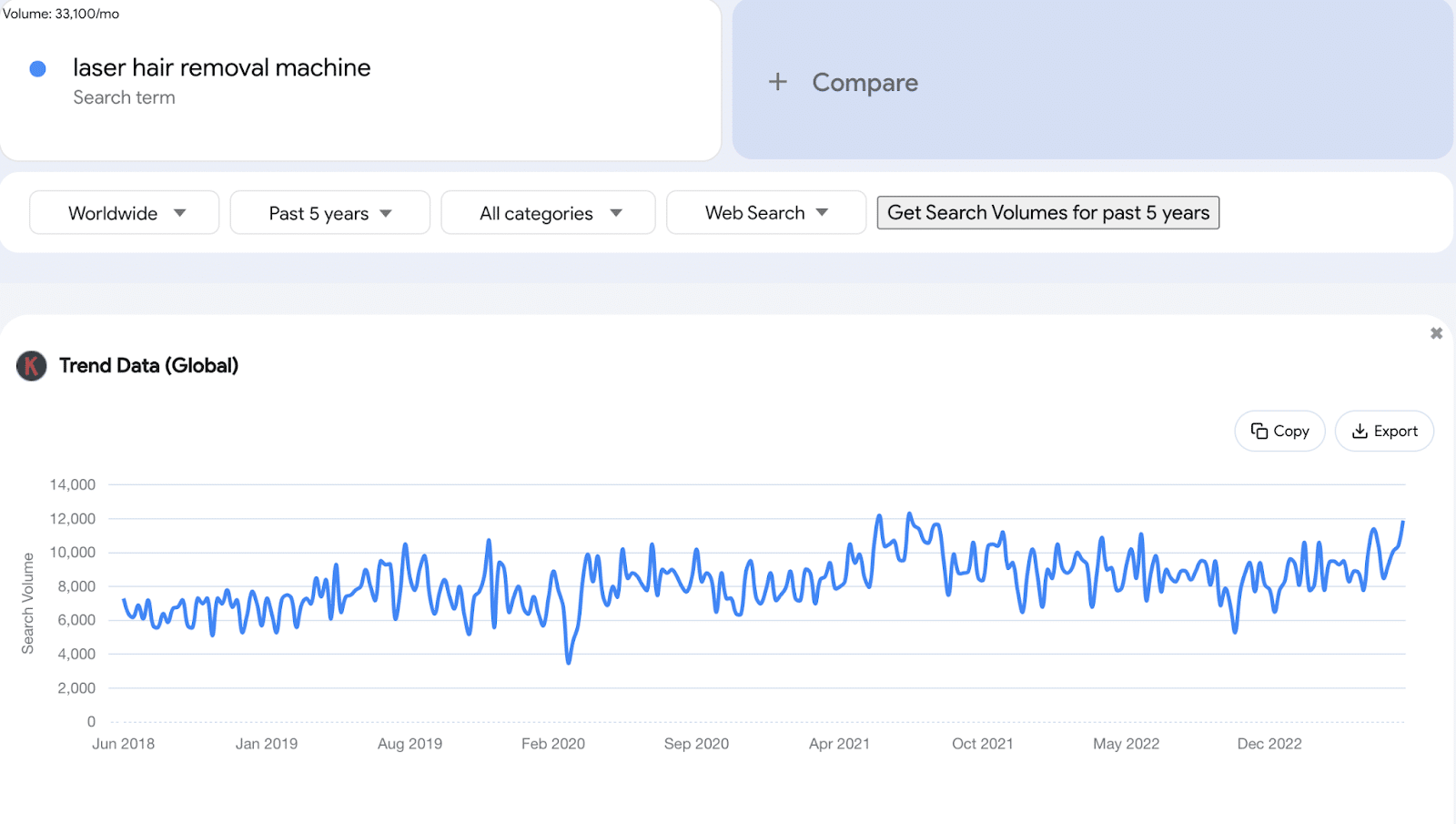
Use the device’s verified intended use and instructions to guide marketing. Explain relevant limitations. Avoid promises about permanent results, universal suitability or safety that the product documentation does not support.
Have a qualified specialist review the device, supplier records and destination-market requirements. Include testing and labeling costs in the budget. Electrical checks alone are insufficient for evaluating the product’s regulatory and performance needs.
3. Portable Solar Panels
Portable solar panels can be moved and set up to generate electricity from sunlight. Products vary in size, output and connector types. Some are designed to work with a separate battery or power station.
Review search interest for portable solar panels alongside questions about compatible equipment. Check whether buyers need a panel alone or a complete charging setup.
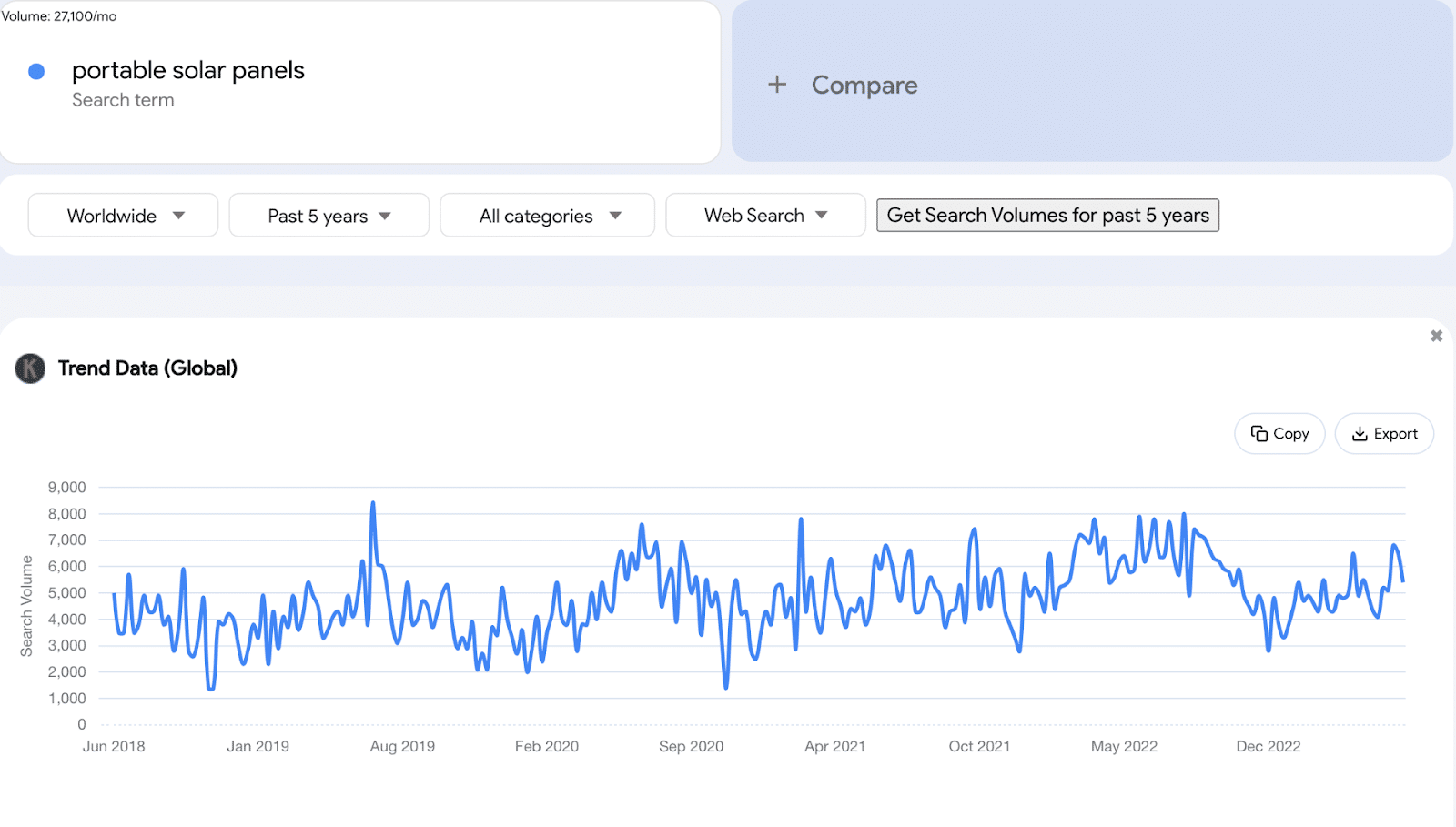
State the panel’s rated output and explain the conditions that affect performance. List verified connector and equipment compatibility. Avoid presenting rated output as a guarantee of power available in every setting.
Check cell quality, wiring and connectors. Test folding and transport durability where relevant. Verify weather-resistance claims and confirm that packaging protects the panel during shipping.
Before You Chase a Trend, Check Manufacturing Risk
Trend data can show what shoppers are noticing. It does not tell you whether a product can be made at the right cost and quality. Check tooling needs, minimum order quantities and supplier capacity. Include testing, packaging and shipping in the budget.
A promising idea still needs demand validation and a realistic product research plan before you place a production order. Compare the cost of correcting a weak design now with the cost of changing it after tooling.
Use market reports as background when their dates and category definitions fit your research. For example, a pet-care market report covers a broader category than one pet accessory. Check product-level evidence before making an inventory commitment.
Turn Your Product Shortlist Into a Development Plan
Bring your shortlist, target customer and expected selling price to Gembah. Discuss your product development plan and identify the research, design or sourcing work needed before production.