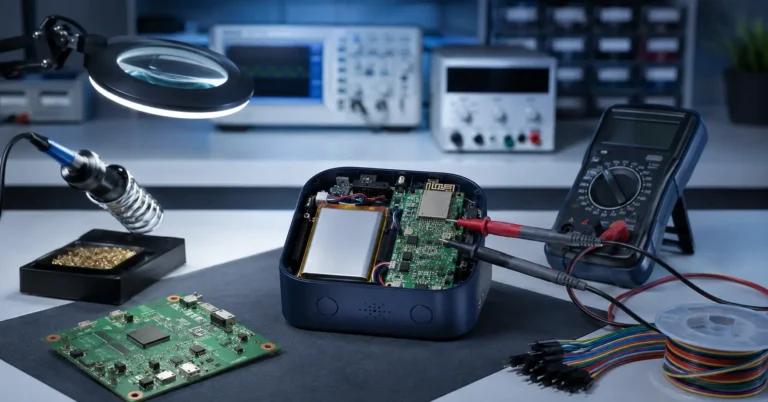

Before you approve tooling or place a production order, prove four things. People will pay for the product. The market leaves room for a clear difference. The numbers still work after real costs. A qualified factory can make the product as planned.
Product validation turns those questions into tests you can run before the expensive stages begin.
If you’re working with an early concept, validation helps you decide what deserves more time and money. It can also show that an idea needs a different customer, price, feature set or manufacturing plan.
Quick answer: Validate a product idea before manufacturing by checking demand, competition, profit and factory feasibility. Look for buyer actions such as waitlist signups, preorders or retailer interest. Compare real factory quotes with your target price and selling costs. Move to tooling when the evidence supports both demand and profit.

What Product Validation Means for a Physical Product
Product research gathers facts about customers, competing products, pricing and the market. Market validation asks people to act on your offer. For a physical product, you also need cost and factory evidence. A product with strong demand can still fail if it costs too much to make or can’t meet its performance requirements.
That makes physical-product validation different from collecting opinions. Friends might praise an idea because they want to support you. Survey respondents might say they’d buy, then choose something else when they see the price. Search volume proves that people search for a topic. It doesn’t prove they’ll buy your version.
Stronger evidence carries a real cost or commitment. A shopper joins a waitlist after seeing the expected price. A buyer places a refundable deposit. A retailer asks for samples and terms. A factory reviews the design files and returns a detailed quote. Each action answers a different part of the decision.
Validation happens in rounds. Early tests should be fast and cheap. Later tests should become more realistic as the evidence improves. You shouldn’t pay for production tooling to answer a question that a mockup, landing page or rough prototype could have answered earlier.
Keep a validation record as you work. For each claim, note the source, date, audience and test conditions. Separate facts from assumptions. For example, a supplier quote is evidence for one design, quantity and set of terms. It isn’t a permanent cost for every version of the product.
Rank the unknowns by how much damage they could cause. A color preference might wait. A question about safety, demand or unit cost needs an early answer. This keeps the research focused on decisions that could stop the project.
A useful target depends on the product, price, sales channel and traffic source. Set the pass or fail level before each test. Base it on your margin model, expected acquisition cost and the size of your target market.
Step 1: Confirm the Customer Problem and Demand
Start with the problem your product is meant to solve. Define who faces it, when it happens and what people do about it now. A broad label such as “busy parents” won’t give you a useful test group. “Parents packing formula for daycare” points to a setting, a task and an existing routine you can study.
Talk to People Who Face the Problem
Interview people who match the intended customer. Ask about the last time the problem occurred. Find out what they used, what went wrong and what the problem cost in time, money or effort. Past behavior gives you more useful evidence than guesses about a future product.
Avoid leading with your solution. If you describe the product first, people tend to react to your pitch. Let them explain the problem in their own words. Record repeated phrases because they can guide the product brief, landing page and later sales copy.
Check What the Market Already Does
Search data, marketplace sales estimates, social discussions and retail shelves can show whether a category exists. Check trend direction and seasonality. Look at several years when the data allows it. A short spike can come from news, a viral post or a holiday rather than lasting demand.
Map related searches that show use cases, materials and common complaints. A kitchen-storage idea might connect to small apartments, under-sink storage or hard-to-reach cabinets. These terms can reveal a narrower customer group with a clearer need.
Use more than one source. The product research methods you choose should match the channel where you plan to sell. Marketplace data can help with an Amazon launch. Retailer interviews matter more when wholesale placement is part of the plan. Direct-to-consumer brands should test whether they can reach buyers at a workable cost.
Write down what would count as enough demand before you run the test. The right signal might be qualified waitlist signups, preorder revenue, retailer interest or repeated interview evidence from the target customer. Search volume can support the decision. It shouldn’t make the decision by itself.
Check for gaps in the sample. Existing customers of a category can explain current problems, while people who stopped buying may expose price or trust barriers. Retail buyers and service teams can see return patterns that consumers rarely mention in interviews. Label each source so you don’t treat different groups as one audience.
Step 2: Check the Competition and Your Product Difference
Competition proves that buyers already spend money in the category. It also sets the standard your product must meet. Your job is to find a problem that competitors leave open and decide whether your team can solve it.
List direct competitors that solve the same problem for the same buyer. Then add indirect options. A new countertop organizer competes with other organizers, but it may also compete with cabinet inserts, wall storage or a customer’s choice to keep using a drawer.
Review the Products, Not Just Their Listings
Buy several leading products when the budget allows. Compare materials, dimensions, assembly, packaging and instructions. Use each product as the customer would. Photos and product pages often hide weak hinges, awkward controls, poor balance or difficult cleaning.
Read positive, negative and middle-rated reviews. One-star reviews can overstate rare failures. Five-star reviews show what buyers value. Middle-rated reviews often give the clearest tradeoffs because those customers can see both strengths and faults.
Group comments by feature and use case. Count patterns, but keep the context. Ten complaints about a handle matter more if they come from your intended users and describe the same failure. A long list of unrelated complaints doesn’t point to one clear product decision.
Define a Difference Buyers Will Notice
A useful product difference should connect to a problem buyers already recognize. It should also survive manufacturing, pricing and testing. Color and packaging can help a product stand out, but they rarely fix a weak offer on their own.
Turn the difference into a statement you can test: “For apartment cooks with narrow cabinets, this rack keeps pans upright without permanent installation.” That statement names the user, problem and reason to choose the product. It also creates testable requirements for size, stability and installation.
Check whether competitors can copy the difference with a small listing change. A stronger advantage may come from a better mechanism, material choice, patentable feature, supplier relationship or customer experience. Each option has a cost and none guarantees success.
Assess competition in the channel where you plan to launch. A product may face crowded Amazon results but have room in specialty retail. Another may look open in search results while retailers already carry strong private-label options. Compare shelf space, search placement, review strength, delivery times, warranties and return policies for that channel.
Turn the chosen difference into the concept design and product requirements. If the advantage depends on easier cleaning, define the parts that must be removable and how quickly the task should take. That link between research and design keeps the idea testable.

Step 3: Test Price, Costs and Margin
A product can attract buyers and still lose money. Build the margin model before detailed design locks in expensive choices. Use ranges at first, then replace estimates with quotes and test results.
Test the Price With the Offer
Show the expected price during demand tests. A signup collected without a price can hide weak purchase intent. Test a small number of price points with similar audiences and messages. Track the revenue or contribution margin each version could produce, not only the conversion rate.
Compare your target price with the full set of alternatives. A higher price needs a reason buyers understand. A low price can raise demand while leaving too little cash for ads, returns, product support and future inventory.
Build a Landed-Cost Model
Start with the factory price, then add every cost required to place a sellable unit in the customer’s hands. Your model may include tooling, packaging, freight, duties, inspections, warehousing, marketplace fees, payment fees, fulfillment, returns and customer acquisition.
Keep one-time costs separate from per-unit costs. Spread tooling and development costs across more than one sales case. A quote based on a large order can make the unit cost look attractive while exposing the business to too much unsold inventory.
Run a base case, a weak-sales case and a higher-cost case. Test what happens if the order is smaller, freight rises, returns are higher or paid traffic costs more. A sound model leaves room for normal changes. A model that works only under the best assumptions needs revision.
Cash timing matters too. Tooling deposits, production payments and freight can come due months before customer revenue arrives. Map when cash leaves and returns under each sales case. A profitable unit can still create a cash shortage if inventory moves slower than planned.
| Cost to model | Source | Questions to answer |
|---|---|---|
| Factory price | Written supplier quotes | What quantity, materials and packaging does the quote include? |
| Tooling and setup | Tooling quote and payment terms | Who owns the tool, and how many units should carry the cost? |
| Freight and import costs | Freight estimate and tariff classification | What changes by shipping method, product size or country? |
| Selling and fulfillment | Marketplace, warehouse or retail terms | Which fees apply to each order and returned unit? |
| Customer acquisition | Test campaigns or channel history | Can the expected margin pay for a customer? |
| Returns and defects | Test results and category history | What failure rate can the business absorb? |
Use the same assumptions across your price test, sales forecast and factory request. Mismatched quantities or packaging requirements can make two numbers appear compatible when they describe different products.
Update the model after every meaningful design change. A thicker wall, new coating or extra fastener can affect tooling, assembly, shipping weight and defect risk. Ask who owns each number and when it was last checked. Old estimates shouldn’t travel into a tooling decision without review.
Step 4: Confirm Factory Feasibility
Factory feedback should begin before you finish the design. A concept can look simple on a screen and still require costly tooling, tight tolerances or a material the factory doesn’t handle well.
Prepare enough detail for a useful review. Share drawings, target materials, dimensions, expected function, finish requirements, estimated order volume and testing needs. Ask the factory to state its assumptions. A short unit price without those details gives you little evidence.
Seek feedback from at least two qualified factories. Compare their proposed process, tooling, minimum order quantity, lead time and quality plan. Large gaps between quotes can point to different assumptions or different levels of capability.
Questions to Ask Each Factory
- Have you made products with similar materials, parts and performance needs?
- Which part of the design creates the most production risk?
- What design changes could lower cost or improve repeatability?
- Which tests will confirm that production units meet the requirements?
- What does the quote exclude?
- How will changes to quantity affect the unit price and lead time?
Check business licenses, certifications, references and quality systems that apply to your category. Ask for samples of similar work. A factory visit or live video review can help confirm equipment and processes. These checks reduce risk, but they don’t replace sample approval and production inspection.
A prototype or sample should test the biggest unknowns before tooling. That could mean fit, strength, heat resistance, sealing, battery life or how several parts assemble. Tie each test to a written requirement so you can decide whether it passed.
Normalize the quotes before comparing them. Confirm that each factory priced the same materials, finish, packaging, order quantity and quality checks. Ask how long the quote stays valid and what could change the price. The lowest number has little value when it leaves out a required process.

Three Product Validation Tests to Run Before Tooling
These tests turn research into observable evidence. Run them in the order that addresses your biggest risk. If demand is uncertain, start with the offer. If the product depends on a difficult mechanism, factory and prototype work may need to happen earlier.
1. Landing Page and Buyer-Action Test
Create a focused page for one customer group. Show the problem, product concept, main difference and expected price. Ask for an action that fits the stage, such as a waitlist signup, refundable deposit or preorder.
Send qualified traffic from the channel you expect to use after launch. Track the audience, message, spend and action rate. Separate people who match the target customer from broad traffic. A low-cost signup from the wrong audience won’t support the launch plan.
Set the pass level before traffic begins. Base it on the contribution margin and expected cost to acquire a customer. If results miss the target, test whether the problem comes from the audience, offer, price or product idea. Change one major factor at a time.
2. Competitor Sample and Review Test
Buy leading products and use them under realistic conditions. Photograph parts, measure key dimensions and record what happens. Compare those observations with repeated review themes.
Write a short requirement for each problem your idea will solve. If buyers complain that a lid leaks, define the position, liquid and time used in the leak test. “Better seal” is an opinion. A test condition gives designers and factories something they can verify.
Show the samples or early prototype to people in the target group. Watch how they use each option. Their behavior can reveal problems that interviews and reviews miss.
3. Factory Feasibility Checkpoint
Send the same brief to at least two factories with relevant experience. Request written assumptions, estimated tooling, unit prices at realistic order sizes, lead times and key production risks.
Compare the answers with your margin model and product requirements. Ask each factory to explain major cost drivers. If both factories flag the same design problem, revise it before tooling. If their answers differ sharply, investigate the assumptions before choosing a supplier.
Gembah’s product research and market validation services can help you define the evidence needed before design, sourcing and production decisions.
Product Validation Decision Table
Use the table as an evidence check. Skip point totals because one weak area can put the full investment at risk.
| Question | Evidence required | Pass signal | Warning sign |
|---|---|---|---|
| Will buyers act? | Waitlist, preorder, retailer or test-ad results from the target audience | Repeated buyer actions at a traffic cost that fits the margin model | Compliments without signups, orders or other action |
| Is there room to compete? | Review patterns, product comparisons and competitor samples | A repeated problem that the new product can solve | The main difference is color, packaging or a lower price |
| Do the numbers work? | Factory quote, landed cost, selling fees, returns and customer acquisition cost | The target margin remains after all expected costs | The model depends on estimated manufacturing costs |
| Can it be made? | Feedback from at least two qualified factories | Materials, tooling, MOQ and lead time fit the plan | One vague quote or major design changes are still required |
Record the source, date, sample size and assumptions behind each answer. Mark the product “revise” when one area lacks evidence. Mark it “stop” when demand or profit fails after a fair test.
When to Move Forward, Revise or Stop
Move Forward
Move into detailed design or tooling when buyer actions meet the target, the difference solves a repeated problem and quoted costs support the margin model. Factory feedback should confirm that the product can meet its key requirements.
Keep the evidence with the project brief. Design choices should trace back to customer needs, tests or factory limits. This prevents later changes from removing the reason buyers chose the product.
Revise
Revise when one part of the case is weak and a clear test could improve it. You might narrow the customer group, change the offer, remove a costly feature or adjust the manufacturing method. Set a limit on revisions so the team doesn’t keep funding an idea without stronger proof.
Stop
Stop when the target audience won’t act after a fair offer test or when real costs leave no workable margin. Stop when the product can’t meet a key safety or performance requirement. Ending a weak idea before tooling protects cash for a better one.
Save the research. Failed tests can still reveal a customer problem, price limit or manufacturing constraint that guides your next product idea.
Product Validation FAQs
How do you validate a product idea before manufacturing?
Confirm the customer problem, ask buyers to act on a priced offer, study competing products, build a full cost model and get written feedback from qualified factories. Set a pass or fail target before each test.
What’s the difference between product research and market validation?
Product research gathers information about customers, demand, competitors and pricing. Market validation tests whether the target customer will take a meaningful action. Physical products also need cost and factory checks before production.
Is search volume enough to validate a product?
No. Search volume shows interest in a topic or category. It doesn’t prove that people will buy your product at your price. Pair search data with buyer-action tests, cost estimates and competition research.
How many customers should you include in a validation test?
Use enough qualified people to find repeated behavior and compare results with your pass target. The right sample changes with the product, audience and test. Record the sample size and traffic source so others can judge the evidence.
When should you contact a factory?
Contact factories before the design is locked. Early feedback can identify material, tooling and assembly problems while changes still cost less. Give each factory enough detail to state its assumptions and production concerns.
How do you know a product is ready for tooling?
The product is ready when buyer evidence supports the offer, the margin survives real cost quotes and factories confirm the design can be made. Key functions and risks should already have clear test results.
Decide Whether Your Product Is Ready
A product idea is safer to fund when demand, costs and factory limits have been tested. Gembah can help you review the evidence and plan the next stage before you commit to tooling.