
TikTok influencer marketing has become one of the most powerful tools for product brands looking to reach buyers who are ready to act. Unlike traditional social platforms, TikTok’s algorithm rewards engaging content over follower counts, which means your product can reach millions through creators with modest audiences. For businesses bringing new products to market, this levels the playing field in ways Instagram and Facebook never could.
At Gembah, we help entrepreneurs and businesses develop products from concept to manufacturing, and we’ve seen firsthand how the right influencer partnerships can make or break a product launch. We’ve worked with clients who spent $25K on celebrity influencers before coming to us, only to see our suggested micro-creator strategy deliver better results for under $5K. Once you’ve built something worth selling, connecting with the right TikTok creators becomes critical to getting traction fast.
This guide walks you through finding TikTok influencers, negotiating partnerships that actually convert, and scaling campaigns that drive real revenue. Whether you’re launching your first product or looking to expand reach, understanding how TikTok Shop has changed the game will give you a serious edge.
Ready to explore how Gembah can support your product development and go-to-market strategy? Learn more about our end-to-end services.
TL;DR: TikTok Influencer Marketing
TikTok influencer marketing delivers measurable results for product brands by leveraging authentic creator content and an algorithm that prioritizes discovery over follower counts. The platform’s integration with TikTok Shop has shifted strategies from flat-fee posts to performance-based partnerships using samples and commissions, making it easier for brands to scale without massive upfront costs. Success depends on choosing creators based on engagement and audience fit rather than vanity metrics, giving them creative freedom, and tracking real conversions instead of likes.
Key Points:
- 50% of TikTok users have purchased products after seeing creator promotions, making it a direct sales channel
- TikTok Shop generated approximately $26 billion in global GMV in the first half of 2025, proving its e-commerce power
- Micro and nano creators often outperform celebrities with higher engagement rates and more authentic connections
- Performance-based partnerships using samples plus commission typically beat flat-fee arrangements for ROI
- Average TikTok influencer campaigns deliver $5.78 revenue per $1 spent, with top campaigns reaching much higher
- Focus on GMV and conversions as your primary KPIs, not likes or views alone
Also read:
- Instagram Influencer Marketing: New Founder Guide 2025
- Celebrity Endorsements for Small Businesses: What Actually Works (and What’s a Waste of Money)
- 15 E-Commerce Strategies for Selling Your Product Online
Why TikTok Influencer Marketing Works for Product Brands
TikTok has fundamentally changed how brands connect with buyers. The platform’s structure rewards creativity and authenticity over polished ads, which means product brands can compete without Hollywood-level production budgets. More importantly, TikTok users aren’t just scrolling for entertainment—they’re actively looking for products to buy, and they trust creator recommendations more than traditional advertising.
The platform’s massive reach combined with high purchase intent creates perfect conditions for product launches. When you pair that with TikTok Shop’s seamless checkout experience, you’ve got a channel that can go from awareness to sale in seconds.
TikTok’s Algorithm Favors Discovery Over Followers
TikTok’s For You Page operates differently than Instagram or Facebook feeds. The algorithm assigns scores to videos based on predicted user retention and watch time, pushing engaging content to relevant viewers regardless of the creator’s follower count. This levels the playing field dramatically—a creator with 5,000 followers can reach more people than someone with 500,000 if their content resonates.
For product brands, this means you can work with smaller creators and still achieve viral reach. The key is creating content that people want to watch all the way through and engage with, not paying for access to large follower bases.
TikTok Users Buy Impulsively
TikTok has created a shopping behavior that other platforms struggle to match. 49% of TikTok users say creators inspire them to explore products and brands featured in content. Even more striking, 55% of American TikTok users admit to making impulse purchases on social media, with TikTok Shop and creator-driven content driving most of those decisions.
The platform combines entertainment with instant gratification. Users discover products through entertaining content, get excited, and can buy immediately without leaving the app. This impulse buying behavior makes TikTok particularly effective for physical products that can be demonstrated visually.
Micro and Nano Creators Outperform Celebrities
Follower count doesn’t predict success on TikTok the way it does on other platforms. Micro-influencers with 10,000 to 100,000 followers and nano-influencers with 1,000 to 10,000 followers consistently deliver better engagement rates and ROI than celebrities. These creators foster closer connections with their audiences, which translates to more trust and higher conversion rates.
The cost difference is substantial too. While celebrity influencers with over 1 million followers might charge $45,000 or more per post, micro-influencers typically charge between $500 and $5,000. Nano-influencers often work for product samples plus commission, making them accessible for brands at any budget level.
Product Features That Perform on TikTok
In our work developing consumer products at Gembah, we’ve identified clear patterns in what drives creator interest and audience engagement. Products with visible transformations—before/after results in beauty, organization, or fitness—generate 3-5x more creator interest compared to incremental improvements. Creators gravitate toward products that deliver visual proof points they can demonstrate in 15-60 seconds.
Problem-solution products that address specific pain points consistently outperform general lifestyle items. When working with clients launching kitchen gadgets, we’ve noticed creators who focus on time-saving meal prep drive 40% higher conversion rates than general lifestyle creators, even with smaller audiences. The key is matching product benefits to creator niches where those specific problems matter most.
Price point significantly affects performance too. Products between $15-$60 convert best through creator content, hitting the sweet spot between impulse purchase and perceived value. Higher-ticket items ($100+) can succeed but typically require creators who do in-depth reviews rather than quick demonstrations.
TikTok Shop Changed the Game: Samples + Commissions Beat Paying for Posts
TikTok Shop fundamentally shifted how smart brands structure influencer partnerships. The old model of paying flat fees for posts made sense when social media was purely about awareness. But TikTok Shop integrated commerce directly into the platform, which means every creator partnership can now drive measurable sales immediately.
The platform generated $1.1 billion in US monthly GMV by July 2025, proving it’s a serious sales channel. For product brands, this means you can tie creator compensation directly to results rather than hoping brand awareness eventually converts.
The Default Winning Offer: Free Samples Plus Commission
The most effective TikTok Shop strategy involves sending creators product samples and offering them commission on every sale they generate. This approach delivered 5x ROI for brands during Black Friday 2024, with content costs at $7-12 per piece versus $50-100+ for standard user-generated content.
Creators who earn commission on sales are motivated to create content that actually converts, not just content that looks good. They’ll naturally optimize their messaging, test different approaches, and promote products they genuinely believe will sell. One skincare brand using micro-influencers through an open affiliate program saw a 1,194% sales increase and 3.2x return on ad spend by letting creators earn commission on sales.
Why Paying Flat Fees for UGC Usually Fails
When you pay a flat fee, the creator gets compensated regardless of whether their content converts. They have no incentive to optimize for sales or create follow-up content if the first post underperforms. The creator takes your money and moves on, whether you made sales or not.
The exception is established creators with proven track records of driving sales for similar products. But even then, negotiating a lower base fee plus performance bonus typically delivers better results than a pure flat-fee arrangement.
On TikTok Shop, GMV is the KPI, Not Likes
Gross Merchandise Value measures total sales revenue generated through the platform, and it’s the metric that actually matters for product brands using TikTok Shop. If a video gets 50,000 views but only drives 5 sales, it’s underperforming compared to a video with 10,000 views that drives 50 sales.
A thrifting-focused brand’s multi-platform campaign demonstrates this principle. Using tiered influencers (nano/micro for engagement, macro for reach) with performance-driven paid media, the campaign achieved 3.8M impressions, 71.9K link clicks, 11.6K purchases, $0.96 CPA, $29.71 ROAS, and $334K+ purchase value. The top creator alone drove $192K in sales, proving that conversion metrics matter far more than engagement vanity metrics.
When you structure partnerships around GMV, creators naturally optimize for conversions. Set clear GMV targets for each creator partnership and evaluate them based on sales generated rather than social metrics.
A Simple Performance-First Campaign Structure
Start by identifying 10-20 micro or nano creators whose audiences match your target buyers. Send each creator a product sample with clear information about commission rates and how to join your TikTok Shop affiliate program. Don’t dictate content requirements beyond basic brand safety guidelines.
Give creators two weeks to post content and drive initial sales. Track GMV generated by each creator using TikTok Shop’s attribution tools. After two weeks, evaluate which creators drove the most sales and reach out to discuss ongoing partnerships. Offer higher commission rates or exclusive products to top performers.
Scale by recruiting similar creators to your top performers. Use lookalike search strategies to find creators with similar audience demographics, content styles, and engagement patterns. This approach builds a network of reliable partners who consistently drive sales.
Finding the Right TikTok Influencers for Your Product
Finding TikTok influencers who can actually sell your product requires more than browsing the platform and reaching out to creators with large followings. You need a systematic approach to identifying creators whose audiences match your target buyers and whose content style aligns with your brand.
Define Your Ideal Creator Profile First
Before searching for influencers, document exactly what you’re looking for. Define your target audience demographics including age range, gender, location, and interests. Then identify what content style would resonate with that audience while showcasing your product effectively.
Consider audience alignment as your top priority. The creator’s followers should match your target customer profile in demographics and interests. When working with clients launching beauty products at Gembah, we’ve found that creators who do tutorials and reviews drive substantially higher conversion rates than general lifestyle creators, even with smaller audiences.
Evaluate content style and values next. The creator’s tone, aesthetic, and approach should complement your brand without being identical. Review their past brand partnerships to see how they integrate sponsored content naturally.
Finally, assess engagement metrics over follower counts. A creator with 15,000 highly engaged followers who regularly comment and share content will outperform someone with 150,000 passive followers. Target engagement rates of 10-20% for nano-influencers and 5-15% for micro-influencers as baseline indicators of active, responsive audiences.
Search TikTok Using Hashtags and Keywords
TikTok’s native search function provides a direct way to find creators in your product category. Search relevant hashtags that your target audience uses and analyze which creators consistently appear in top results. Start with product category hashtags like #skincareroutine, #fitnesstech, or #homeorganization depending on your product.
Use keyword searches for specific use cases your product addresses. If you sell kitchen gadgets, search terms like “meal prep” or “quick recipes” to find creators whose content naturally aligns with your product benefits. These creators have already built audiences interested in the problems your product solves.
Analyze competitor mentions to find creators already promoting similar products. Search your competitor brand names or product types to identify creators active in your space.
Use Influencer Discovery Tools
Specialized platforms streamline creator discovery by providing detailed data you can’t easily access through TikTok alone. Promoty excels as a TikTok-focused search tool with global influencer data including followers, average views, engagement metrics, and audience demographics. The platform provides growth rates and similar profile suggestions for precise targeting.
HypeAuditor offers a 207.5 million creator index emphasizing audience quality scores to detect fake followers and engagement. Their lookalike feature identifies similar creators once you’ve found successful partners. Modash and IQfluence provide massive databases with over 350 million profiles combined, using AI-driven semantic search to match creators to brand requirements.
Vet Creators Before Reaching Out
Thorough vetting prevents wasted outreach and protects your brand. Review content history going back several months. Check posting frequency, content quality consistency, and whether the creator maintains a clear niche and audience.
Analyze engagement patterns to identify authentic influence. According to industry analysis, brands should scrutinize that “an influencer with 1 million followers who get 500 comments per post” is far more valuable than “one with 5 million followers who barely gets 50 comments”. Real engagement includes substantive comments and conversations rather than generic emoji responses.
Examine past brand partnerships to assess integration quality and disclosure practices. Creators who seamlessly integrate products while maintaining transparency make better long-term partners than those whose sponsored posts feel forced.

Reaching Out and Negotiating Partnerships
Once you’ve identified promising creators, your outreach approach determines whether they respond positively or ignore your message entirely. TikTok creators receive partnership requests constantly, which means generic pitches get deleted immediately.
Craft a Direct, Benefit-Focused Pitch
Lead with value to the creator’s audience rather than your brand story. Frame your product as something their followers will genuinely appreciate discovering. Start by showing you understand their content—reference a specific recent video and explain why you think your product aligns with their audience’s interests.
Explain clearly what you’re offering, whether samples plus commission, flat fee, or another structure, and what you expect in return. Make the logistics simple with clear next steps. Avoid requiring creators to fill out lengthy applications before discussing partnership terms.
Decide: Paid, Gifted, or Affiliate?
Your compensation structure should match the creator’s size, your budget, and campaign goals. Gifted partnerships work well for nano and many micro-influencers who are building their creator businesses. You send product samples at no cost beyond shipping and potentially offer commission on sales.
Affiliate structures where creators earn commission on sales they generate align incentives perfectly. TikTok influencer rates vary from $200-500 per video for nano-influencers to $15,000-40,000 for macro-influencers, but affiliate models bypass these upfront costs entirely.
Paid partnerships make sense for established creators with proven track records of driving sales in your product category. Reserve paid deals for scaling proven partnerships rather than initial tests.
Negotiate Based on Performance, Not Followers
Follower count is one of the least reliable indicators of campaign success on TikTok. Request case studies or examples from previous brand partnerships when negotiating paid deals. Ask about engagement rates, conversion rates, and sales generated if they’ve worked with similar products.
Propose tiered compensation structures that reward results. For example, offer a base rate plus bonuses for hitting specific GMV targets or engagement thresholds. This approach aligns incentives and protects you from paying premium rates for underperforming content.
Set Clear Expectations in Writing
Once you’ve agreed on terms verbally, document everything in a simple written agreement. Specify deliverables exactly: how many videos the creator will post, posting timeline, required hashtags or mentions, and content guidelines.
Define compensation terms precisely. Document whether you’re providing product samples, flat fees, commission rates, or combinations. For affiliate arrangements, specify commission percentage, how attribution works, payment schedule, and any minimum thresholds.
Address content rights clearly. Specify whether you can repurpose creator content for your own marketing channels and any limitations. Many brands negotiate rights to use creator videos in ads, on product pages, or across social media.
Structuring Campaigns That Convert
Creating campaigns that drive actual sales requires balancing creative freedom with clear campaign goals. The most successful TikTok campaigns give creators space to produce authentic content while providing strategic direction on product benefits and target audiences.
Give Creative Freedom (Don’t Script Everything)
TikTok users can immediately tell when content is overly scripted or inauthentic. Creators know their audiences better than brands do. Share product details, unique selling points, and any specific claims or features you want highlighted. Provide brand safety guidelines around what not to say or show. Then let creators develop their own hooks, demonstrations, and storytelling approaches.
Data shows that 60% of TikTok users are more likely to trust a brand recommendation from an influencer than from the brand’s own ads, and 84% of consumers are more likely to trust a brand that uses real customer or creator content. This trust stems from authenticity—when creators have freedom to present products in their natural style, audiences respond.
Use Unique Discount Codes to Track Performance
Unique discount codes assigned to each creator provide clear attribution for sales while giving their audiences added incentive to buy. Create simple, memorable codes tied to each creator’s name or handle. A code like “SARAH15” for 15% off is easy for viewers to remember and type.
Track redemption rates and revenue per code through your e-commerce platform. This data shows which creators drive the most sales and highest average order values. Communicate performance back to creators regularly to motivate them to promote more actively.
Best-Performing Content Formats
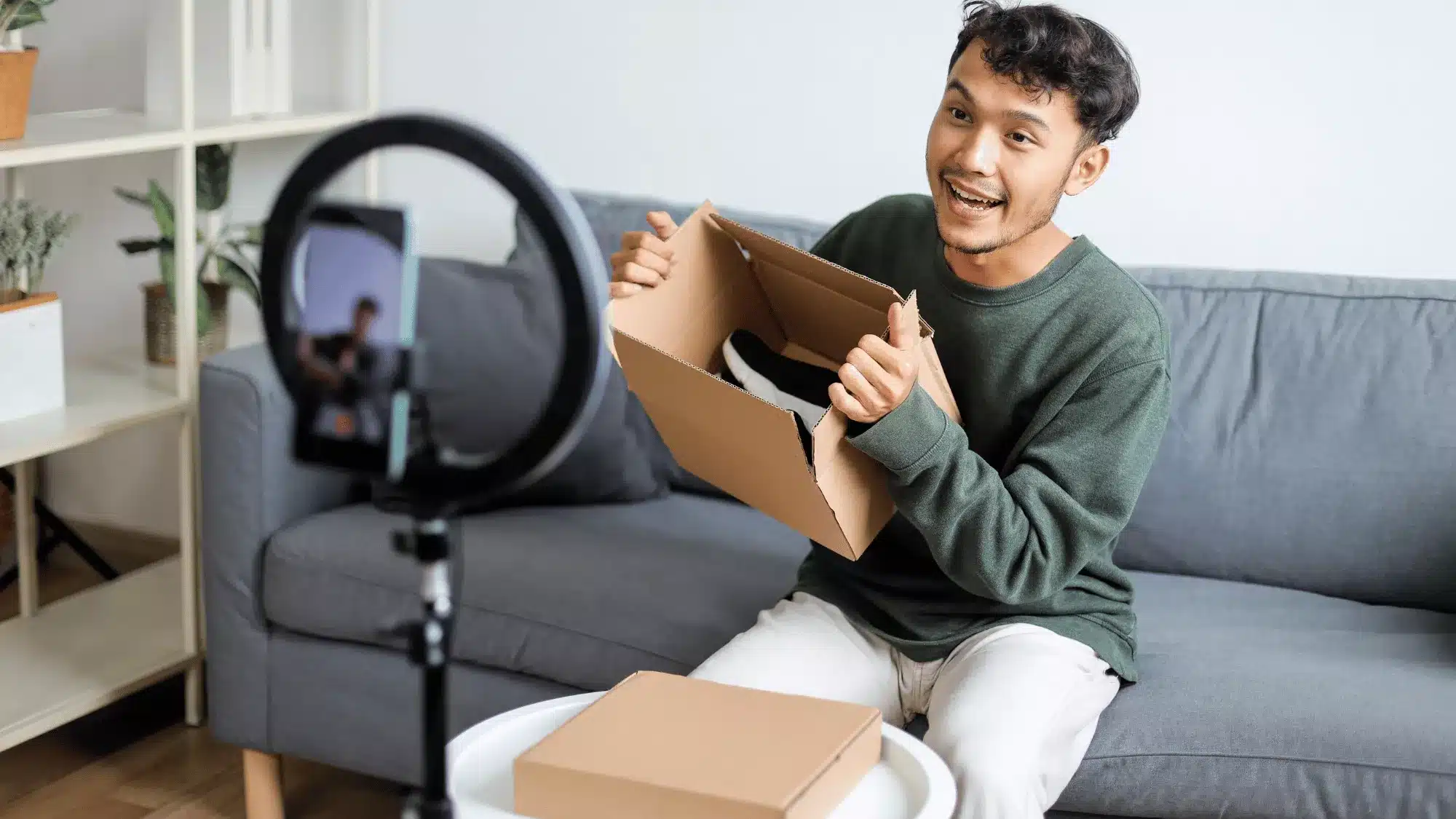
Certain content formats consistently drive higher engagement and conversions on TikTok. Unboxing and first impressions videos work exceptionally well for product launches. Viewers appreciate genuine reactions to trying products for the first time, building credibility because the creator is discovering the product alongside their audience.
Before-and-after demonstrations show product benefits visually and immediately. Whether showing makeup application, organization transformations, or fitness results, demonstrating clear improvement grabs attention and drives conversion.
Tutorial and how-to content performs well for products requiring explanation or demonstration. Creators who show exactly how to use your product while explaining benefits address viewer questions and objections, building confidence in the purchase.
When TikTok Influencer Marketing May NOT Be Right
TikTok influencer marketing isn’t universally effective. Understanding when this strategy underperforms helps you make smarter resource allocation decisions. Highly technical B2B products that require extensive evaluation and multiple stakeholder approval rarely convert through TikTok’s impulse-driven environment. The platform’s quick consumption format doesn’t suit complex buying processes.
Extremely high-ticket items ($500+) requiring long sales cycles face challenges on TikTok. While creators can generate awareness, conversion typically happens elsewhere after extended consideration. Products that aren’t visually demonstrable—software without clear UI benefits, services without tangible outcomes, or products whose value takes weeks to appreciate—struggle to capture attention in TikTok’s visual-first format.
Additionally, products targeting audiences outside TikTok’s primary demographics (18-44 year-olds) may find better ROI on other platforms. If your ideal customer rarely uses TikTok, forcing influencer campaigns there wastes resources that could perform better elsewhere.
Tracking ROI and Campaign Performance
Measuring influencer campaign success requires tracking specific metrics that connect creator activity to actual business results. Vanity metrics like likes and follower counts tell you almost nothing about ROI. Focus your tracking on engagement quality, traffic generation, conversion rates, and revenue attribution.
Track These Metrics Per Creator
Engagement rate measures how actively viewers interact with content as a percentage of views. Calculate it as (likes + comments + shares) / views × 100. Target 10-20% for nano-influencers, 5-15% for micro-influencers, and 1-3% for macro-influencers as baseline indicators of content resonance.
Click-through rate tracks the percentage of viewers who click through to your product page. This metric reveals whether content successfully drives traffic and purchase intent. Conversion rate shows what percentage of clicks result in actual purchases. Calculate it as (total conversions / total clicks) × 100.
Revenue per creator tracks total sales attributed to each creator’s unique code or affiliate link. This bottom-line metric determines ROI directly. Compare revenue per creator against any compensation paid plus product costs to calculate true profitability.
Use UTM Links and Affiliate Tracking
UTM parameters added to links let you track traffic sources precisely in Google Analytics. Create unique UTM codes for each creator and campaign to see exactly how many visitors each partnership drives. Structure UTM parameters consistently using campaign name, source (creator name or handle), and medium (social/influencer).
TikTok Shop’s affiliate system tracks attribution automatically for sales within the platform. Each creator gets a unique affiliate link that credits them for purchases made within a specific attribution window, typically 7-15 days after click.
Calculate True ROI (Not Just Vanity Metrics)
True ROI calculation requires comparing revenue generated against total costs invested. Include all expenses: creator compensation, product samples, shipping, platform fees, and a percentage of your team’s time managing campaigns. Subtract these costs from attributed revenue to determine net profit, then divide net profit by total costs to calculate ROI percentage.
Compare influencer ROI against your other marketing channels honestly. If influencer campaigns deliver $6 per $1 spent while paid search delivers $4 per $1 spent, influencer marketing deserves larger budget allocation. Make investment decisions based on comparative performance rather than preset budget assumptions.
Scaling What Works
Once you’ve identified creators and content approaches that drive real results, scaling becomes your next priority. Build systems for finding similar high-performers, repurposing successful content, and using creator insights to improve your own brand presence on TikTok.
Double Down on Top-Performing Creators
Your highest-performing creators deserve increased attention and investment. Offer them more products, higher commission rates, or exclusive partnership terms to incentivize ongoing content creation. Structure ongoing partnerships with monthly product shipments or content requirements to maintain consistent exposure.
Involve top creators in product development decisions when appropriate. Ask their opinions on new product variations, packaging improvements, or line extensions. For brands working with Gembah on product development, creator insights can inform design decisions that improve market fit.
Repurpose Creator Content
High-performing creator videos shouldn’t live only on TikTok. Request content usage rights in partnership agreements so you can leverage creator content in ads, on product pages, and across other social platforms. Top-performing videos work exceptionally well as social proof on product pages.
Use creator content in paid advertising campaigns through TikTok Spark Ads or by running the videos as ads on Instagram and Facebook. Creator content in ad form often outperforms brand-produced ads because it feels native to the platform.
Find Similar Creators (Lookalike Strategy)
Once you’ve identified your top performers, find similar creators who likely deliver comparable results. Analyze what your successful creators have in common: audience demographics, content style, niche focus, and engagement patterns.
Influencer discovery tools like HypeAuditor and Modash offer lookalike search features that identify creators with similar audience profiles and engagement patterns. Review which hashtags and sounds your top creators use consistently, then search these same hashtags to find other creators operating in similar content spaces.
Build Your Own TikTok Using Influencer Insights
Creator partnerships should inform your brand’s own TikTok strategy. Analyze which content formats, hooks, and messaging approaches drive the most engagement and conversions. Study the specific language and framing top creators use when discussing your product—these phrases resonate with your target buyers.
Note which product features and benefits creators emphasize most and which their audiences respond to strongest. At Gembah, we help brands develop products from concept through manufacturing, which provides natural opportunities for compelling behind-the-scenes content that builds credibility and connection with audiences already warmed up by creator content.
Common TikTok Influencer Marketing Mistakes
Even experienced marketers make avoidable mistakes when transitioning to TikTok influencer campaigns. Understanding these common pitfalls helps you avoid wasting budget and damaging brand reputation.
Choosing Creators Based Only on Follower Count
Follower count is one of the weakest predictors of campaign success on TikTok. Focus instead on engagement rates, audience quality, and content relevance. A creator with 15,000 followers and 15% engagement rate will outperform someone with 150,000 followers and 2% engagement.
Watch for signs of purchased followers or engagement. Sudden follower spikes, disproportionate follower-to-engagement ratios, and generic bot comments all suggest inflated metrics.
Over-Controlling the Creative Process
Brands that script every word and require multiple approval rounds kill the authenticity that makes TikTok content effective. Marketing experts note that “brands investing in long-term influencer partnerships see major returns on investment (ROI) as creators refine their messaging for the right audience”, while treating partnerships as “a one-time transaction” limits potential.
Provide clear guidelines on what must be included and what’s off-limits, then trust creators to develop engaging content within those parameters. If you’ve vetted creators properly and set clear expectations, approval shouldn’t be necessary.
Not Tracking Conversions (Only Awareness)
Measuring campaign success through views, likes, and impressions without tracking actual sales is a critical mistake. Set up proper conversion tracking through unique discount codes, affiliate links, and UTM parameters before your first campaign launches.
Many brands celebrate viral videos without checking whether views translated to purchases. A video with a million views that drives 10 sales underperformed compared to a video with 50,000 views that drives 100 sales.
Expecting One Viral Video to Change Everything
The myth of overnight viral success leads brands to unrealistic expectations and poor campaign strategy. While viral videos do occur, sustainable growth comes from consistent creator partnerships that steadily drive awareness and sales over time.
Even genuinely viral videos often don’t translate to proportional sales increases. Focus instead on building diverse creator portfolios that generate steady, predictable results. Multiple creators each driving modest but reliable sales create more sustainable growth than gambling on viral moments.
What Happens After Your First Campaign
Your first TikTok influencer campaign provides valuable data regardless of overall results. Strong performers show you what works to replicate and scale. Underperformers reveal what doesn’t resonate or which creator characteristics predict poor results.
Review Performance and Identify Patterns
Compile detailed performance data from every creator partnership. Track engagement rates, click-through rates, conversion rates, revenue generated, and cost per acquisition. Look for patterns in top performers—do they share similar audience sizes, content styles, or specific niches?
Compare creator performance against your other marketing channels. How does cost per acquisition from TikTok influencers compare to paid search, Facebook ads, or email marketing? This competitive analysis helps you allocate budget appropriately.
Build a Creator Network
Strong creator relationships provide compounding value over time. Maintain regular communication with top performers even between campaigns. Offer your creator network early access to new products and exclusive partnership opportunities.
Consider creating a formal ambassador program with tiered benefits based on performance. Top-tier creators might receive monthly product shipments, higher commission rates, and input on product development.
Integrate Influencer Marketing Into Broader Strategy
TikTok influencer marketing shouldn’t operate as an isolated tactic. Align influencer campaign timing with product launches, major promotions, and seasonal opportunities. Share creator performance data with your product development team—if creators consistently emphasize specific product features or buyers repeatedly ask about certain capabilities, that feedback should inform future product iterations.
Use influencer campaigns to test messaging and positioning before committing to larger marketing investments. If certain product angles drive strong engagement and conversion through creators, apply those insights to your paid advertising and landing page copy.
Gembah: Get Help with Influencer Marketing
Developing products that perform well in influencer campaigns requires careful planning from the concept stage forward. Gembah provides end-to-end product development services that prepare your products for successful TikTok influencer marketing from day one. We help entrepreneurs and businesses take ideas from concept through manufacturing, creating market-ready products that influencers can confidently promote.
Our network of over 600 designers and 2,000 vetted factories lets us match your project with experts who understand your category. When influencers promote products that actually work as advertised, their authentic enthusiasm drives conversions. We also support product differentiation through expert design and development—in crowded categories where dozens of brands compete for creator attention, unique features and thoughtful design make your product stand out.Ready to develop products that succeed in today’s creator economy? Schedule a consultation with Gembah to discuss how we can support your product development and go-to-market strategy.