When building a product business, understanding patent vs trademark vs copyright protections can mean the difference between safeguarding your innovation and watching competitors copy your work. Most founders face the same dilemma: which protection do I need first? At Gembah, we guide entrepreneurs through product development from concept to manufacturing, and this question comes up constantly. The answer isn’t one-size-fits-all. Your choice depends on what you’re protecting, your budget, and your go-to-market timeline.
TL;DR: Patent vs Trademark vs Copyright
Patents protect inventions and functional innovations. Trademarks safeguard brand identifiers like names and logos. Copyrights cover creative expression, like written content or artistic designs. Each serves a distinct purpose in intellectual property protection.
Key Points:
- Patents suit physical inventions with novel functionality, but filing costs start around $10,000-$15,000 with attorney fees and take 2-3 years to grant
- Trademarks protect your brand identity and can last indefinitely with proper maintenance, making them essential before launch
- Copyright registration costs under $100 and protects creative works automatically upon creation, though registration strengthens enforcement rights
- Most product entrepreneurs need trademark protection first to secure their brand, followed by patents only if they have truly novel functionality
- NDAs and trade secrets often provide better early-stage protection than expensive patent filings
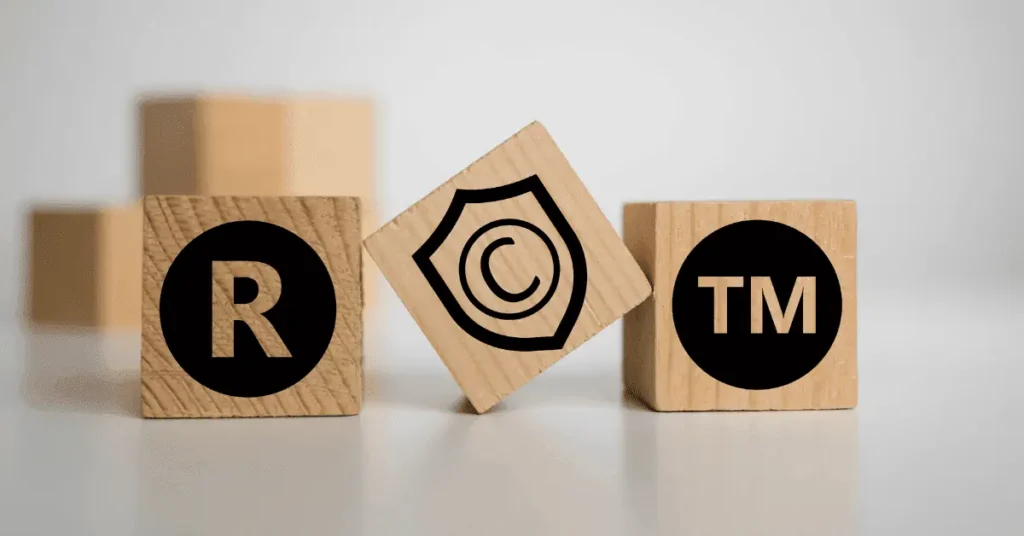
Patent vs Trademark vs Copyright (Simple Definitions With Real Examples)
The difference between patents and trademarks confuses many founders, yet each protection type serves a completely different purpose in your IP strategy.
Patent (protects inventions)
A patent protects new, useful, and non-obvious inventions—the functional aspects of your product, how it works, what it does differently, or the technical problem it solves.
A kitchen gadget founder came to us with a unique slicing mechanism that reduced prep time by 40%. We helped them evaluate: Could competitors design around it? Yes, multiple blade angle approaches existed. Could they maintain speed-to-market with a 6-month launch window? After analysis, we recommended filing a trademark immediately for brand protection, using trade secrets for the specific blade angle and assembly process, and skipping the patent. This saved $12,000 in filing costs and got them to market nine months faster than a patent timeline would allow.
Another client developed a baby monitor with proprietary motion-detection algorithms. Here, the decision differed. The algorithm was genuinely novel, competitors were entering the space quickly, and the company had secured seed funding. We guided them through a provisional patent application to establish priority while they validated product-market fit over the next 12 months. This strategy protected their core innovation without committing to full utility patent costs until they confirmed commercial viability.
Trademark (protects brands)
A trademark protects words, phrases, logos, designs, or symbols that identify your goods or services and distinguish them from competitors. Think McDonald’s golden arches or Nike’s swoosh.
A Gembah client launching eco-friendly reusable food storage learned this lesson early. They invested in product development but delayed trademark filing to “save money.” Three months before launch, a trademark clearance search revealed two similar marks in their class. Pivoting to their second-choice name cost $8,400: $3,200 for new packaging design, $2,800 for destroyed prototype packaging, $1,200 for updated website development, and $1,200 in legal fees for the new trademark application. Filing a comprehensive trademark search upfront ($800) and securing the mark earlier would have prevented this entirely.
Copyright (protects creative expression)
Copyright protects original artistic, literary, or intellectual works fixed in a tangible medium. This includes product packaging designs, instruction manuals, marketing materials, software interfaces, and promotional content. Unlike patents, copyright doesn’t protect ideas or functionality—only how you express those ideas.
A toy company working with Gembah created distinctive character illustrations and packaging graphics. We recommended copyright registration for these creative elements ($65 filing fee) while pursuing trademark protection for the product line name. This dual strategy proved essential when a competitor copied their packaging aesthetic. The registered copyright enabled swift cease-and-desist action with statutory damage claims, while the trademark protected their brand identity in the marketplace.
What Each One Protects
| Protection Type | What It Protects | Duration | Filing Required? | Typical Cost |
| Patent | Inventions, functional innovations, processes, machines, product designs | 20 years (utility) / 15 years (design) | Yes, detailed USPTO application | $10,000-$15,000+ with attorney fees |
| Trademark | Brand names, logos, slogans, product packaging, distinctive colors/sounds | Indefinite with renewals every 10 years | Recommended but not mandatory | $1,000-$3,000 per class with attorney |
| Copyright | Original creative works: writing, art, music, software, architectural designs | Life of author + 70 years | Automatic, registration optional | $45-$125 for registration |
Patents require proving your invention is novel, non-obvious, and useful. Trademarks demand proof of use in commerce and must not confuse consumers. Copyrights kick in automatically when you create something original, though registration brings major enforcement benefits.
The Filing Reality Check (Timing, Cost, and Business Fit)
Filing for intellectual property protection involves strategic decisions about timing, budget, and business goals. Not every startup needs every protection type, and filing in the wrong order can drain resources without delivering meaningful protection.
When a patent makes sense
Patents suit businesses with genuinely novel functional innovations that competitors could easily copy and that provide significant market advantage. The USPTO’s 2025 fee increases raised utility patent filing fees approximately 10% for large entities, with design patent filing costs up 27% and issue fees jumping 76%.
Beyond filing fees, expect attorney costs of $8,000-$12,000 for utility patents. Total investment typically hits $10,000-$15,000 minimum, with maintenance fees at 3.5, 7.5, and 11.5 years post-grant. The 11.5-year maintenance fee for large entities stands at $8,280.
However, the patent system faces significant backlogs. As of March 2025, the USPTO reported 830,020 unexamined utility patent applications awaiting review. While overall utility patent allowance rates reach 60.2% including Requests for Continued Examination, plan for 2-3 year timelines from filing to grant.
Patents make sense when you’re developing hardware with unique mechanisms, chemical formulations, or manufacturing processes that competitors can’t design around. Many software innovations face eligibility challenges, making trade secrets a better option.
When a trademark is non-negotiable
Trademarks become essential the moment you pick a brand name and start building market presence. Unlike patents, trademark protection can last indefinitely with proper maintenance, making early filing critical.
USPTO trademark fees increased January 2025, with base application fees now ranging from $350 to $550 per class depending on filing method. Attorney fees typically add $1,000-$2,500 for straightforward single-class applications.
The stakes are high: 27.9% of trademark applications were unsuccessful in 2023—146,679 out of 524,982 total applications—often due to issues identifiable by prior clearance searches, leading to over $33 million in forfeited fees. Trademark oppositions are also rising, with 7,650 oppositions filed in fiscal year 2025, a 15% increase year-over-year.
Examination takes roughly 3-6 months after filing, with publication for opposition occurring about 3 months later if approved. Total registration timeline runs 12-18 months if unopposed. You’ll need to file a Declaration of Use between the 5th-6th year post-registration and renew every 10 years.
For product businesses, trademark protection is non-negotiable before launch. Strong trademarks also increase company valuation during fundraising or acquisition discussions.
When copyright matters most
Copyright protection matters most for businesses built around creative content, software, or distinctive visual designs. Registration costs remain affordable at roughly $45-$65 per work for online filing, with processing taking 3-10 months.
Copyright automatically protects your work upon creation, but registration delivers critical benefits: statutory damages up to $150,000 per infringement, attorney fee recovery, and stronger enforcement rights. For product businesses, it safeguards marketing materials, packaging designs, and instructional content./
Product Development Angle (How to Protect Your Idea Before You File Anything)
Smart protection starts before any formal filing. During product development, practical confidentiality measures often provide better immediate protection than rushing expensive patent applications.
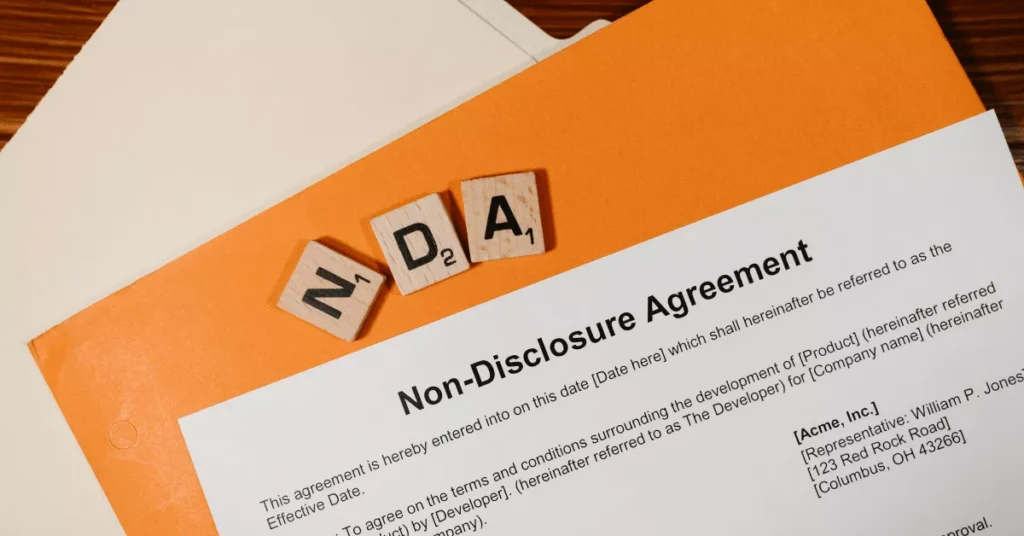
NDAs and confidentiality agreements
Non-disclosure agreements create your first line of defense when sharing product concepts with manufacturers, designers, or potential partners. Sign NDAs early but strategically—present agreements before disclosing sensitive details to manufacturers, investors, or contractors.
Gembah uses NDAs and confidentiality agreements with all vendors in our network to protect client information throughout the development process. This standardized approach ensures consistent protection whether you’re working with designers, engineers, or factory partners.
Include 2026-relevant provisions like “No-AI Training” prohibitions to prevent your data from training competitors’ AI models. Specify reasonable durations and clear remedies for breaches to ensure enforceability.
Ownership of design files and IP
Clear contractual language defining IP ownership prevents devastating disputes during manufacturing. Specify work-for-hire structures where clients own all created IP, assignment clauses where manufacturers transfer rights to clients, or licensing agreements with clearly defined terms.
Once your design is complete and paid for, you should own 100% of the intellectual property, including all design files. Gembah ensures this through clear contracts with designers and manufacturers, giving entrepreneurs flexibility to switch production partners without losing access to their own product designs.
One client learned this the hard way. Their first manufacturer claimed ownership of custom injection mold tooling worth $18,000, holding the designs hostage during a pricing dispute. With Gembah, we establish client tooling ownership upfront, preventing these leverage situations.
Trade secrets as a practical alternative
Trade secrets serve as practical alternatives when secrecy can be maintained indefinitely. Innovations like formulas, processes, or methods that are difficult to reverse engineer offer unlimited duration protection, unlike patents’ 20-year limit.
This strategy avoids public disclosure risks inherent in patent filing. Trade secrets defend against unauthorized disclosure but not independent discovery, so evaluate reverse-engineering vulnerability. Manufacturing methods, recipes, and know-how in industries like food and beverages benefit particularly from this approach—Coca-Cola’s formula remains one of history’s most famous trade secrets.
Implement reasonable security measures through NDAs, access restrictions, and protocols scaled to the secret’s value. Consider hybrid strategies: patent core inventions publicly while keeping complementary improvements or specific processes secret.
Top 3 Founder Mistakes With Patents, Trademarks, and Copyrights
Even experienced entrepreneurs make costly intellectual property errors. These three mistakes appear repeatedly across product launches and can derail otherwise promising businesses.
Mistake 1: Trying to patent a brand name
Patents protect functional innovations and inventions that are new, useful, and non-obvious. Brand names, logos, and slogans don’t meet these criteria—they’re source identifiers that tell customers who makes a product.
Trademark law governs brand protection. If you’re launching a new kitchen gadget called “QuickSlice,” you need trademark registration, not a patent application. The patent protects how QuickSlice’s blade mechanism works. The trademark protects the QuickSlice name and logo.
This confusion costs founders time and money. Patent applications require extensive technical documentation and prior art searches. Filing a patent application for a brand name results in immediate rejection, burning through professional fees without any protection gained.
Mistake 2: Thinking copyright protects product ideas or functionality
Copyright protects only tangible expressions of ideas, not the ideas themselves or their functional aspects. If you design a new folding chair mechanism, copyright won’t stop competitors from using that mechanism. You need a patent for functional protection.
Copyright covers the instruction manual you write, the product photos you take, and the packaging designs you create. It protects creative expression fixed in tangible form, while patents protect how things work and what they do.
This mistake leaves functional innovations completely unprotected. Founders who rely solely on copyright find competitors legally copying their product’s core functionality because copyright law explicitly excludes protection for useful articles and functional designs.
Mistake 3: Skipping trademark searches, then having to rebrand mid-launch
Failing to conduct thorough trademark searches before launching causes expensive, reputation-damaging rebrands. Founders often assume their business name or product name is available without verifying through the USPTO’s trademark database.
One Gembah client spent $47,000 rebranding after a trademark conflict emerged three months post-launch. The breakdown: $12,000 in destroyed packaging materials already printed, $18,000 in new brand identity and design work, and $17,000 in legal fees for cease-and-desist response and new trademark filing. A $1,200 comprehensive trademark search and early filing would have prevented this entirely.
With 19,130 extensions to oppose filed in fiscal year 2025—up 7.7% year-over-year—opposition activity is rising. Comprehensive trademark searches examine similar marks in your product class, phonetic similarities, and foreign language equivalents. Professional searches cost $500-$1,500 but prevent $50,000+ rebranding disasters.
Mid-launch rebranding forces businesses to scrap packaging, rework marketing campaigns, and explain the change to confused customers. Early adopters may struggle to find you under the new name, tanking search rankings and social media presence built under the original brand.
Quick Decision Tree
Start with these questions to determine which protection to file first:
1. Are you selling a branded product to customers? → Yes: File trademark first. Secure your brand name and logo before launch to avoid costly rebranding. No: Continue to question 2.
2. Does your product have truly novel functionality that competitors don’t offer? → Yes: Evaluate whether a patent makes financial sense given $10,000-$15,000 costs and 2-3 year timelines. Consider provisional patent applications for 12-month protection while assessing commercial viability. No: Continue to question 3.
3. Can you maintain competitive advantage through secrecy? → Yes: Use NDAs, confidentiality agreements, and trade secret protection. This works for manufacturing processes, proprietary formulas, or methods difficult to reverse engineer. No: Continue to question 4.
4. Is your product primarily creative content, software, or visual designs? → Yes: Register copyrights for creative elements while using trademarks for brand names. Copyright registration costs under $100 and provides strong enforcement rights. No: Reassess your IP strategy.
Common IP Dilemmas Founders Actually Face
‘My trademark search found a similar mark in a different product category. Should I still file?’
This depends on likelihood of confusion and expansion potential. Trademark law examines whether consumers might confuse your products or services. A “Velocity” energy drink and “Velocity” accounting software can typically coexist because the markets are unrelated and consumer confusion is unlikely.
However, assess three factors: How similar are the marks visually and phonetically? How related are the product categories? Could either business logically expand into the other’s territory? A “Summit” outdoor gear company and “Summit” camping equipment brand face higher conflict risk than the energy drink and software example.
If the existing mark operates in a tangential category with expansion overlap potential, consider alternative names. If the mark appears abandoned (no active use for 3+ years), consult an attorney about potential cancellation proceedings. Never assume an unused mark is available—formal abandonment processes matter.
‘Should I file a provisional or full utility patent?’
File a provisional patent if you need 12 months to validate market fit, refine your design, or secure funding before committing to full utility patent costs. Provisional applications cost less ($300-$3,000 total) and don’t require formal claims, giving you “patent pending” status while you test commercially.
File a full utility patent application if you have commercial traction, validated market demand, and budget for the complete process. Provisional patents require conversion to utility applications within 12 months or they expire. If you’re confident in your invention‘s commercial viability and have $10,000-$15,000 available, starting with a utility application eliminates the conversion step.
A Gembah client used this strategically: filed a provisional patent for their ergonomic handle design ($2,400 total), launched a Kickstarter campaign that raised $180,000 in pre-orders, then converted to a full utility application with confidence that market demand justified the investment.
‘A manufacturer wants to retain tooling ownership—is this normal?’
No. While some manufacturers propose this, you should negotiate tooling ownership upfront. Custom tooling represents significant investment ($5,000-$50,000+ depending on complexity) and ties you to that specific factory.
Manufacturers retain tooling ownership to lock in your business, making it cost-prohibitive to switch suppliers. If you own the tooling, you can move production to alternative factories without recreating molds or dies from scratch.
Negotiate tooling ownership in your initial manufacturing agreement. Some scenarios allow shared tooling costs with client ownership after specific order volumes are met, but avoid agreements where the manufacturer permanently owns custom tooling you funded. Gembah’s factory network works with client-owned tooling structures, ensuring entrepreneurs maintain production flexibility as they scale.
Budget-constrained founders: Start with trademark filing ($350-$550 USPTO fees plus $1,000-$2,500 attorney fees). This protects your brand immediately while you validate market fit. Add patent protection later if your product gains traction and justifies the investment.
Well-funded startups: File trademark and provisional patent applications simultaneously if you have novel functionality. Gembah works with entrepreneurs at various funding stages, helping prioritize IP protection strategies that match business goals and budgets.
International expansion plans: File trademarks in target markets early. The Madrid Protocol allows streamlined international filing, but timing matters. Many countries grant rights to first filers, not first users, making early international trademark registration critical for global brands.
Conclusion
Understanding patent vs trademark vs copyright differences empowers entrepreneurs to make strategic IP protection decisions aligned with business goals and budgets. Patents protect functional innovations, trademarks safeguard brand identity, and copyrights cover creative expression.
The filing reality check reveals that patents make sense for truly novel inventions with significant market advantages, despite costing $10,000-$15,000 and taking 2-3 years to grant. Trademarks become non-negotiable before launch, providing indefinite protection for brand identifiers. Copyright registration delivers affordable protection for creative assets, costing under $100 while enabling powerful enforcement rights.
Smart protection starts before formal filings through NDAs, clear IP ownership contracts, and strategic use of trade secrets. The top founder mistakes—trying to patent brand names, thinking copyright protects functionality, and skipping trademark searches—cost businesses significant time and money during critical launch phases.
Gembah helps entrepreneurs navigate these IP protection decisions throughout product development, from concept through manufacturing. Our vetted network operates under confidentiality agreements, ensuring your intellectual property remains protected. We secure 100% IP ownership for clients in all design files and tooling, giving you flexibility and control as you scale.
Don’t let IP protection paralyze your product launch. Start with trademark searches and filings to secure your brand, implement strong NDAs with all partners, and evaluate whether patents make economic sense for your specific innovation.
Ready to protect your product idea while bringing it to market? Schedule a consultation with Gembah’s product development experts to discuss your IP strategy alongside design, engineering, and manufacturing planning.