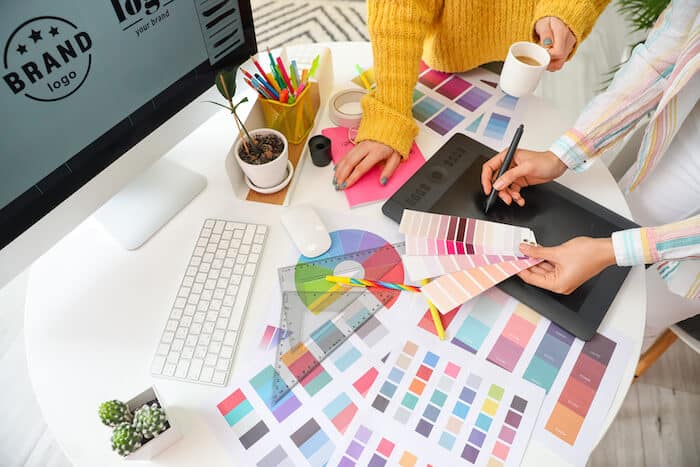
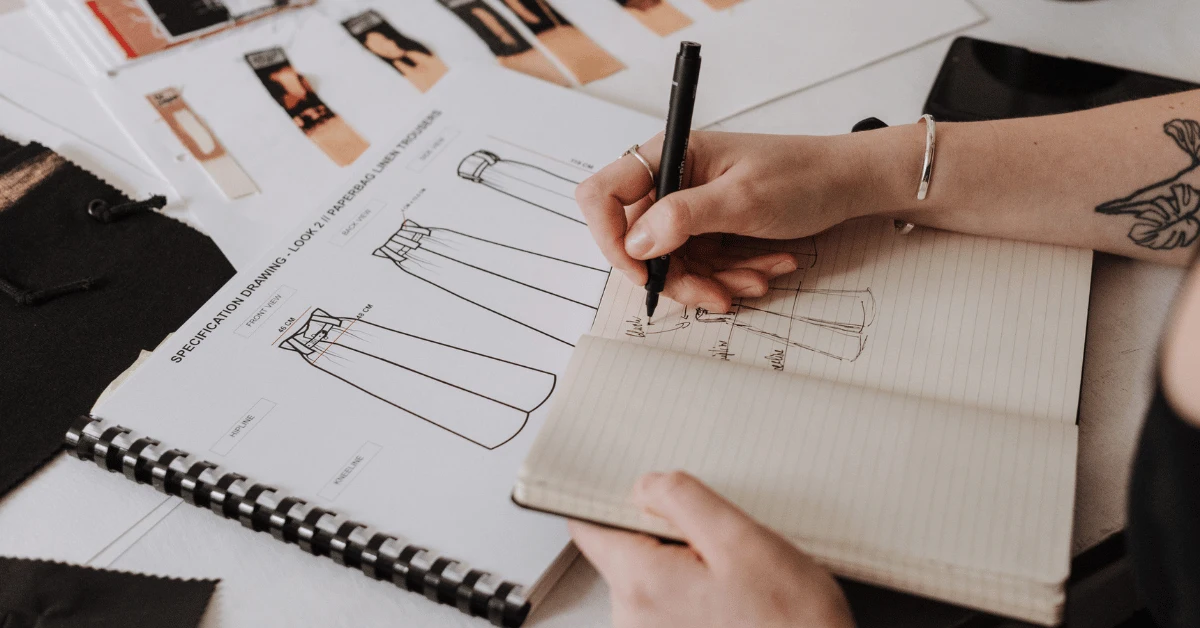
Picture the moment a founder finally sits down with their apparel idea, a mood board, and a sketch, ready to hand it to a factory, and realizes none of it is something a factory can actually build. That gap, between a good idea and a manufacturable spec, is exactly where textile product designers come in.
A textile product designer is the bridge between concept and production: the person who turns a fabric idea into the specs, patterns, and tech pack a manufacturer can build from. It is a technical role, and it matters more in a tight market. McKinsey’s State of Fashion 2026 projects only low single-digit growth for the global fashion industry and names tariffs as the top concern, which means getting a product right the first time, with fewer wasted sample rounds, is now a real competitive edge. This guide covers what textile product designers do, how the role differs from a fashion designer, when you need one, and how to choose the right partner. At Gembah, this is the work our textile network does every day.
Also Read
- Product Design: How to Create Products That Sell and Scale
- White Label vs Custom Product Development
- Private Label vs Custom Manufacturing: Which Fits Your Brand?
Textile Design in One Minute
A textile product designer takes a soft-goods or apparel concept and makes it manufacturable: selecting fabrics and trims, developing patterns and construction, building the tech pack, and running sampling and fit until the product is production-ready. The role is more technical than a fashion designer and more design-focused than a sourcing agent. If you are moving from idea to real product in apparel, accessories, or home textiles, this is the expertise that keeps quality high and sample rounds low.
What to Know Before You Hire One
- They make ideas manufacturable. A textile product designer translates a concept into specs a factory can execute without guessing.
- Fabric selection is the core skill. The right material decides fit, feel, durability, cost, and compliance.
- The tech pack is the key deliverable. It is the document that reduces sample rounds and protects you in a factory dispute.
- The role is distinct from a fashion designer. Fashion design leans aesthetic; textile product design leans technical and production-focused.
- Sampling and fit are where products are won or lost. Iterating the sample is the difference between a good idea and a sellable one.
- Sustainability is now a spec, not a slogan. Organic, recycled, and performance fabrics require real sourcing knowledge.
- Factory connections multiply their value. A designer tied to vetted textile factories shortens the path from sample to production.
What a Textile Product Designer Actually Does
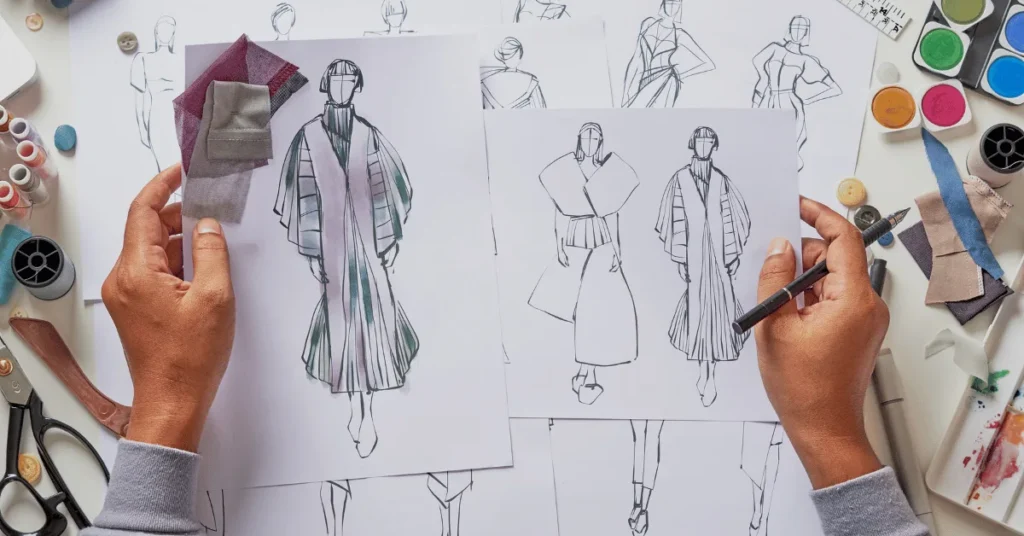
The job is concrete, and most of it happens before a factory is ever involved. Fabric and trim selection comes first: choosing the right textile, weight, and trims for the product’s function, feel, and price point. “Fabric” is not a spec; “100% cotton jersey, 180 GSM, single knit” is.
From there, the designer develops the patterns, seams, and construction details that determine fit and durability, then builds the tech pack, the measurable spec sheet a pattern maker and factory execute from. They manage the sampling and fit rounds, correcting construction until the product matches both the vision and the spec. And they guide material choices against safety, labeling, and sustainability requirements for the target market. Taken together, that is the work that turns a sketch into something a factory can quote and build without improvising.
Have an apparel or soft-goods idea that is still just a sketch? Gembah’s product design services cover fabric selection, patterns, trims, and tech pack creation, so your idea arrives at the factory ready to build. Talk to a Gembah expert.
Textile Designer vs Fashion Designer vs Product Developer
The titles overlap, which is exactly why founders hire the wrong role. The distinction is where each one focuses, and getting it right saves months.
The fashion designer
A fashion designer leads the aesthetic and creative direction: the look, the silhouette, and the collection story. According to the Bureau of Labor Statistics, employment of fashion designers is projected to grow only about 2 percent from 2024 to 2034, with roughly 2,300 openings a year, so this is a specialized, competitive field focused on design vision rather than production mechanics.
The textile product designer
A textile product designer turns that creative direction into a producible product, focused on materials, construction, and manufacturability. The O*NET profile for fashion designers captures how much of the work is technical, from analyzing fabric behavior to specifying construction, and textile product designers live even further toward the engineering end of that spectrum.
The product developer or sourcing lead
A product developer or sourcing lead manages factories, samples, and production once the design and tech pack already exist. They are essential, but they are not the person who makes your idea manufacturable in the first place. Small teams often need one partner who spans all three roles, which is where an end-to-end textile development partner fits.
Fabric Is the Decision That Defines the Product
Material is the single biggest driver of how a textile product performs, so specify it before anything goes to a factory. Naturals like cotton, wool, and linen bring comfort and breathability. Synthetics like polyester and nylon bring durability and performance. Blends balance the two, and for activewear, performance fabrics with moisture-wicking or four-way stretch are effectively the product itself.
Construction matters as much as fiber. A knit fabric stretches and drapes, which suits t-shirts, activewear, and socks, while a woven fabric is stable and structured, which suits shirting, bags, and outerwear. Weight, expressed in GSM (grams per square meter), turns the same fiber from a summer tee into a heavyweight hoodie. This is the practical reason “cotton” is not a spec and “100% cotton jersey, 180 GSM, single knit” is: fiber, construction, and weight together decide how the finished product feels and performs.
Sustainable materials are increasingly non-negotiable rather than a nice-to-have. Organic cotton, recycled polyester, bamboo, and modal are now expected by many buyers, and credibility bodies like Textile Exchange set the standards that separate a real sustainability claim from a marketing one. The scale tells the story: polyester now accounts for about 59 percent of global fiber production, while recycled polyester holds only around 12 percent of the market and less than one percent of all fibers come from true textile-to-textile recycling, according to the Textile Exchange Materials Market Report. National employment and skills data for the occupation, tracked by the Bureau of Labor Statistics, underline how specialized this materials knowledge has become. A designer who knows how these fibers source, behave, and certify is the difference between a claim you can defend and one you cannot.
The wrong fabric is the mistake a textile product never recovers from. Gembah helps you spec and source the right material, from organic cotton to performance blends, before it ever reaches a factory. Get a Gembah quote.
From Sketch to Signed-Off Sample
Textile development follows a consistent arc, and knowing it helps you see where a designer earns their keep. It starts with concept and direction: defining the product, audience, and price point before sourcing anything. Then the tech pack translates that concept into a measurable, factory-ready specification.
Fabric sourcing comes next, sourcing and testing the specified materials to confirm hand-feel, weight, and compliance. Sampling and fit follow, running the rounds that correct construction until you approve a golden sample. Only then does the approved sample move into managed production with quality control at the factory. Skipping or rushing the early steps is what produces the endless sample loop, where corrections cost weeks each because the spec was never solid to begin with.
The Compliance Layer: Labeling and Safety
Apparel and soft goods carry legal requirements that a good textile product designer builds in from the start, because retrofitting compliance after production is expensive and sometimes impossible. Two federal regimes matter most.
Labeling comes first. Under the FTC’s Textile Fiber Products Identification Act, most textile products must carry a label listing fiber content by generic name and by weight, the country of origin, and the manufacturer or its registered identification number. The FTC’s separate Care Labeling Rule requires clear washing and care instructions. Safety comes next: most clothing textiles must meet the flammability standard the Consumer Product Safety Commission enforces under 16 CFR 1610, and children’s sleepwear faces stricter rules still. Getting fiber content, care, and flammability right inside the tech pack is far cheaper than discovering a labeling failure after a production run has already shipped.
Signs You Need a Textile Product Designer
Not every project needs one on day one, but a few situations make it clear that you do. If any of these sound like your product, it is time to bring in textile product designers rather than pushing ahead alone.
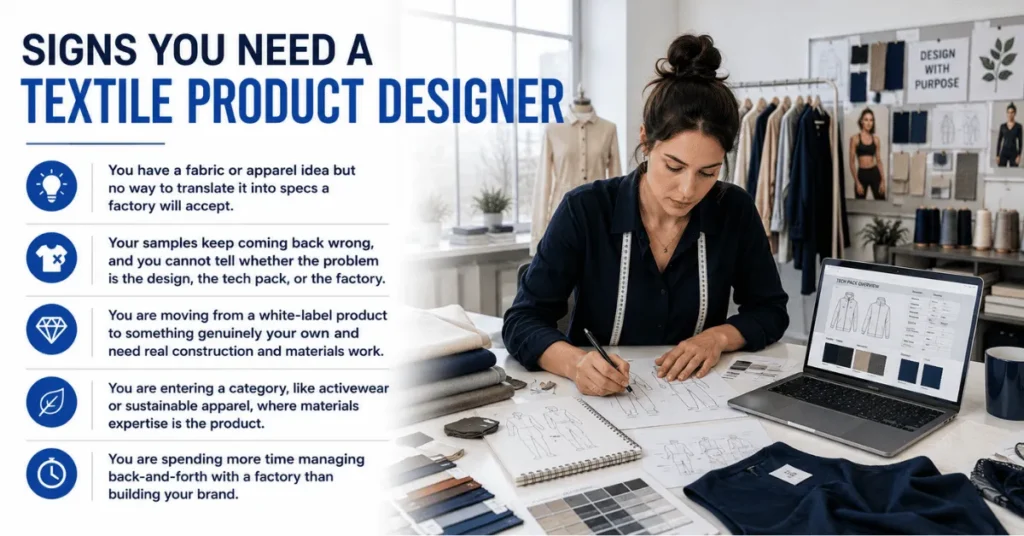
- You have a fabric or apparel idea but no way to translate it into specs a factory will accept.
- Your samples keep coming back wrong, and you cannot tell whether the problem is the design, the tech pack, or the factory.
- You are moving from a white-label product to something genuinely your own and need real construction and materials work.
- You are entering a category, like activewear or sustainable apparel, where materials expertise is the product.
- You are spending more time managing back-and-forth with a factory than building your brand.
How Gembah Supports Textile Development
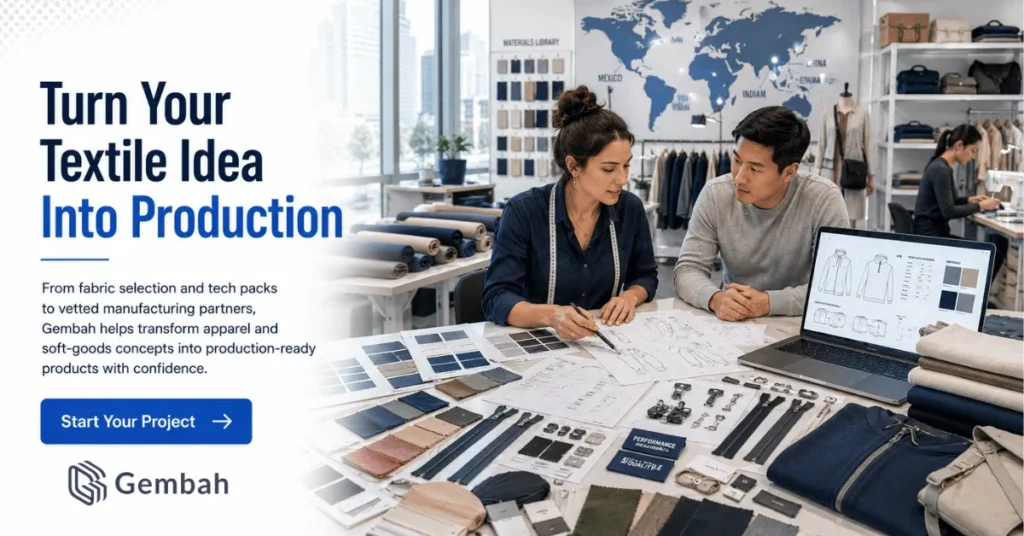
Pulling design, materials, and factory connections into one place is what keeps a textile launch from stalling. Gembah’s textile and apparel expertise connects you with vetted textile manufacturers and experienced designers for apparel, accessories, activewear, and home goods, so you are not assembling that team piece by piece.
The product design work covers fabric selection, patterns, trims, and tech pack creation, with design for manufacturing built in so samples come back closer to right the first time. Gembah’s textile network spans factories in India, Vietnam, China, and Mexico, matched to your product and volume, from small pilot runs to scaled production. Founders like Aira Basics used Gembah to take a soft-goods concept, a barefoot-style sock, from idea to a launch-ready product, detailed in the Aira Basics case study. It is end-to-end product development with the materials expertise a textile product built on the wrong fabric never recovers from.
Conclusion
A textile product designer is what turns a fabric idea into a product a factory can actually build, and choosing one with real materials expertise and factory connections is what keeps quality high and sample rounds low. In a market growing slowly and watching costs, that efficiency is not a luxury; it is how first-time apparel and soft-goods brands reach launch without burning their runway on corrections.
Ready to turn your apparel or soft-goods idea into a real product? Tell Gembah about your product and get matched with textile designers and vetted factories who can carry it from fabric to finished run. Get started with Gembah.