Every new brand hits the same early fork. Launch fast with a white label product and a logo on the box, or invest in custom product development to own something genuinely differentiated. Both paths have built billion-dollar companies. They just build very different ones, and the founder who picks the wrong one usually does not realize it for twelve months.
The decision is not really about speed or cost. It is about what your moat actually is. If your edge is brand, distribution, or customer experience, white label can carry you a long way. If your edge depends on a feature, form, or experience that nobody else can buy off a shelf, white label will quietly cap your growth. Research from Harvard Business Review on product differentiation has consistently shown that durable category leaders win on structural differentiation, not surface branding.
At Gembah, we work with founders on both paths and we see the trap up close. This guide explains what each path involves, what it costs in time and money, and how to choose the right one for your market and stage.
TL;DR
White label products let you launch in roughly 12 to 14 weeks by buying an existing manufacturer’s product and rebranding it. Custom product development takes 6 to 18 months and involves design, prototyping, tooling, and engineering, but you own the intellectual property and build real defensibility. White label wins on speed and capital efficiency. Custom wins on differentiation and long-term margin. A growing third option, design-to-manufacturing (D2M), gives you a custom product on a faster timeline by integrating design and manufacturing in one workflow.
Key Points
- White label means purchasing a ready-made product from a manufacturer and applying your branding.
- Custom product development means designing and engineering a unique product from scratch with your own tooling.
- White label typical timeline: roughly 12 to 14 weeks from decision to inventory in hand, factoring sample approval and a typical first run.
- Custom typical timeline: 6 to 18 months from concept to first production run, depending on category complexity and tooling.
- White label MOQs are often lower, and you avoid tooling costs. Custom creates higher upfront costs but lower per-unit costs at volume.
- Custom products defend against competition, white label products do not. Anyone can buy the same base product and compete on price or marketing.
- Design-to-manufacturing (D2M) sits in between: you get a custom product but on a faster, lower-friction timeline by collapsing design and manufacturing into one workflow.
- Gembah supports all three paths and helps founders pick based on market dynamics, not just budget.
Not sure which path your category supports? Get a 30-minute working session with the Gembah team and a clear recommendation based on your category, capital, and timeline. Talk to a Gembah product development expert.

What Is White Label Product Development?

A manufacturer already makes a product, and you buy it with your branding applied. That might be a logo on the box, a sticker on the bottle, a printed tag on apparel, or a label inside an electronics device. The product itself does not change, only the branding layer.
Common categories include skincare, supplements, electronics accessories, apparel basics, household goods, and pet products. Gembah has covered the trade-offs in detail in our guide to white labeling, and the playbook is well-established for brands that want speed over structural differentiation.
The manufacturer typically retains the design and the formula. You are renting a product, not owning one. Customization is limited to surface-level branding, not the product itself, and that matters when you start thinking about defensibility.
When White Label Works Well
- You want to test a market or audience quickly without committing capital to tooling and design work.
- Your differentiation lives in brand, marketing, or distribution rather than in the product itself.
- You need to build revenue and customer data before you can justify the cost of custom development.
- Your category is mature, and customer expectations of the product are well-defined.

What Is Custom Product Development?
Custom product development is the full end-to-end build. The flow runs concept, industrial design, engineering, prototyping, tooling, and production. You own the design files, the tooling, and in most cases the underlying intellectual property, subject to how the contract is structured.
Each phase requires specialist work. Industrial designers shape form and user experience. Mechanical and electrical engineers solve manufacturability. Sourcing experts find the right factory for your tolerances and volume. Quality auditors run inspections at production. A custom development engagement is buying that full team, not buying any one of those roles in isolation.
The work generally includes a design for manufacturing review before tooling locks, which is the step that catches the most expensive late-stage problems. Skipping it is the single most common reason custom programs blow their budgets.
When Custom Development Is Worth It
- Your differentiation depends on a feature, form, or experience that does not exist in any white label catalog.
- You are planning to build a category, not a single product. Tooling amortizes across multiple SKUs.
- You need IP protection or regulatory control that only comes with ownership of the design.
- You are entering a category where white label competitors are already commoditized on price.
Side-by-Side: White Label vs Custom
- Speed to market: white label 12 to 14 weeks; custom 6 to 18 months.
- Upfront cost: white label is low, mostly inventory and packaging artwork; custom is high, with design, engineering, and tooling all front-loaded.
- Per-unit cost: white label is slightly higher because the manufacturer margin is built in; custom is typically lower at scale once tooling amortizes.
- Differentiation: white label is surface-level branding only; custom is structural.
- Defensibility: white label products can be replicated by any competitor; custom products can be protected with patents, trade dress, or trade secrets.
- IP ownership: white label leaves IP with the manufacturer; custom transfers IP to you, subject to contract terms.
- Best for: white label suits brand-led businesses; custom suits product-led businesses.
Want a real cost and timeline comparison for your product? Send us your concept or category and we will walk you through both paths broken out by phase. Get a quote from Gembah.
The Hybrid Approach: Design-to-Manufacturing (D2M)
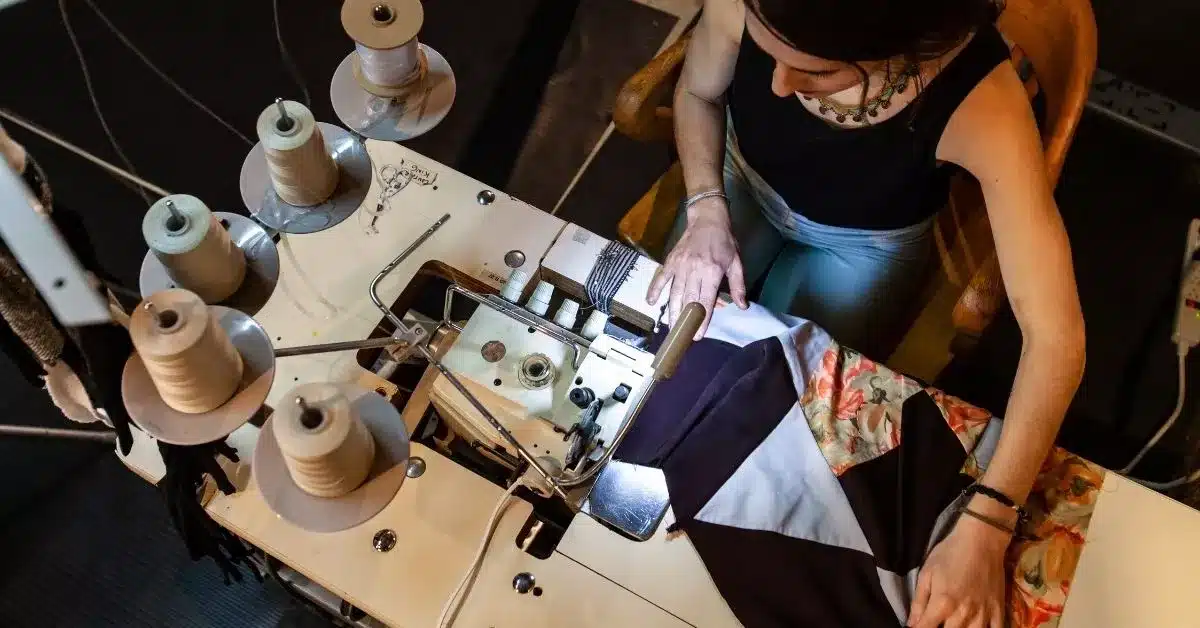
A growing number of brands are landing in a third lane. They want a product that is genuinely their own, but they cannot absorb an 18-month custom timeline or a six-figure design and tooling investment up front. The answer is design-to-manufacturing, often shortened to D2M.
D2M collapses what used to be sequential phases into a single integrated workflow. Instead of designing in isolation and then hunting for a factory afterward, the design team works alongside vetted manufacturers from the first concept review. The Gembah D2M approach brings factory engineers into the design conversation early, which means manufacturability decisions are made before tooling, not after.
The practical impact is shorter timelines and fewer surprises. Founders who use D2M typically hit first production in 4 to 9 months instead of 12 to 18, with lower tooling rework because the factory was involved before the CAD files locked. Per-unit economics often improve as well, because the design team optimizes for cost-effective materials and processes the factory actually runs efficiently.
D2M works particularly well for brands that already validated demand with a white label product and are now ready to upgrade to a proprietary design. The white label run proved the audience and the price point, and the D2M build creates the defensibility for the next phase. The risk of transitioning customers and retailers from one SKU to a redesigned SKU is real, but it is manageable when branding and form factor stay consistent across the move.
Many Brands Start White Label and Move to Custom
The most common path for a capital-efficient founder is to launch white label, build revenue and customer data, then move to custom or D2M once the unit economics justify the spend. This sequence de-risks the product-market fit question before you commit to tooling and engineering.
The transition is straightforward when branding and form factor stay consistent. It gets harder when the new design changes the customer experience materially, or when the original white label product had a unique manufacturer formula you do not own. Planning the transition during the white label phase, rather than after, is what separates a clean handoff from a brand reset.
Which Path Is Right for You?
Choose White Label If…
- You are testing an audience, channel, or positioning rather than a product idea.
- Your capital is limited and you need to validate before investing in tooling.
- The category is not defensible at the product level, which is true for most commodity goods.
- Your team’s edge is marketing, content, or distribution, not product design.
Choose Custom Product Development If…
- Your competitive advantage depends on something you cannot buy off a shelf.
- You are planning a multi-SKU portfolio where tooling amortizes across products.
- You have the timeline and capital to invest 6 to 18 months before launch.
- You want long-term margin advantage from owning your own design and IP.
Choose D2M If…
- You want a custom product but cannot absorb a full 12 to 18 month timeline.
- You have validated demand, often through a white label run, and need the next product to be defensible.
- You want one partner managing design, engineering, and manufacturing under one project lead.
- You want to reduce tooling rework and per-unit cost surprises by involving the factory early.
How Gembah Supports All Three Paths
Most product development firms run one path well. Gembah runs all three under one roof, which is what allows us to switch a founder from white label to D2M to fully custom as their business evolves, without changing partners.
For founders who want to launch white label first and move to a proprietary product later, Gembah helps structure the transition before it becomes a brand reset. The full product development process covers research, design, prototyping, sourcing, and production management, with the same project manager across phases so context does not get lost in handoffs.
6 Signs You Are on the Wrong Path
Founders often realize they picked the wrong path roughly 12 months in. These are the early signals that you have a mismatch.
- Margin is compressing under competitor price pressure and you cannot differentiate because the product itself is the same.
- Retailers ask why you are not on a private label SKU because they have seen identical products from three of your competitors.
- You cannot answer a product question without calling the manufacturer because you do not own the design or formula.
- Your story is brand-only but your category rewards product innovation, not marketing spend.
- Custom tooling spend is sitting unused because you skipped market validation and the product is not moving.
- You are 14 months into a custom build and the category has shifted under you while the tooling locked.
Conclusion
White label and custom product development are not opposites. They are different strategies for different business models, with D2M sitting as a useful middle path for founders who want defensibility without the full custom timeline. The wrong choice is the one made on what is cheap today, instead of what your business actually needs in two years. The Gembah team has worked across all three paths with hundreds of founders, and the pattern is consistent: clarity on which path fits your stage is the single highest-leverage decision you make in your first year.
Ready to talk through which path fits your market and stage? Get a working session with a Gembah product development expert and a clear recommendation for the right next step. Talk to a Gembah expert.