Crowdfunding for product launch offers a powerful way to validate your idea, build an audience, and secure funding simultaneously. But here’s the reality most creators discover too late: campaigns fail because the product itself isn’t ready for manufacturing, not because the marketing was weak.
Before you commit to a Kickstarter or Indiegogo campaign, you need more than hype. You need a manufacturable prototype, accurate cost projections, and realistic production timelines. Backers can smell vaporware from a mile away, and platforms like Kickstarter have suspended high-profile campaigns for promising products they couldn’t actually deliver.
This is where professional product development changes the equation. When you involve manufacturing experts during the design phase (not after your campaign funds), you avoid the disasters that kill 58.98% of campaigns. You get real costs, real timelines, and proof your product can actually be made at the price you’re promising.
This approach has transformed how physical products reach the market. You’re not just asking for money; you’re building a community of early adopters who become your biggest advocates, backed by a product development process that ensures you can actually deliver.
Already have a product idea but not sure if it’s crowdfunding-ready? Get a free feasibility assessment to find out what your product needs before launch.
ALSO READ:
The Product Feasibility Study: How To Prep For A Successful Product Launch
How to Manufacture a Product to Sell: 5 Key Steps for First-Time Entrepreneurs
TL;DR: Crowdfunding for Product Launch
Crowdfunding for product launch validates your concept, generates working capital, and builds a customer base before you manufacture at scale. Platforms like Kickstarter report a 41.98% success rate as of January 2025, but success hinges on thorough preparation, realistic funding goals, and consistent backer engagement. The process starts 30 to 60 days before launch with list-building and paid traffic, continues with active campaign management through regular updates and community interaction, and extends into post-funding communication as you transition from backer accountability to retail strategy.
Key Points:
Campaigns hitting 30% funding in the first week achieve 75% success odds, making pre-launch audience building essential
66.4% of successful Kickstarter projects targeted under $10,000, showing modest goals convert better
Videos appear in 75% of successful campaigns and high-quality email lists convert 1-5% of subscribers to backers
Regular updates increase fundraising by 126%, emphasizing active campaign management

What Crowdfunding Actually Does for Your Product
Crowdfunding validates whether people will actually buy your product before you invest in tooling and inventory. It’s market research with money attached. When backers pledge their credit cards, they’re telling you the concept works and the price point makes sense.
The benefits extend far beyond capital. You gain early adopters who provide feedback, share your campaign, and become your first customer testimonials. This community often shapes your product roadmap through comments and suggestions during the campaign. Successful campaigns also generate proof of concept for retail buyers and investors. Media coverage naturally follows momentum, with journalists watching trending campaigns for stories.
The Two Platforms That Matter: Kickstarter vs. Indiegogo
Kickstarter maintains about 23.8M+ backers and stronger organic discovery, particularly in creative and design categories. The all-or-nothing funding model creates urgency; you receive funds only if you hit your goal.
Indiegogo offers flexible funding, letting you keep pledges even if you miss your target, plus their InDemand feature allows continued sales after the campaign ends. However, Indiegogo’s backer base is smaller at about 9M users with typically lower success rates.
Both charge around 5% platform fees plus 3-5% payment processing, totaling roughly 8-10% of funds raised. Kickstarter tends to perform better for well-developed physical products with prototypes, while Indiegogo works for early-stage concepts where flexible funding reduces pressure.
What You Need Before You Launch a Campaign
You can’t wing a crowdfunding campaign. Success requires a manufacturable prototype or functional sample, not just 3D renderings. Clear cost breakdowns matter: know your per-unit manufacturing cost, tooling expenses, shipping rates by region, and platform fees. You’ll need professional campaign assets including a video under 90 seconds, high-resolution product photos, and written copy that addresses customer pain points.
Most importantly, you need a warm audience before launch day. Campaigns that go live without pre-built email lists typically fail. Plan to spend 30 to 60 days building interest through landing pages, paid ads, and influencer partnerships before you launch.
Why Working Prototypes Beat Renderings Every Time
Backers pledge to prototypes, not promises. The difference between a 3D render and a working sample is the difference between suspension (like Skarp Laser Razor) and $4M+ raises (like well-engineered hardware campaigns).
This is where most first-time founders hit a wall. You know what you want to build, but translating that vision into a manufacturable product requires engineering expertise, factory relationships, and materials knowledge you don’t have yet.
Gembah’s end-to-end product development process takes you from concept sketches to production-ready prototypes in 8-12 weeks. You get:
Design engineering that accounts for manufacturing constraints (so your product can actually be made at scale)
Factory-vetted prototypes tested by the same suppliers who’ll manufacture your production run
Accurate cost breakdowns including tooling, per-unit costs, and shipping (no surprises after you’ve promised backers a price)
Realistic timelines based on actual factory lead times, not guesses
When you launch with a Gembah-developed prototype, you’re showing backers a product that’s already been validated by manufacturers. That credibility converts skeptics into backers.
Most crowdfunding consultants focus on marketing. Gembah focuses on making sure you have something worth marketing. The campaigns that fund in under 24 hours? They didn’t guess at manufacturing feasibility. They knew.
Ready to build a prototype backers will trust? Start with a product design consultation to map your path from concept to campaign-ready sample.
How to Set a Funding Goal That Makes Sense
Your funding goal determines campaign perception and success probability. Set it too high, and backers assume you won’t reach it. Set it too low, and you run out of money during manufacturing.
Don’t Just Guess—Calculate Your Real Costs
Start with your all-in landed cost per unit: factory price, packaging, freight, duties, and a 5-10% contingency for defects. Then add platform and payment processing fees (roughly 8-10% of total funds), fulfillment and shipping costs (often 15-30% for physical products), and marketing expenses (typically 10-25% of funds raised for paid ads and list building).
If you’re manufacturing a kitchen gadget that costs $8 per unit landed, you plan to offer it at $39, and you need 1,000 units minimum, your baseline is $8,000. Add $3,000 for tooling, $4,000 for fulfillment and shipping, $2,000 for platform fees, and $3,000 for marketing. Your real funding goal is around $20,000, not $8,000.
How to Get Accurate Costs Before You Set Your Goal
Here’s where most campaigns blow up: creators set funding goals based on supplier quotes from Alibaba, then discover actual costs are 40% higher once they account for tooling, quality standards, certifications, and shipping realities.
You can’t afford to guess. One miscalculation means you’re either underwater on every unit you ship to backers, or you’re the next cautionary tale about unfulfilled campaigns.
The smarter approach: Get a detailed cost analysis from a product development partner who works with factories daily. Gembah provides transparent cost breakdowns that include:
Tooling and mold costs (often $5K-$30K that creators forget to budget)
Per-unit landed costs (factory price + packaging + freight + duties)
Minimum order quantities (so you know if your funding goal covers the MOQ)
Quality control and inspection fees (the costs that protect you from defective batches)
When you work with Gembah before launching your campaign, you set funding goals based on real numbers from real factories in China, Vietnam, India, and Mexico. No surprises. No scrambling. No apology emails to backers explaining why you’re six months late and out of money.
This is especially critical if you’re using crowdfunding to finance your first production run. Underfunded campaigns either fail to deliver or force founders to self-fund shortfalls (ask the Coolest Cooler team how that worked out).
Need accurate manufacturing costs before you set your funding goal? Request a sourcing quote with real factory pricing and MOQ details.
Why Lower Goals Convert Better
Data shows 66.4% of successful Kickstarter projects targeted under $10,000. Lower goals signal achievability and reduce backer risk perception. A campaign asking for $5,000 feels safer to support than one requesting $100,000, even if the latter has a better product.
Consider setting your minimum viable goal that covers essential costs only. If you need $30,000 ideally but can start production at $15,000 by reducing initial batch size, launch with the lower target. Overfunding happens frequently when campaigns build momentum. Machine learning analysis confirms funding goal stability up to $100,000, after which success rates drop steeply.
Stretch Goals Keep Momentum Going
Once you hit your initial target, stretch goals maintain excitement. Plan these in advance: at 150% funding, you’ll add a second color option; at 200%, you’ll upgrade packaging; at 300%, you’ll include a bonus accessory. Communicate stretch goals clearly during the campaign. This gamification effect keeps shares and pledges flowing after the initial surge fades.
Building a Campaign Page That Actually Converts
Your campaign page is your sales pitch, product demo, and trust-builder combined. Every element must work toward conversion.
Your Video Is 80% of the Battle
Videos appear in 75% of successful campaigns because they build trust and demonstrate product value quickly. Keep yours between 60 and 90 seconds, with the critical hook in the first 3-5 seconds for mobile viewers. Show the product solving a real problem in the first 30 seconds.
Skip high-budget production unless your product demands it. Authenticity matters more than polish. Successful videos often feature the founder explaining their story, close-up product demonstrations, and brief testimonials from early testers. Include a clear call to action at the end, telling viewers exactly what pledge level to choose.
Write Your Description Like You’re Explaining It to a Friend
Campaign descriptions should flow naturally, not read like technical specifications. Start with the problem your product solves and why existing solutions fall short. Move into how your product works, its key features, and what makes it different.
Break text into scannable sections with clear subheadings. Use short paragraphs of two to four sentences maximum. Include high-quality images throughout to maintain visual interest and illustrate key points. Address common objections directly: if backers might worry about durability, show testing footage. If they question manufacturing feasibility, explain your factory partnership.
Set Reward Tiers That Make Sense
The Lomi Bloom campaign raised millions by keeping tiers simple: an early-bird unit at 15-20% off retail, a standard unit near expected MSRP, and family bundles at a per-unit discount. They emphasized one clear hero tier rather than overwhelming backers with choices.
Anchor your pricing against expected retail. If you plan to sell at $99 eventually, offer early-bird backers $69 and standard backers $79. Limit total tiers to avoid decision paralysis. Include an early-bird special (limited quantity at your best price), standard reward (your main offering), bundle tiers (two-packs or three-packs), and a premium tier with upgraded features or exclusive colors for super-fans.
The Pre-Launch Phase (Most Important Part)
Campaigns hitting 30% of their goal in the first week achieve 75% success probability. That early momentum comes entirely from pre-launch preparation.
Build Your Email List 30–60 Days Before Launch
High-quality pre-launch email lists convert at 1% to 5% of subscribers to backers, while poor lists yield nearly zero. Start building your list at least 30 days before launch, ideally 60 days for complex products.
Create a simple landing page explaining your product and promising early-bird access. Drive traffic through Facebook and Instagram ads targeting your demographic. Test cost-per-lead early; if you’re spending more than $3-5 per email subscriber, refine your targeting or creative. Engage subscribers with 3-4 emails during the pre-launch period, sharing behind-the-scenes product development updates and teasing the campaign launch date.
Prioritize list quality over size. One thousand engaged subscribers convert better than 10,000 random emails. BackerKit Launch helps identify subscribers with crowdfunding backing history and lets you segment messaging to past high-value backers, people who followed but never backed, and people who backed certain product categories.
The Reality About Paid Traffic vs. Organic Discovery
Many creators assume Kickstarter’s organic traffic will carry their campaign. Meta ads typically drive the majority of successful campaign traffic. When done correctly, your early, paid-driven surge tells the algorithm your project is hot, and Kickstarter’s own ecosystem can add up to 30% of total funding on top of what you bring.
Use a two-phase ad strategy: run ads pre-launch to build your email list and VIP reservation funnel, then switch to conversion-oriented ads during the live campaign that send people directly to the Kickstarter page. Budget at least $1,000-2,000 for pre-launch marketing; this upfront cost often determines whether you reach the critical 30% funding threshold in week one.
Line Up Press and Influencers Before You Go Live
Media coverage during your campaign comes from relationships built beforehand. Research journalists who cover your product category and reach out 3-4 weeks before launch. Micro-influencers in your niche often deliver better ROI than celebrities. A YouTuber with 50,000 engaged subscribers in your exact category drives more conversions than a generalist with millions of followers.
Create a press kit with high-resolution images, product specifications, founder bios, and your core story. Launch day determines campaign trajectory, so coordinate all your assets to go live simultaneously: email your full list, post across social channels, activate influencer partnerships, and publish any secured press coverage.

What Happens During Your Campaign (and How to Keep It Alive)
Most campaigns experience strong opening days, a significant mid-campaign slump, and a final 48-hour surge. Your job is managing the valley between peaks.
Update Backers Every 3–5 Days
Campaigns posting regular updates raise about 3× more money than those with sparse communication. Aim for one substantive update every 3-5 days, with more frequent updates in the first and last weeks.
Share manufacturing progress, introduce team members, announce stretch goals, or highlight backer testimonials. Every update triggers a notification to backers and surfaces your campaign to the platform’s algorithm, potentially boosting organic discovery. Keep updates scannable with images, subheadings, and short paragraphs.
Instead of blasting everyone with generic updates, segment messaging to past high-value backers, people who followed but never backed, or people who backed certain product categories. This targeted approach turns your audience into a repeatable asset rather than a one-off event.
Respond to Every Comment and Message
Active discussion signals a healthy campaign. Answer every question publicly so other backers see your responsiveness. When concerns arise about manufacturing feasibility or delivery timelines, address them transparently rather than deflecting. Early response time matters most, especially during the first week when hitting the 30% threshold determines success.
Run Mid-Campaign Promotions
Combat the mid-campaign slump with time-limited promotions. Introduce a 48-hour discount tier, announce a flash stretch goal, or offer bonus add-ons for pledges made during a specific window. Cross-promote with complementary campaigns by partnering with other creators for mutual shoutouts in updates or backer newsletters.
Remarketing ads to warm audiences perform well mid-campaign. Target your website visitors, email list non-backers, and campaign page visitors with Facebook and Instagram ads highlighting funding progress and new testimonials.
Push Hard in the Final 48 Hours
Campaigns often raise 20-30% of total funding in the last two days. Send dual daily emails to your list: one at 48 hours remaining, one at 24 hours, and a final push in the closing hours. Activate all partners simultaneously and concentrate your ad budget here if you’ve been conserving resources. Go live on social media during the final hours to create real-time urgency.
The Mistakes That Kill Crowdfunding Campaigns
Kickstarter data shows 58.98% of campaigns fail to meet funding goals, with the majority receiving minimal support. Understanding common mistakes helps you avoid them.
Launching Without an Audience
The biggest killer is going live without a pre-built community. As crowdfunding consultants consistently point out, campaigns relying purely on platform traffic rarely succeed. Organic discovery exists but can’t be your primary strategy. Successful crowdfunding requires investing in list-building before launch.
Asking for Too Much Money
Goals above $100,000 see steep success drop-offs unless you’re established or have massive pre-launch validation. Most first-time creators should target $5,000-$25,000 depending on product complexity. The Coolest Cooler raised $13.3M but shut down after underpricing rewards at $185 when real costs were much higher. They sold units to backers below sustainable cost, forcing Amazon sales at higher prices while tens of thousands of backers remained unfulfilled.
Manufacturing costs often exceed estimates. Unique features can increase per-unit costs by 15-40%, and tariffs, freight, and component costs can erode margins quickly. Build contingency into your funding goal.
Promising Delivery Dates You Can’t Hit
Typical product campaigns take 8-14 months from funding close to first shipment, with hardware often running 12-24 months. Yet creators commonly promise 3-6 month delivery to appear attractive. Work backward from realistic manufacturing timelines: design takes 4-8 weeks, sourcing and sampling 4-12 weeks, tooling 4-6 weeks, plus shipping, customs, and fulfillment time. Be honest about the total duration.
Skipping the Prototype Phase
Campaigns featuring only 3D renderings or concept art struggle with credibility. Backers want proof you can actually manufacture the product. The Skarp Laser Razor raised over $4M for a device that could supposedly cut hair with light, but Kickstarter suspended the campaign for violating the working-prototype rule. Prototypes never matched promises.
Invest in prototypes or pre-production samples before launching. Test manufacturing feasibility early by involving factories during design rather than after, which prevents late discoveries about tooling, minimum order quantities, or process complexity that blow past delivery dates and consume funds unexpectedly.
After You Fund: What Happens Next
Hitting your goal is when real work begins. You’re now accountable to potentially thousands of backers who expect delivery.
You’re Now Accountable to Hundreds (or Thousands) of People
Your backers aren’t just customers; they’re investors in your vision who took a risk on an unfinished product. Maintain the same update frequency post-campaign that you kept during active funding. Acknowledge that delays might happen and communicate them immediately. Backers accept reasonable delays caused by manufacturing realities but hate discovering problems weeks after they occur.
Set internal deadlines ahead of your promised delivery date. If you committed to June delivery, target April internally. This buffer absorbs inevitable surprises without breaking promises to backers.
Communicate Every Step of Manufacturing
Share factory selection, tooling completion, first production samples, quality control processes, and shipping milestones. Photos and videos from the factory floor prove progress. Backers love seeing their products taking shape. Even mundane updates about material sourcing or assembly line setup maintain engagement and demonstrate you’re actively working toward fulfillment.
Address problems honestly. If a component fails testing, explain what happened and how you’re fixing it. Backers become advocates when they feel included in the journey, even the difficult parts.
Plan Your Retail Strategy Before Fulfillment Ends
Use campaign momentum to secure retail partnerships or prepare your e-commerce site for post-fulfillment sales. Buyers at stores watch successful crowdfunded products and often reach out during campaigns. Consider keeping InDemand active on Indiegogo or offering pre-orders through your site. Some backers discover your product late or want additional units.
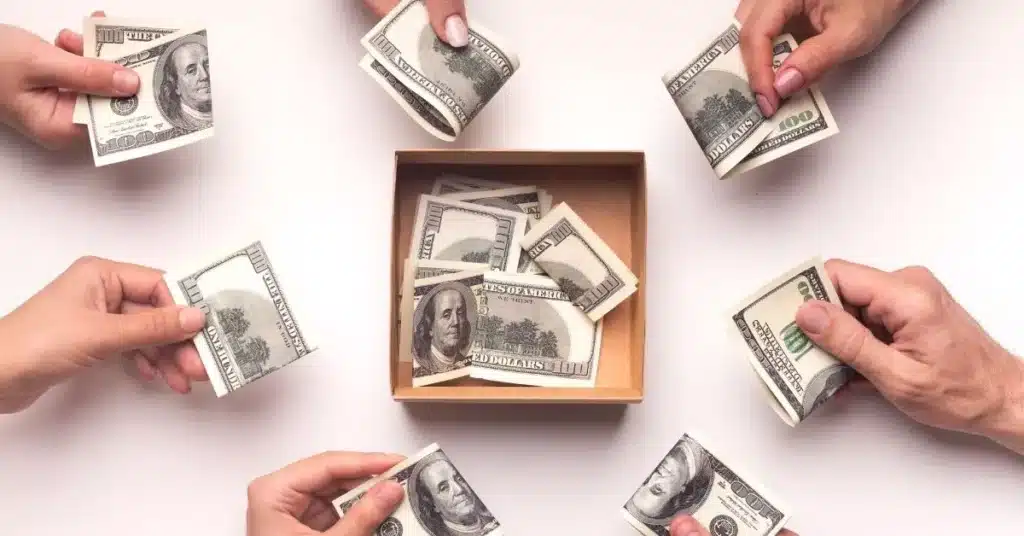
Is Crowdfunding Right for Your Product?
Not every product fits the crowdfunding model. Understanding when to pursue this path versus alternatives saves time and money.
It Works Best For:
Crowdfunding for product launch excels with innovative consumer products that solve clear problems in unique ways. Tech gadgets, kitchen solutions, outdoor gear, and design-forward items resonate with platform audiences seeking novel purchases.
Creative categories perform exceptionally well. Comics achieve a 66.14% success rate, while dance and theater also see high success rates above 60%. Products with visual appeal and demonstrable function convert effectively. Backers need to “get it” quickly from images and video. Physical products with clear manufacturing paths work better than services or software-as-a-service offerings.
It’s Not Ideal For:
Highly regulated products like medical devices face challenges. FDA approval timelines create uncertainty backers dislike. Business-to-business products rarely succeed on consumer-focused platforms; Kickstarter and Indiegogo cater to individual backers, not procurement departments.
Simple commodity products without differentiation struggle. If your product competes primarily on price against established brands, crowdfunding’s premium positioning doesn’t fit. Products requiring massive tooling investments often need more capital than reasonable crowdfunding goals provide.
The Alternative: Pre-Orders on Your Own Site
Some entrepreneurs skip platforms entirely, running pre-order campaigns through their own websites. This approach avoids platform fees and gives complete control over customer data and messaging. Pre-orders work when you have an existing audience or significant marketing budget. Without platform discovery and backer communities, you’re responsible for 100% of traffic generation.
The trade-off is legitimacy. Kickstarter’s name recognition provides trust that unknown websites lack. First-time creators often need platform credibility, while established companies can leverage existing reputation.
Conclusion
Crowdfunding for product launch transforms how entrepreneurs test ideas and fund manufacturing. With a 41.98% success rate on Kickstarter, the odds improve dramatically for creators who understand the process: build an audience pre-launch, set realistic funding goals, create compelling campaign pages, maintain active communication, and deliver on promises.
But here’s what separates the campaigns that deliver from those that collapse: the product was manufacturable from the start.
Marketing gets you funded. Product development gets you fulfilled. The campaigns raising six and seven figures aren’t just better at ads. They’re better at building products that can actually be made at the costs and timelines they promised.
The non-monetary benefits of crowdfunding (validation, feedback, community) only matter if you can deliver the product. Kickstarter’s graveyard is full of well-marketed campaigns that couldn’t translate hype into shipping boxes.
Ready to launch a campaign that actually delivers?
Gembah provides end-to-end product development services from concept to manufacturing. They ensure your design is manufacturable, your costs are transparent, and your timelines are realistic before you make a single promise to backers.
Their process includes:
Product design and engineering with manufacturing constraints built in
Factory sourcing and vetting across China, Vietnam, India, and Mexico
Prototyping and sampling that proves feasibility before launch
Production management and quality control so you ship what you promised
Thousands of products have launched through Gembah’s platform. The ones that crowdfund successfully do so because the manufacturing risk was eliminated before the campaign ever went live.
Get a free feasibility assessment and find out if your product is ready for crowdfunding, or what it needs to get there. Because the best marketing in the world can’t save a product that can’t be built.